Campagna Chanel Cruise 2026-27 “L’anatomia della liberazione”. Articolo di Kate Granger, Fashion Editor di RUNWAY RIVISTA. Foto/Video per gentile concessione di: CHANEL / Alec Soth.
When Gabrielle Chanel set up shop in Biarritz in 1915, it was neither an accident of geography nor a bourgeois vacation. It was a calculated desertion. Far from the stifling decorum of Parisian salons and the suffocating silhouettes of the Belle Époque, the Atlantic coast provided an unruly, wind-whipped laboratory. There, against crashing brine and shifting sands, modern sportswear was born out of sheer impatience with constraint.
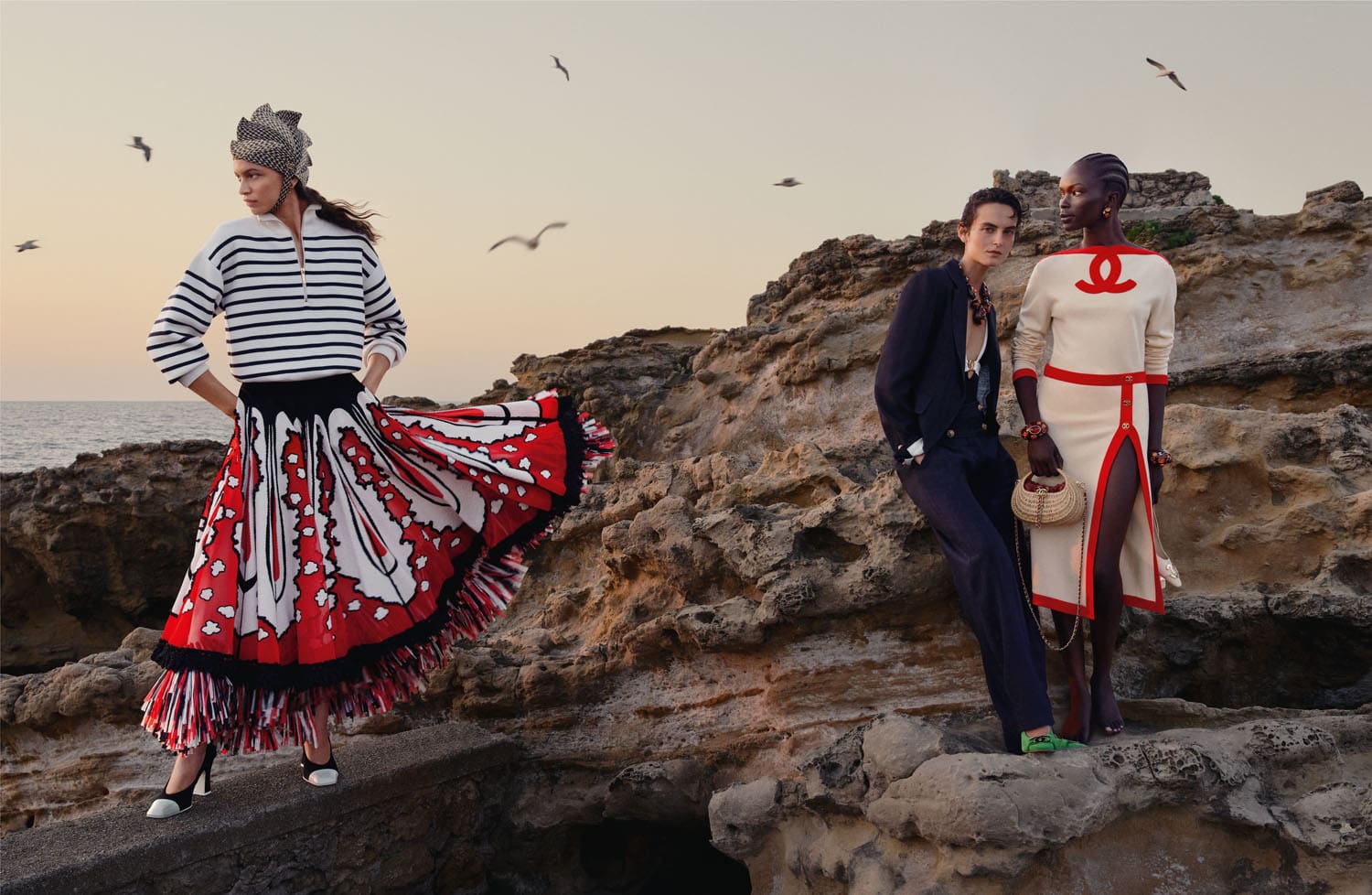
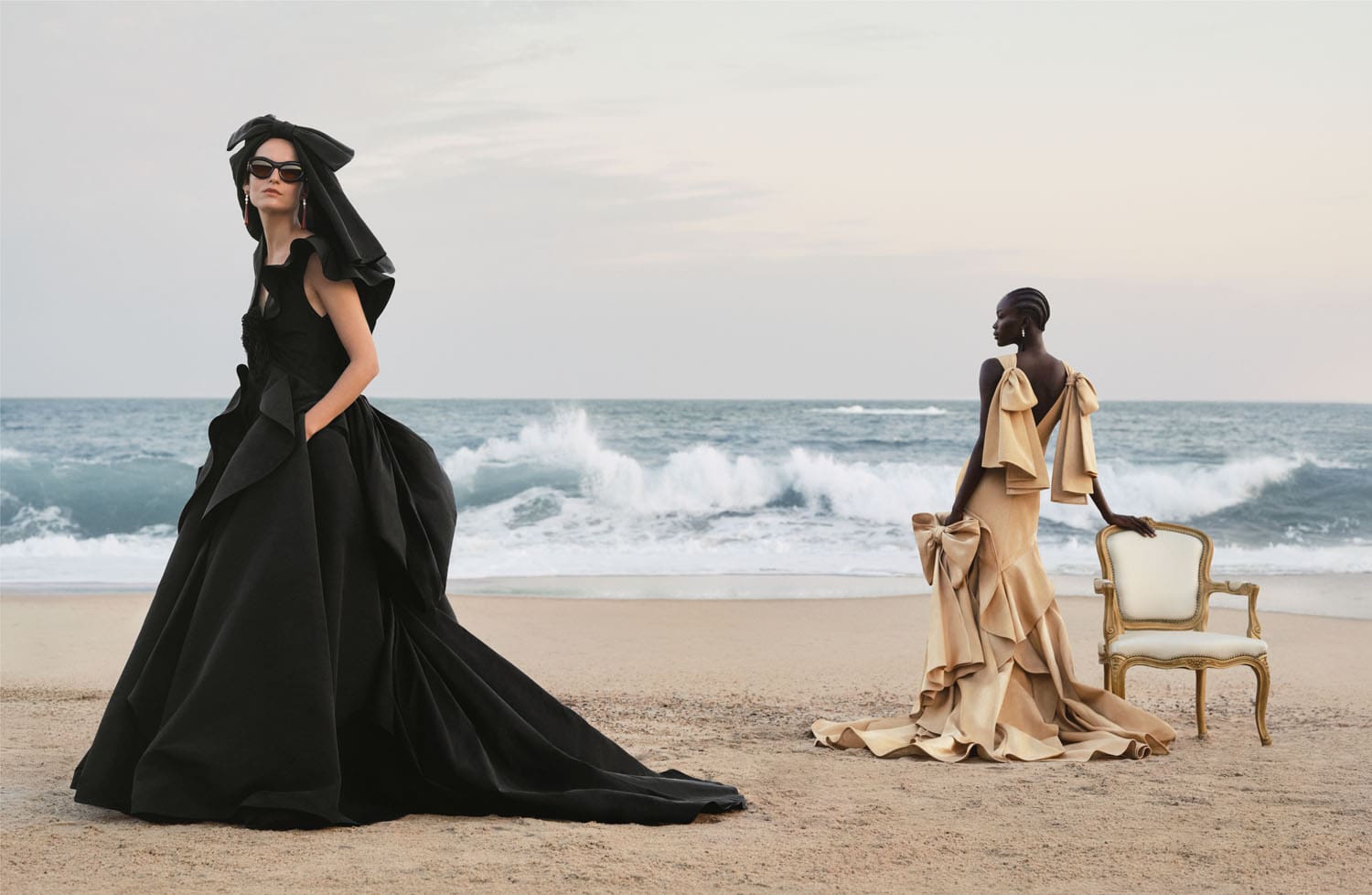
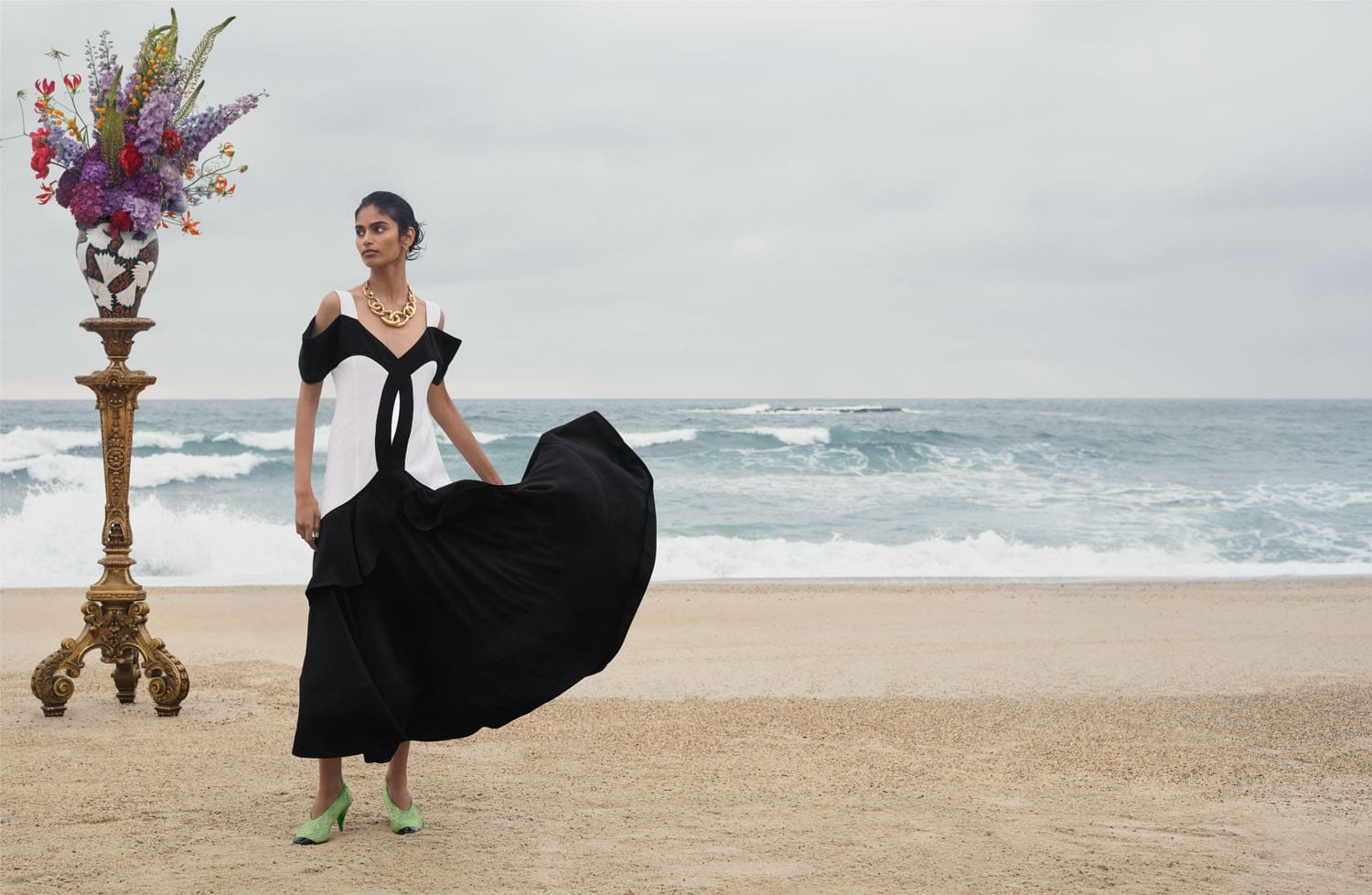
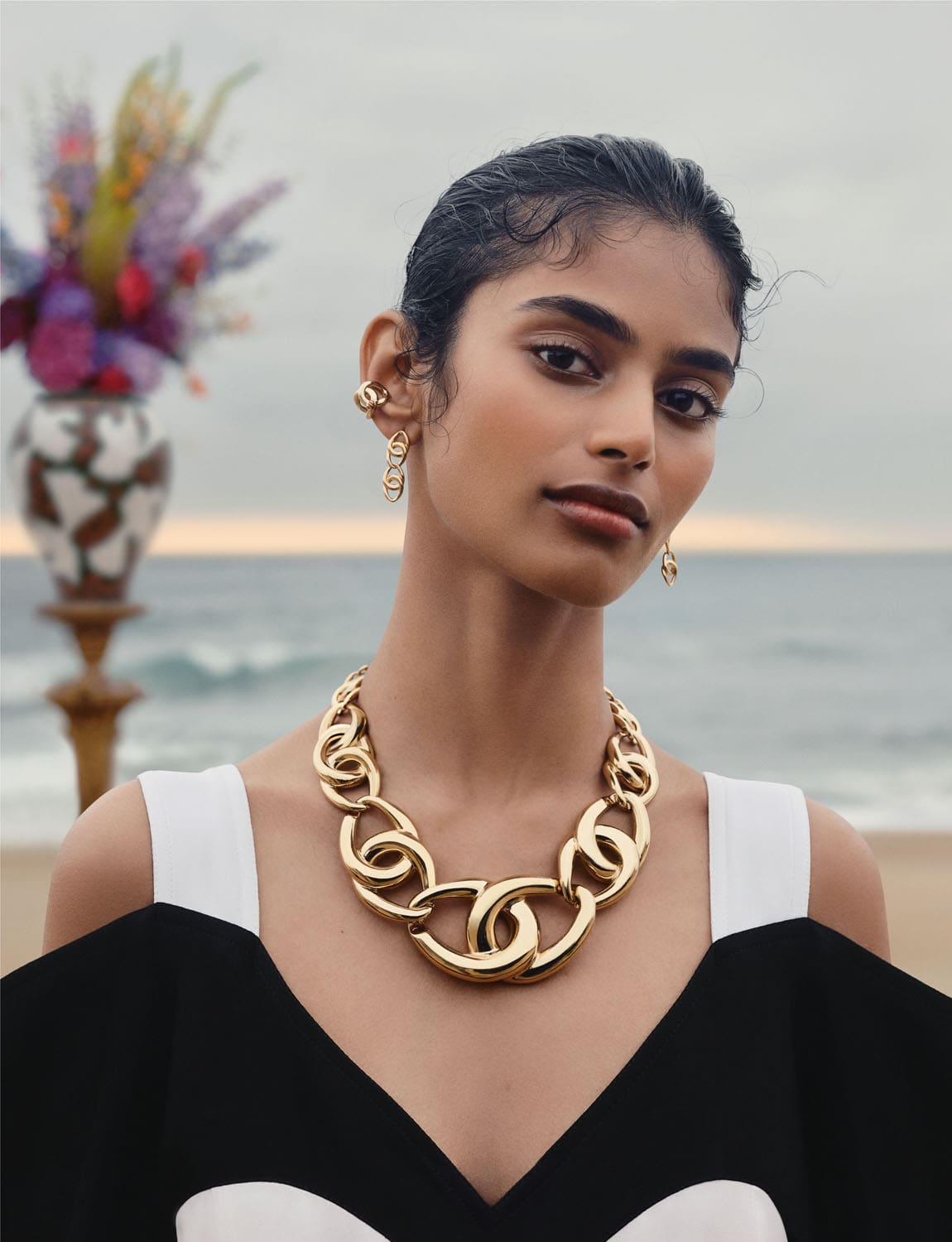
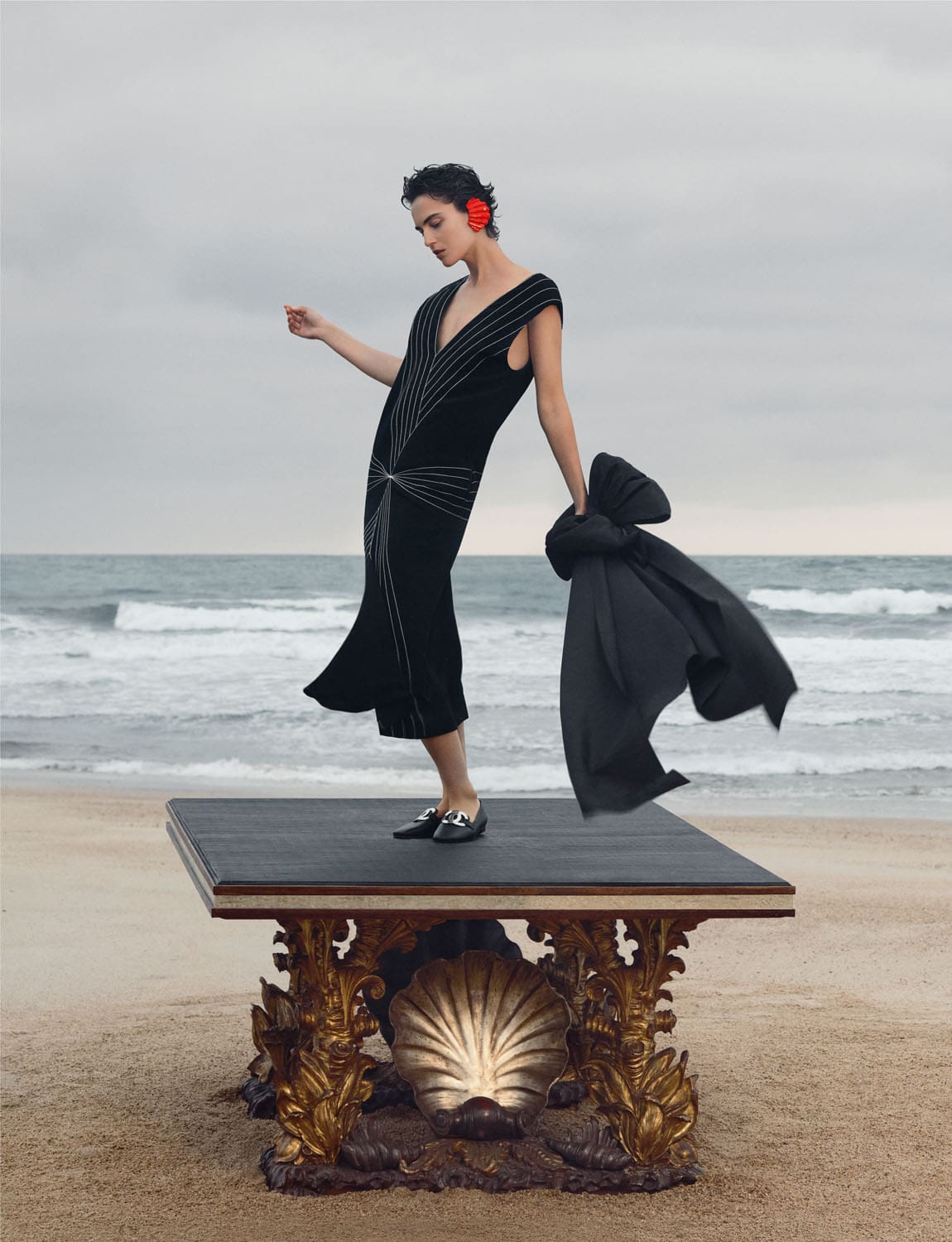
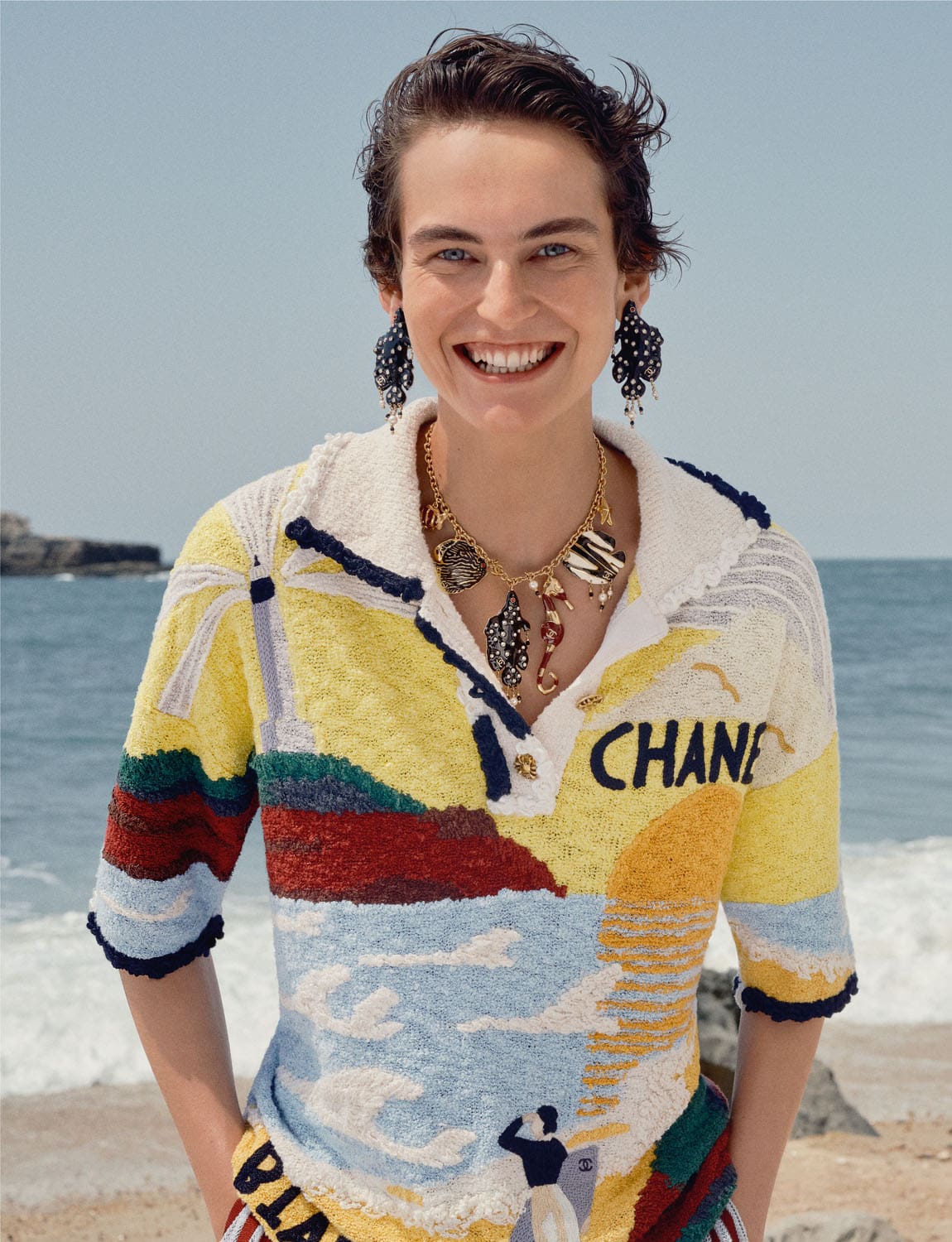
A little over a century later, Matthieu Blazy orchestrates his inaugural Cruise collection for the House by returning to that exact shoreline. Rather than treating Biarritz as a postcard backdrop for pastel leisure, Blazy interrogates the very premise of resort wear. Captured through the unflinching, poetic lens of Alec Soth on the Grande Plage—with cinematic direction by Stuart Winecoff—the campaign dismantles the barrier between indoor rigidity and coastal abandon. The salon does not merely visit the beach; it collapses into it.
The Centenary of Black: From Servant’s Smock to the Revenge Dress
Fashion mythology rarely pauses to acknowledge the subversive irony of the little black dress. When Chanel codified the design in 1926, she performed an act of high-society sabotage: taking the severe uniform of domestic service and shop girls, stripping it of ornate distraction, and turning it into the ultimate badge of modern elegance. It was egalitarianism disguised as couture, an erasure of social hierarchy that foreshadowed denim by half a century.
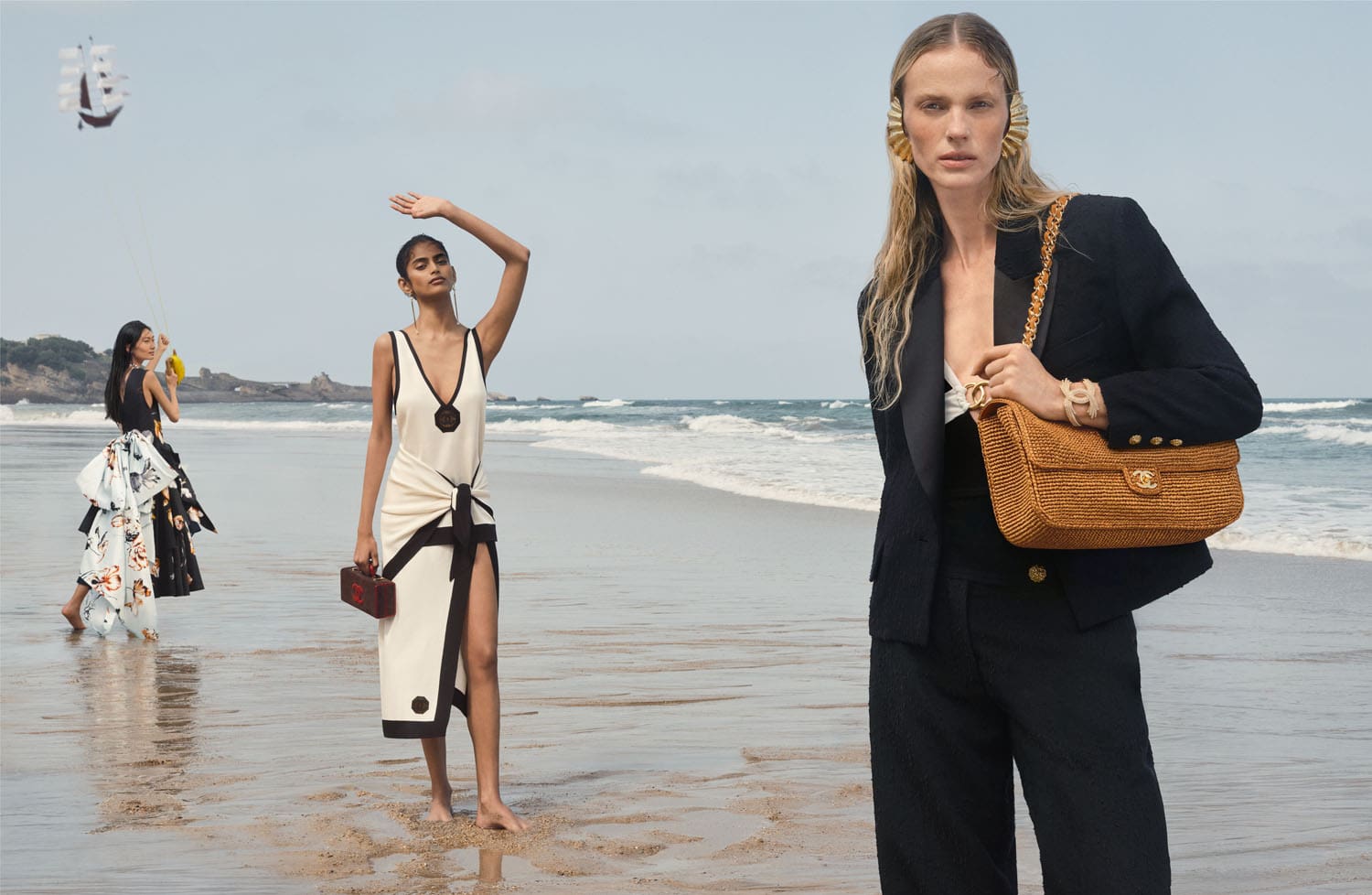
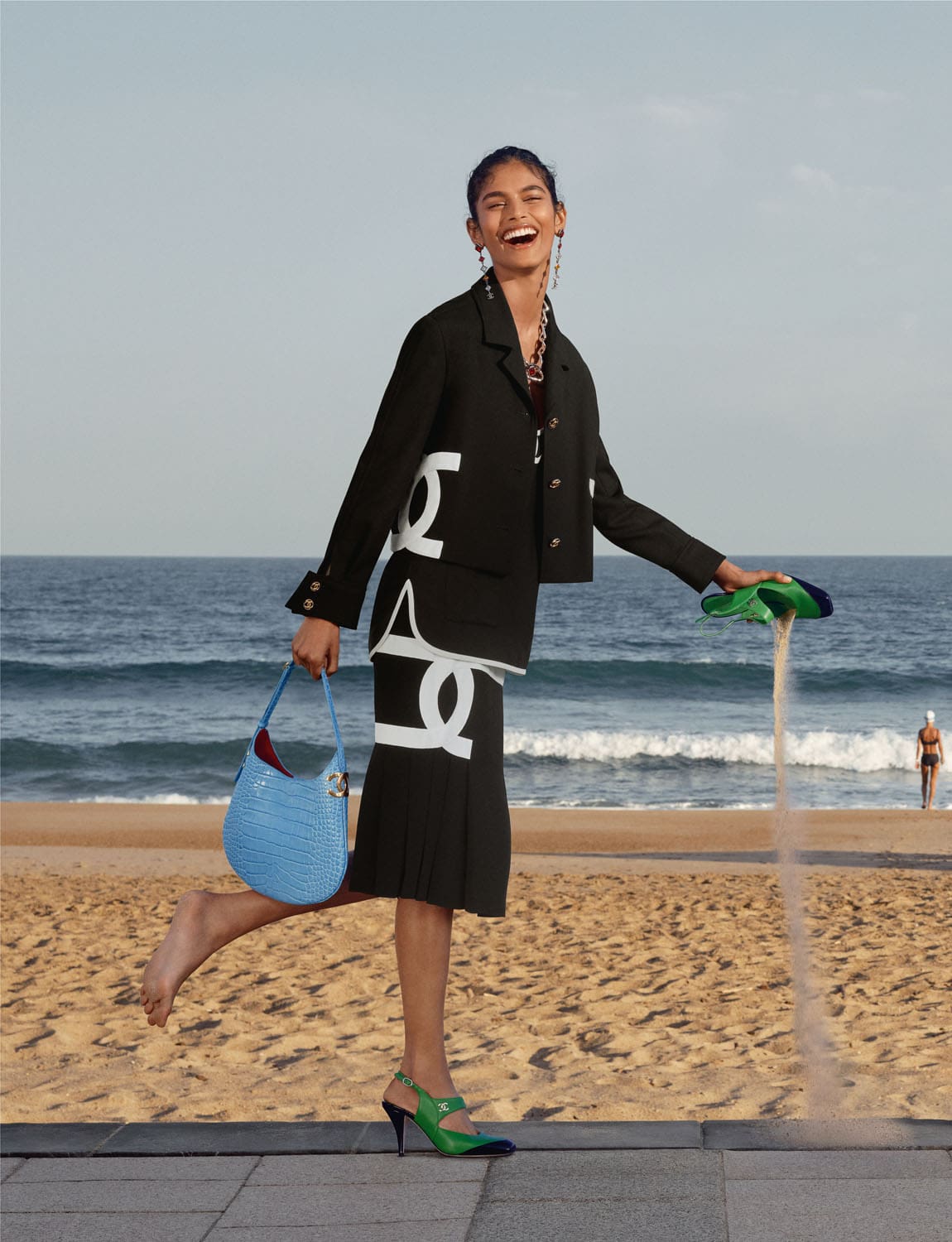
Exactly one hundred years later, Blazy marks the centenary not with reverent taxidermy, but with bite. The 1926 silhouette is resurrected and recast as the “revenge dress.” It opens the wardrobe with austere discipline, only to unravel polite expectations. A discreet archival signature from the original design—the delicate bow placed low at the back—is radically amplified into an architectural, oversized purse. Drifting across skirts and clinging to hips, the motif moves from decorative afterthought to structural weight, turning a historic gesture of modesty into an assertive, kinetic statement.
The Saline Wardrobe: Salt-Bleached Canvases and Trucker Marinières
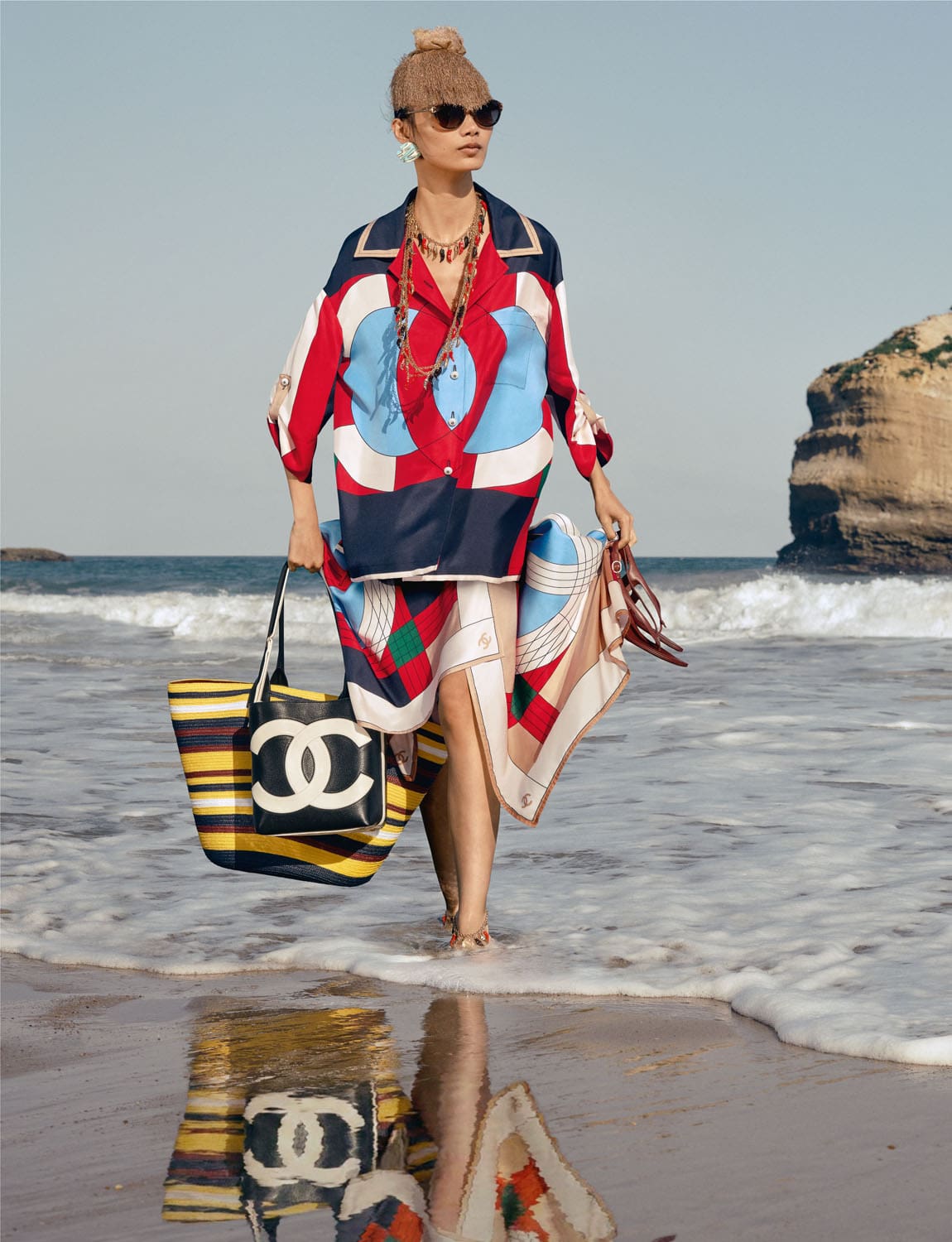
Blazy’s genius has always resided in his tactile intellect, and here he confronts the canon of Chanel tweeds with the physical reality of the ocean. The collection rejects the stiffness of town tailoring in favor of cotton-canvas suits that look salted, sun-bleached, and wind-cured. Trousers and wraps borrow the unencumbered geometry of the pareo, sliding effortlessly between one- and two-piece assemblies.
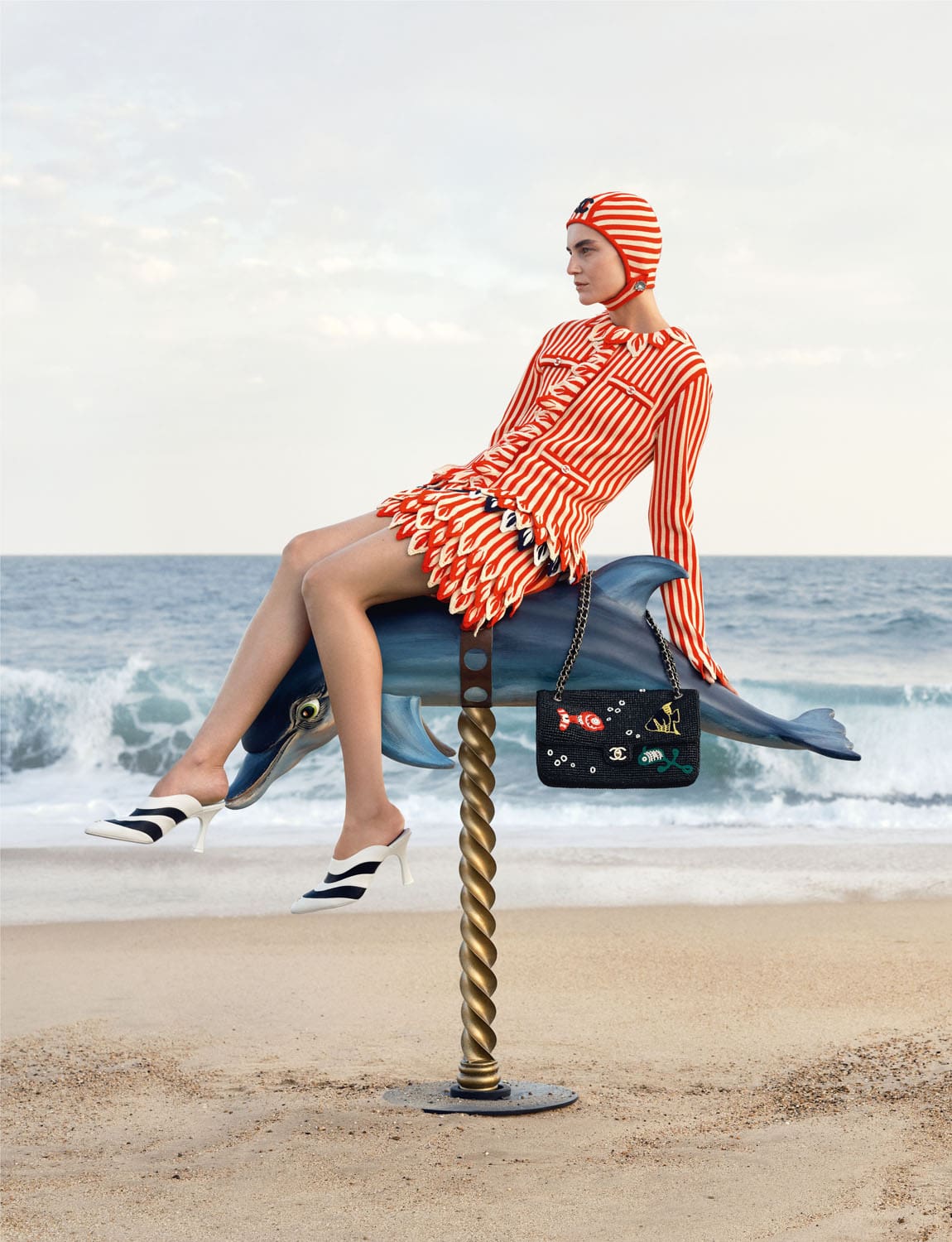
The sacred maritime uniform receives an equally unsentimental upgrade. The quintessential sailor top—the historic jersey marinière that Coco appropriated from local fishermen—is re-engineered with a sharp, utilitarian trucker collar. Paired with fluid silk overshirts and airy tailoring, it strips away any lingering bourgeois sentimentality, offering instead an athletic, unbothered posture calibrated for a life lived outdoors.
Basque Irony and Marine Surrealism
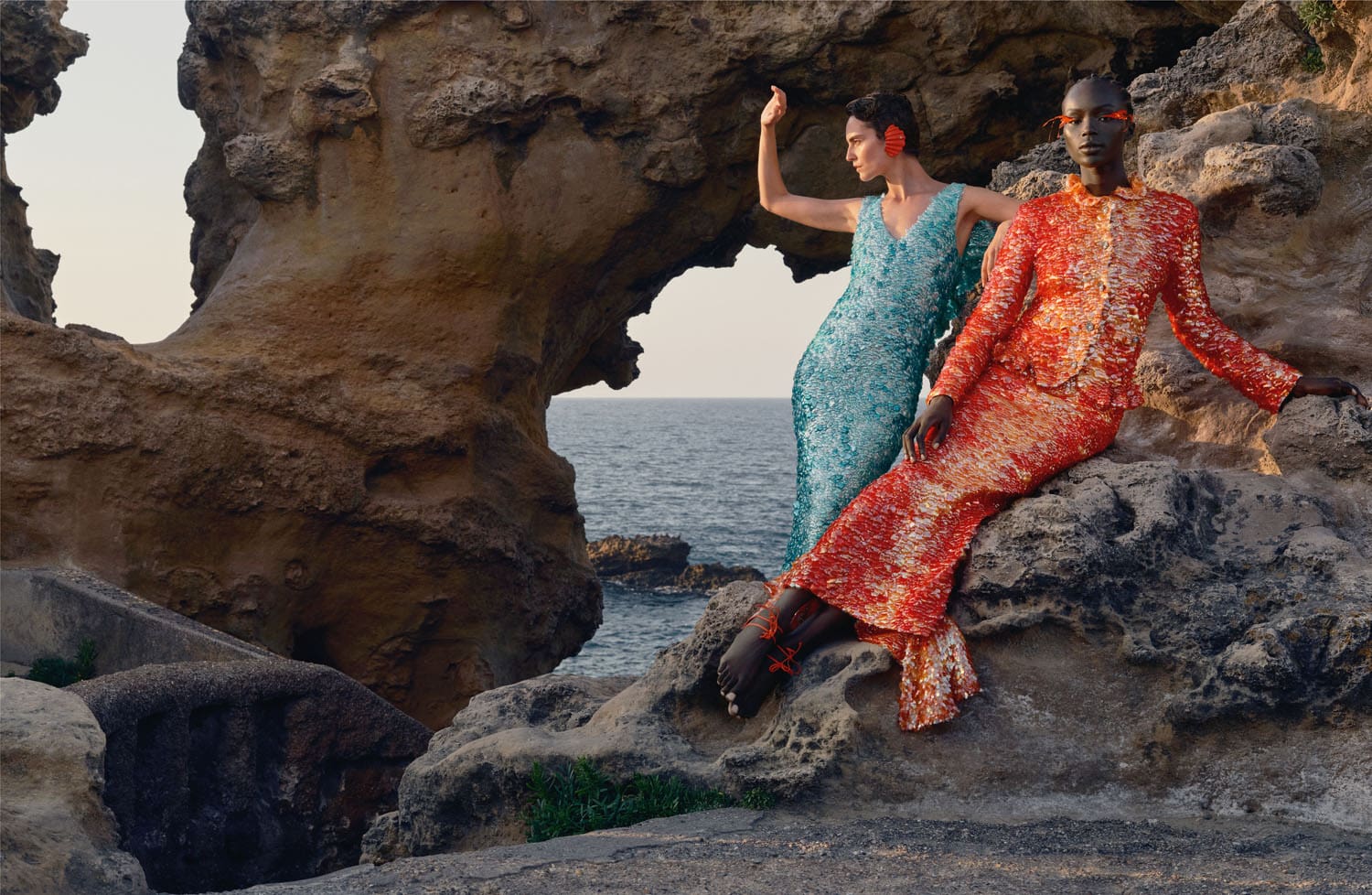
Regionalism in high fashion frequently slides into caricatured pastiche. Blazy bypasses the trap by treating Basque iconography with wry, poetic irreverence. The fierce red piment d’Espelette transforms into sculptural chili-pepper jewelry, dangling against bare clavicles with dry humor. The twisted branches of the tamarisk—Biarritz’s resilient coastal guardian—surface across all-over knits and jacquard overcoats that map the rugged Atlantic coastline.
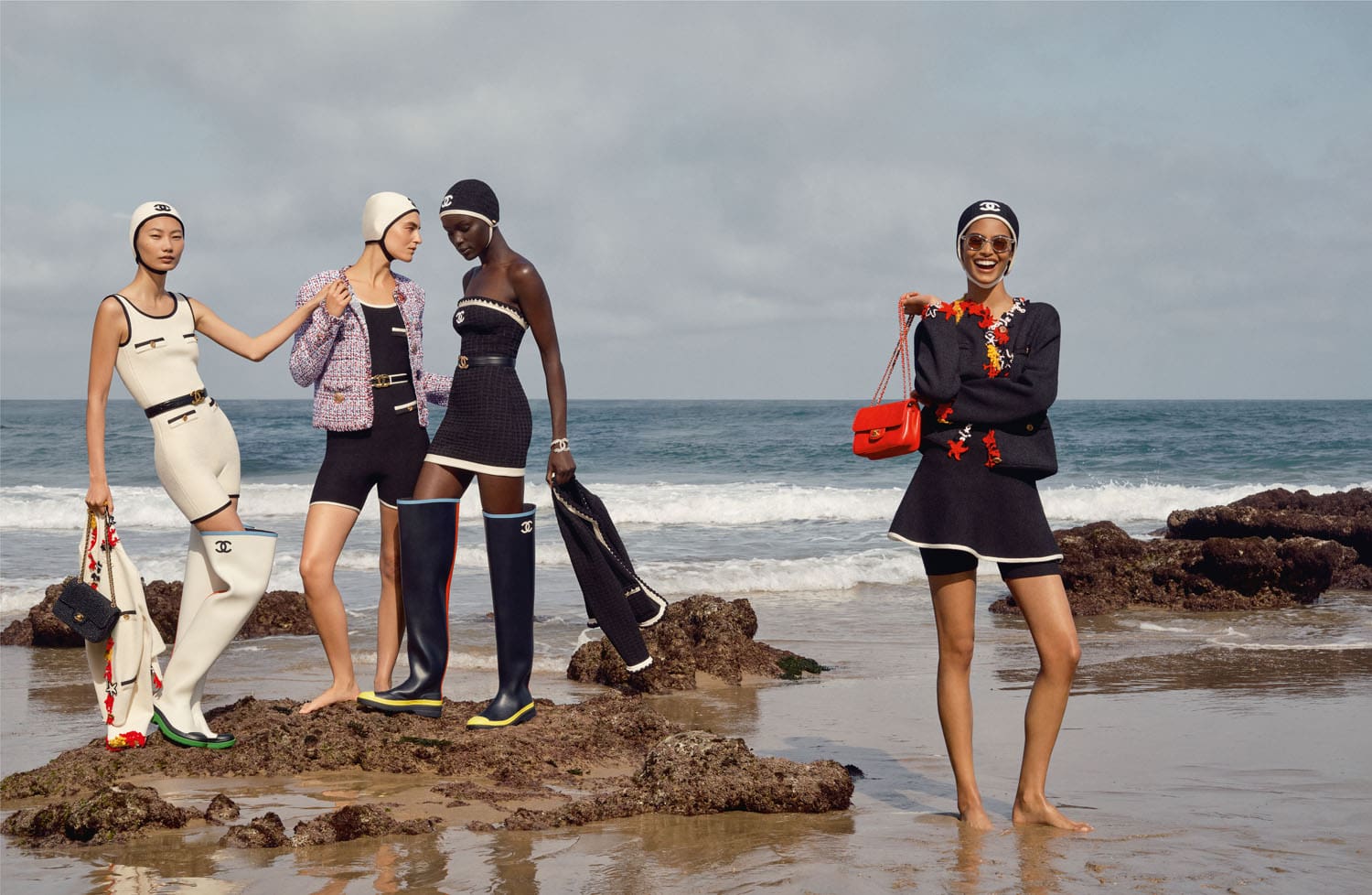
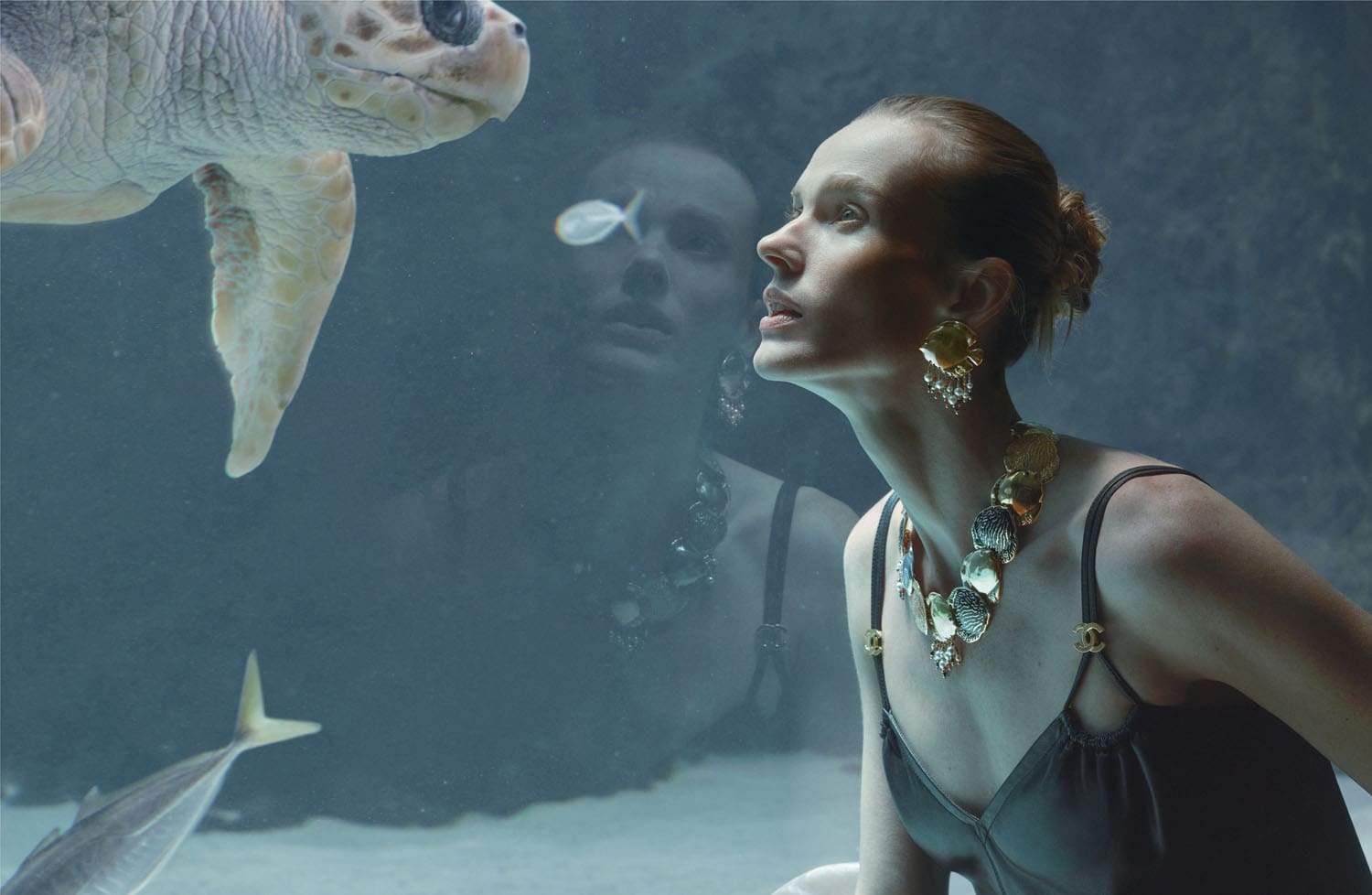
The ocean itself creeps ashore in a playful, almost surrealist parade. Buttons take the form of miniature crabs and swimming fish, fastening jackets over coral-cut dresses embroidered with shimmering beads. In a nod to early twentieth-century bathers, playsuits share space with swimming caps and featherweight tweed jackets, capturing that precise moment when swimming attire and eveningwear trade identities under the afternoon sun.
The Monogram as Scaffolding
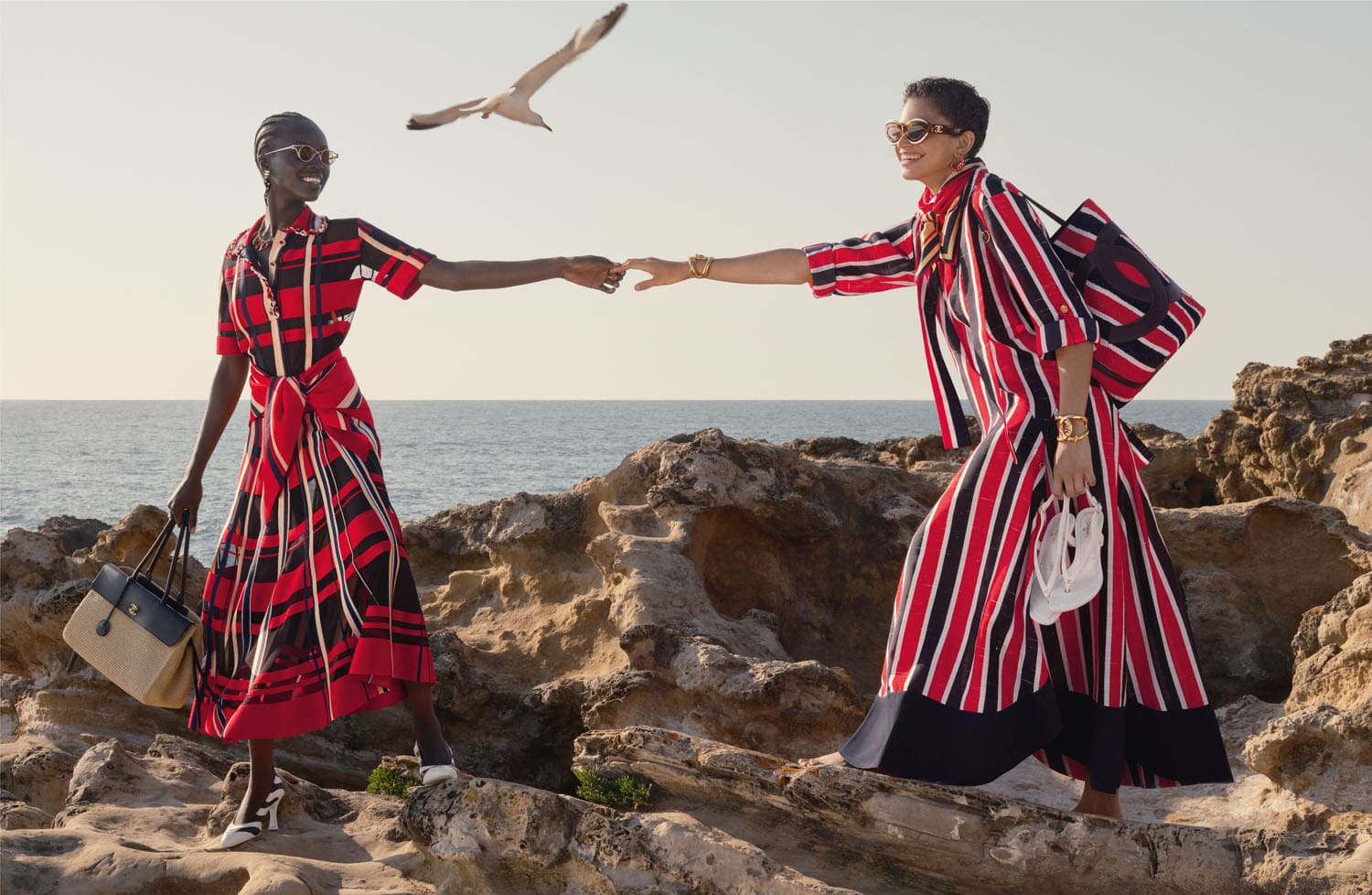
Rather than scattering the double C across surfaces like cosmetic wallpaper, Blazy incorporates the emblem directly into the architecture of the garments. The curved geometry becomes the seam, the seam becomes the silhouette. It shapes the structural contours of knit dresses, dictates the flared volume of skirts, forms the base of oversized raffia totes, and chisels the lines of supple pumps and loafers.
The materiality underneath does the heavy lifting. Weightless silks, dense flocks, cashmeres spun so fine they mimic sea breezes, and tweeds engineered exclusively for humid warmth replace heavy wools. Petticoats flash hems edged in raw raffia, while iridescent sequins ripple like wet scales under Atlantic sunlight.
By sending Josephen Akuei, Stephanie Cavalli, Ruyu Chen, Chiara Dorward, Bhavitha Mandava, Bruna Souza, and Anne Vyalitsyna onto the wet sands of the Grande Plage, Blazy avoids the pristine illusions of standard luxury campaigns. Soth’s lens captures wind-tangled hair, damp hemlines, and genuine kinetic movement. It is an assertive declaration for a new chapter: Chanel’s elegance belongs in the wild, salt-crusted air where it first learned to breathe.
See all Chanel Cruise 2026-27 Campaign