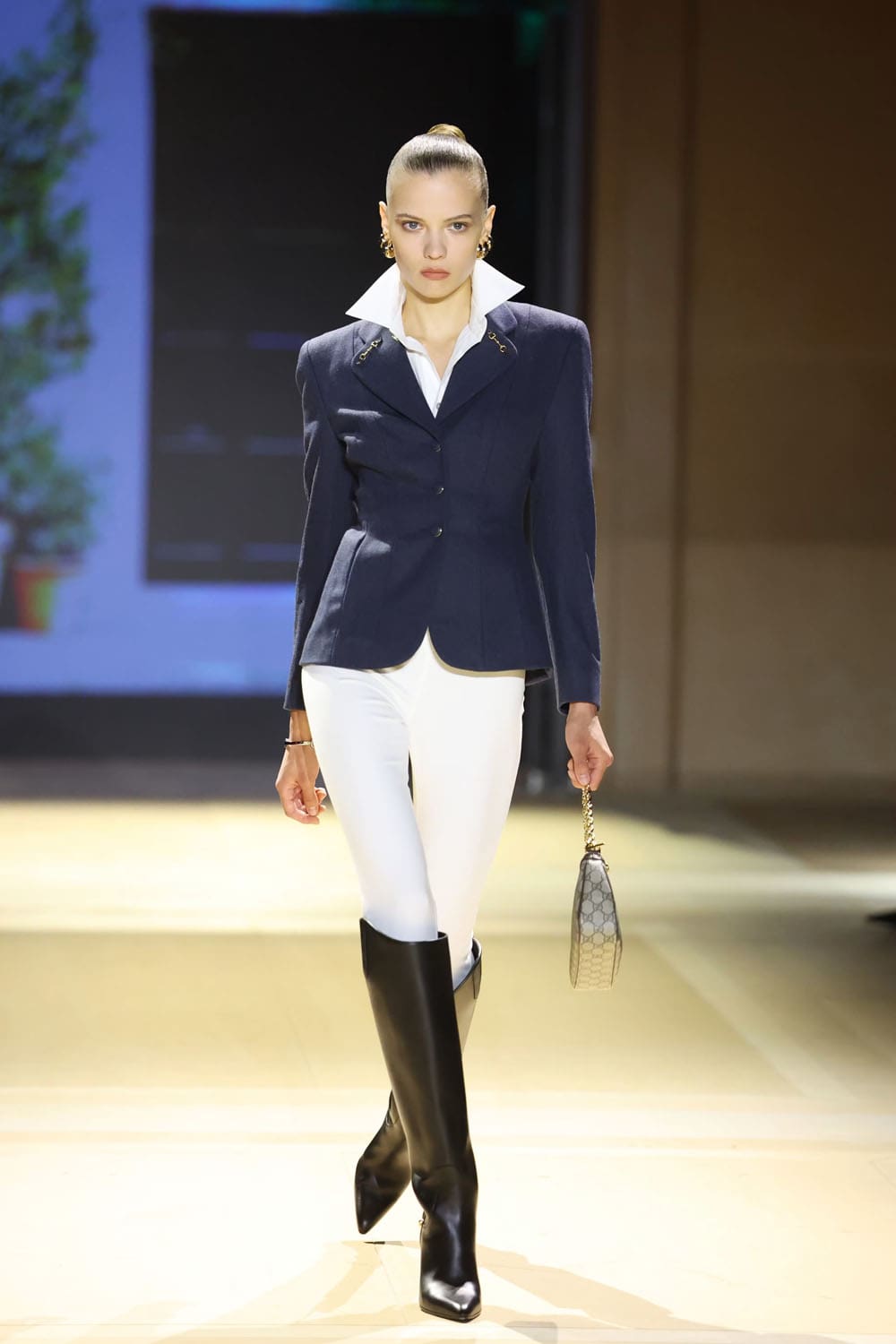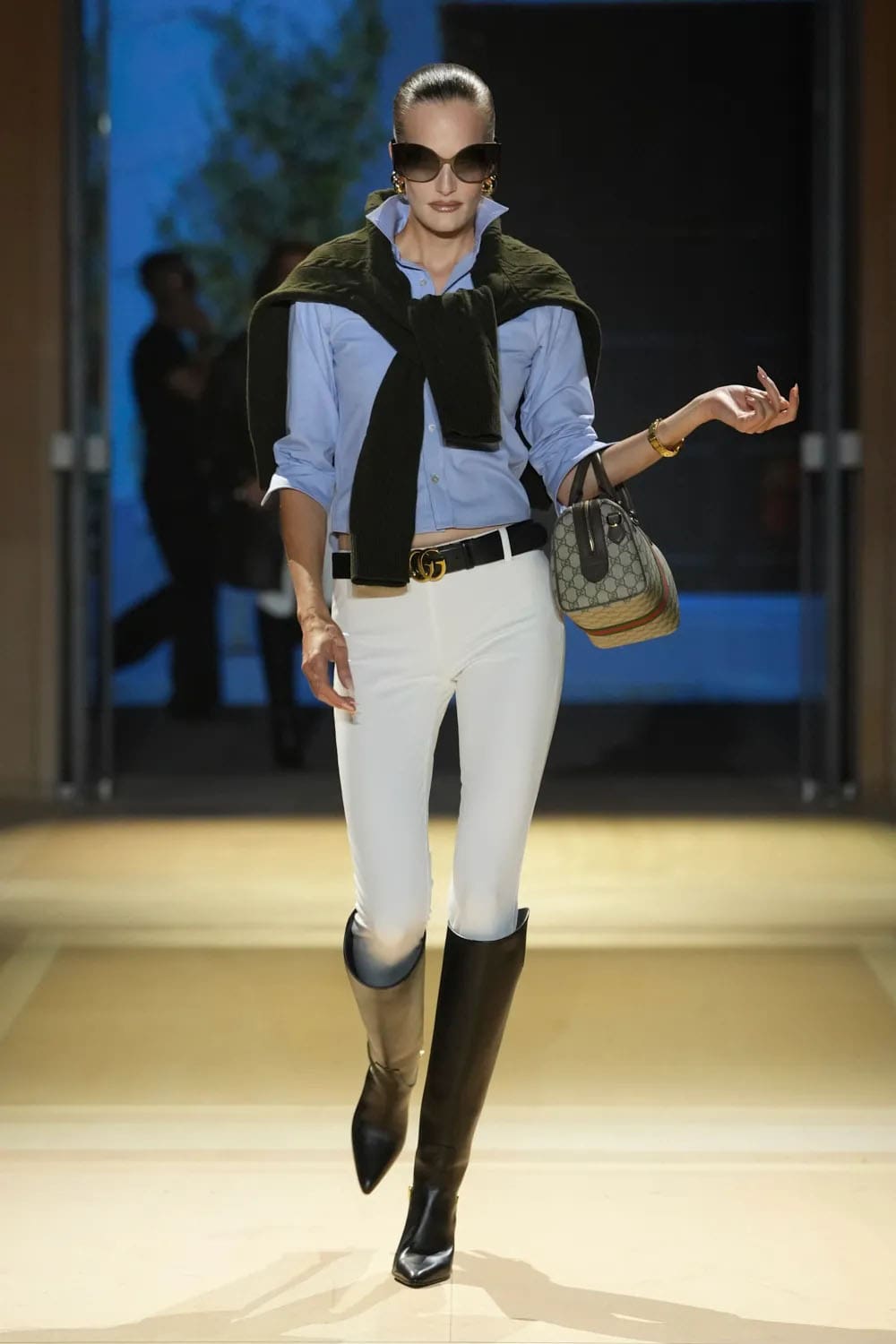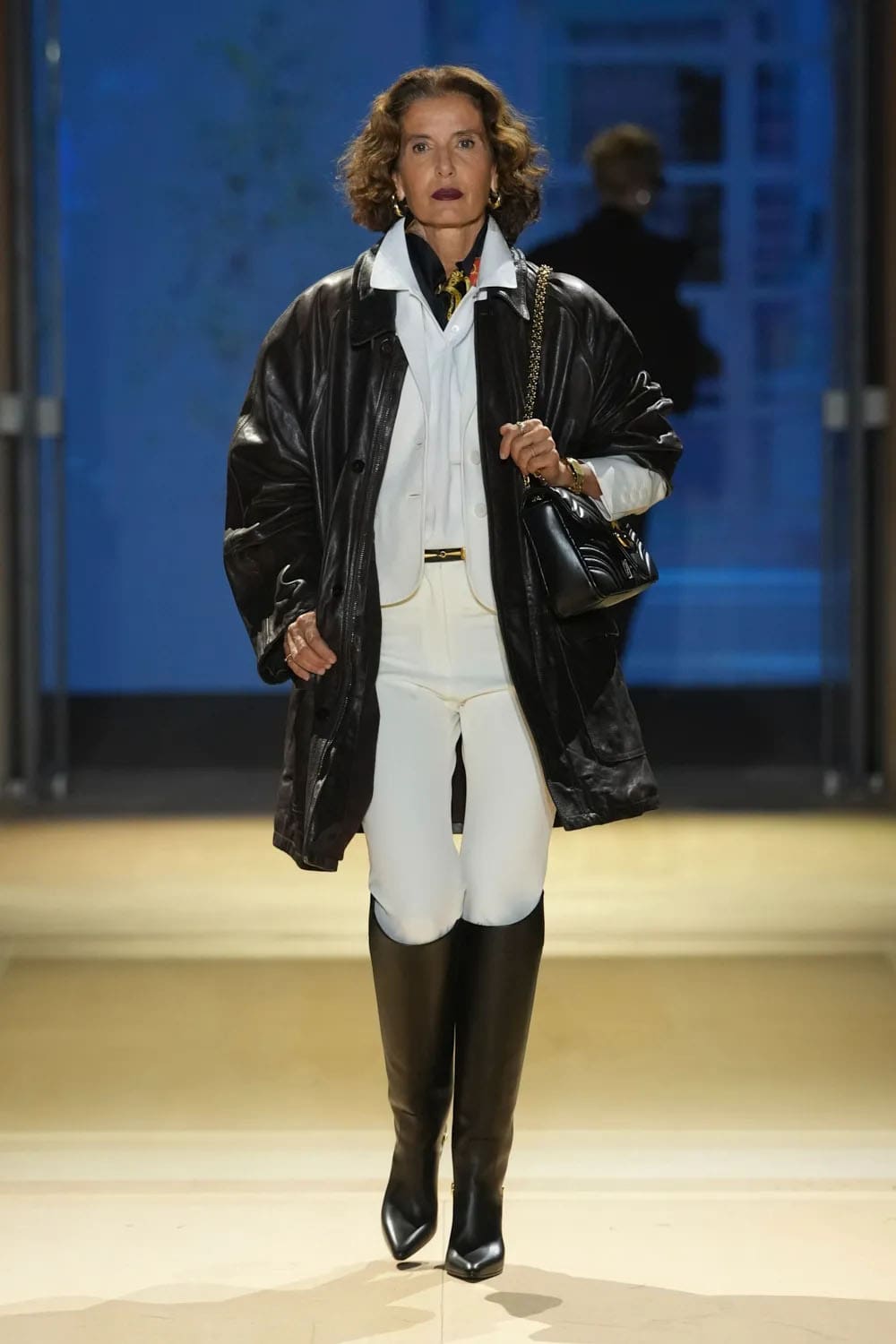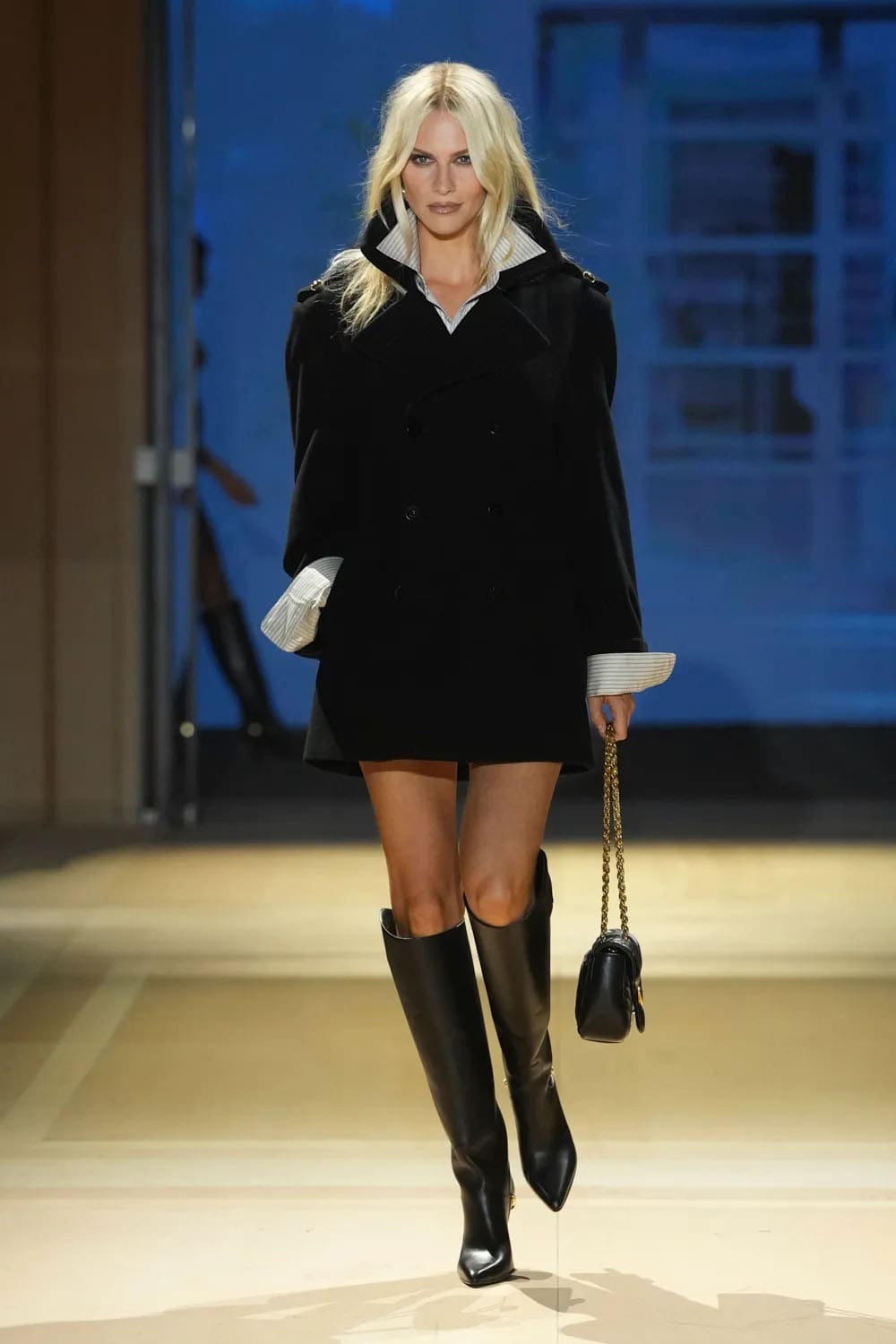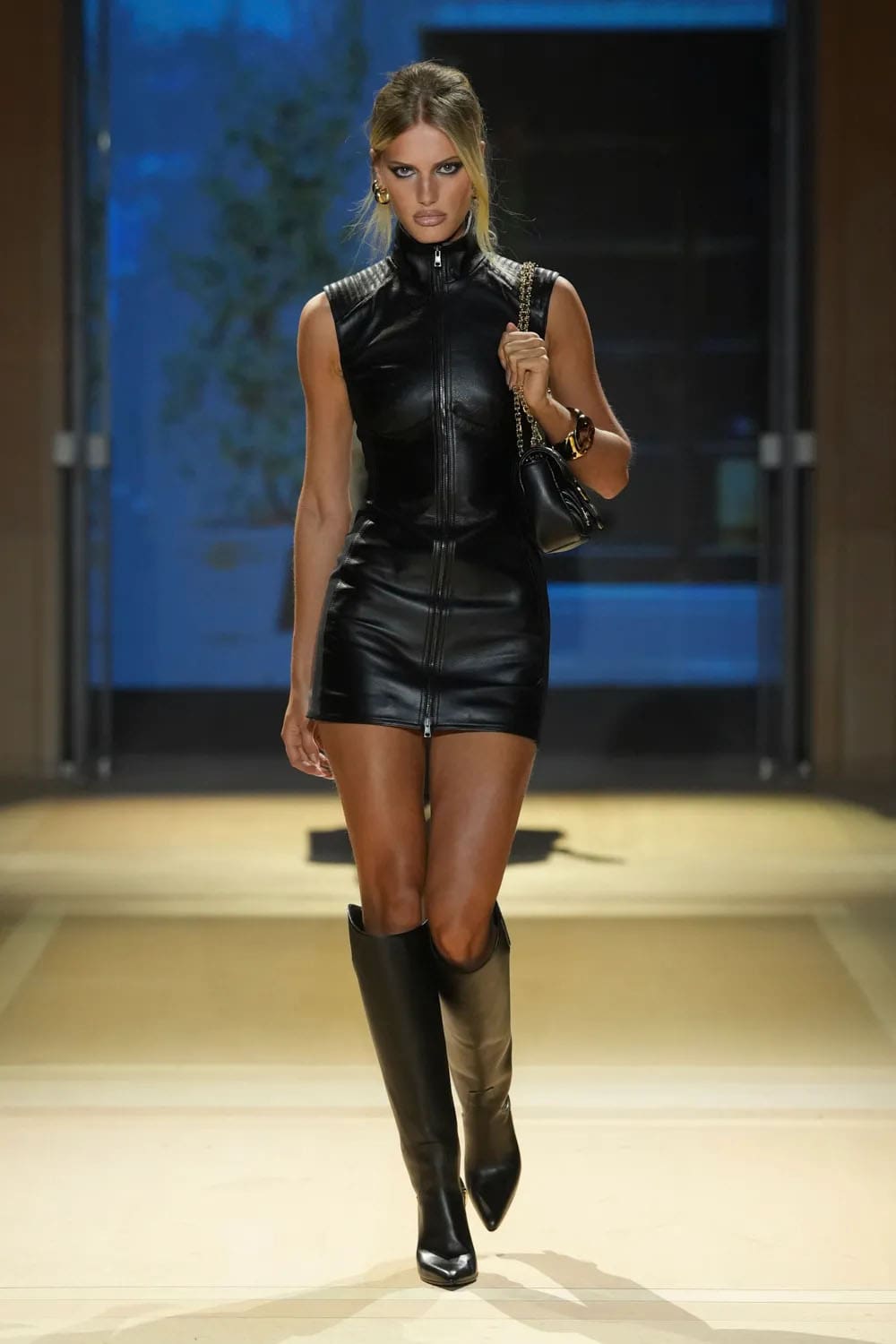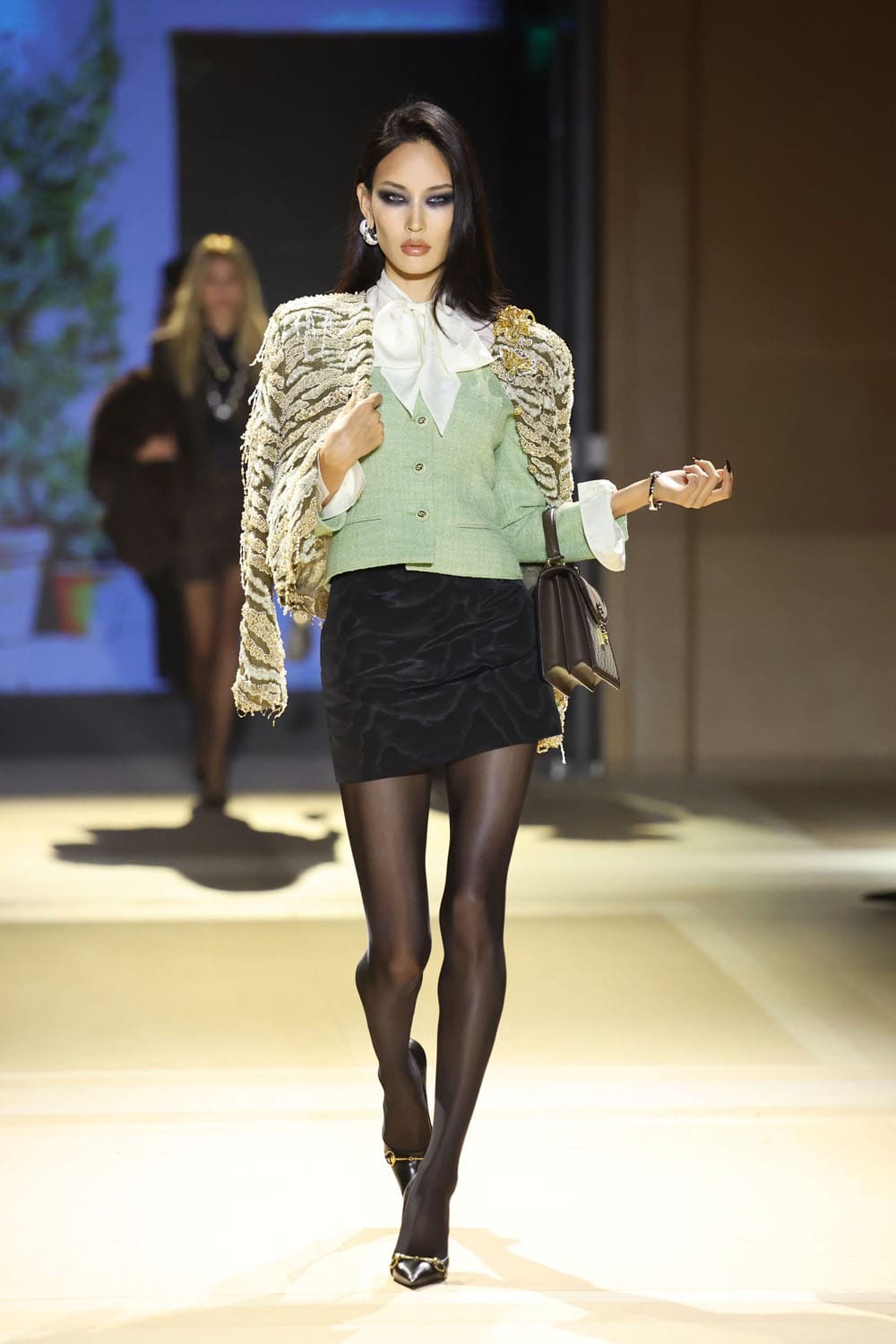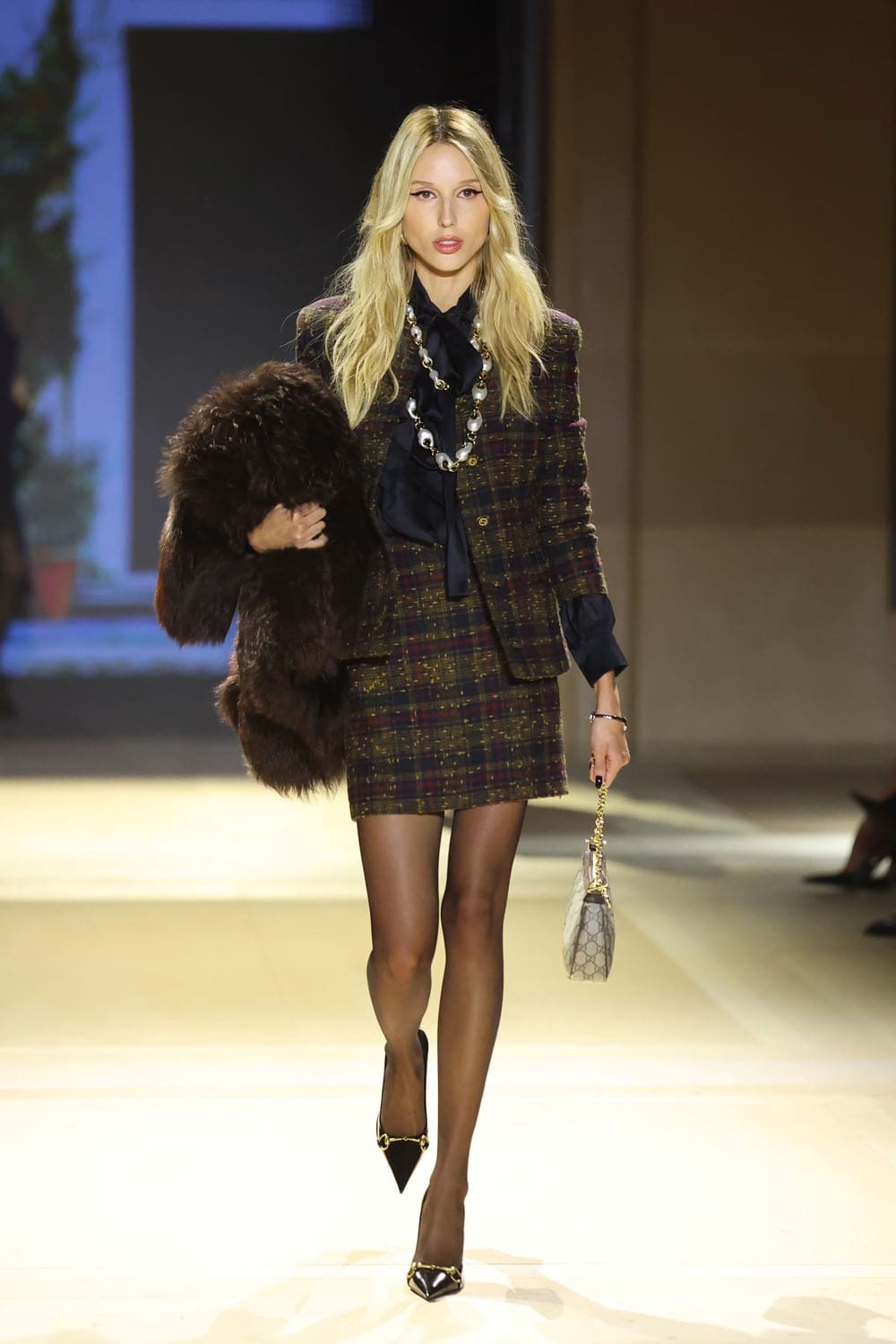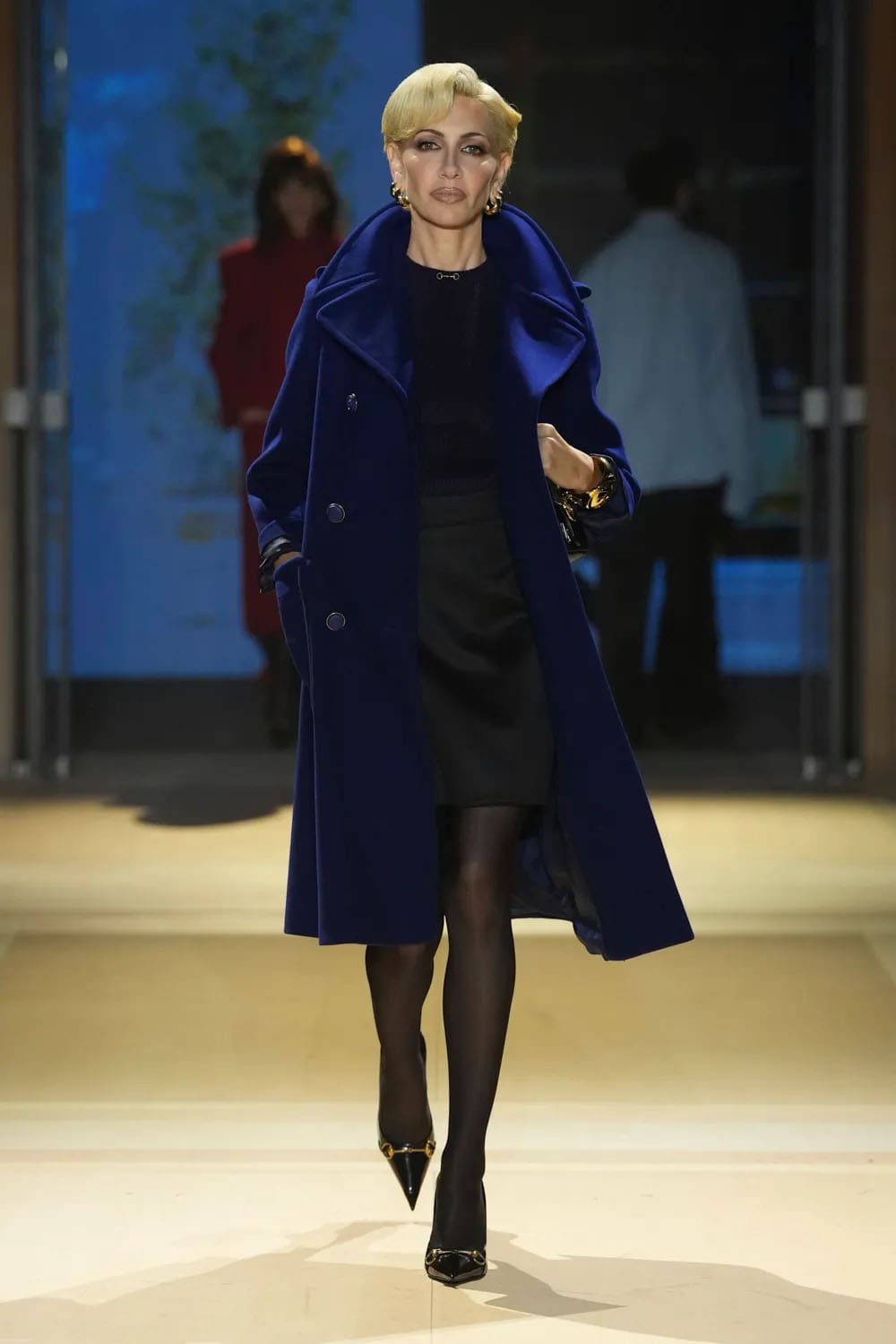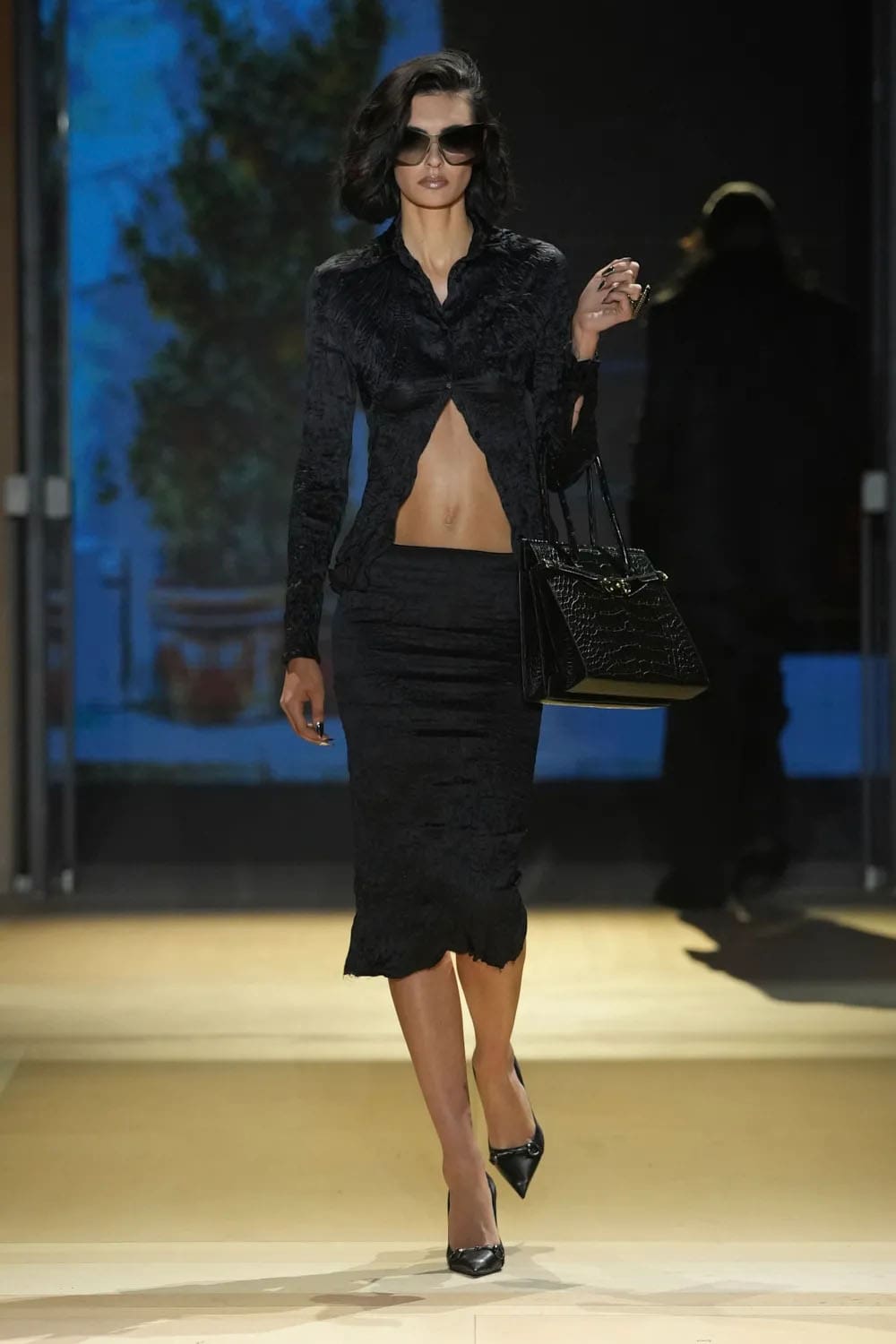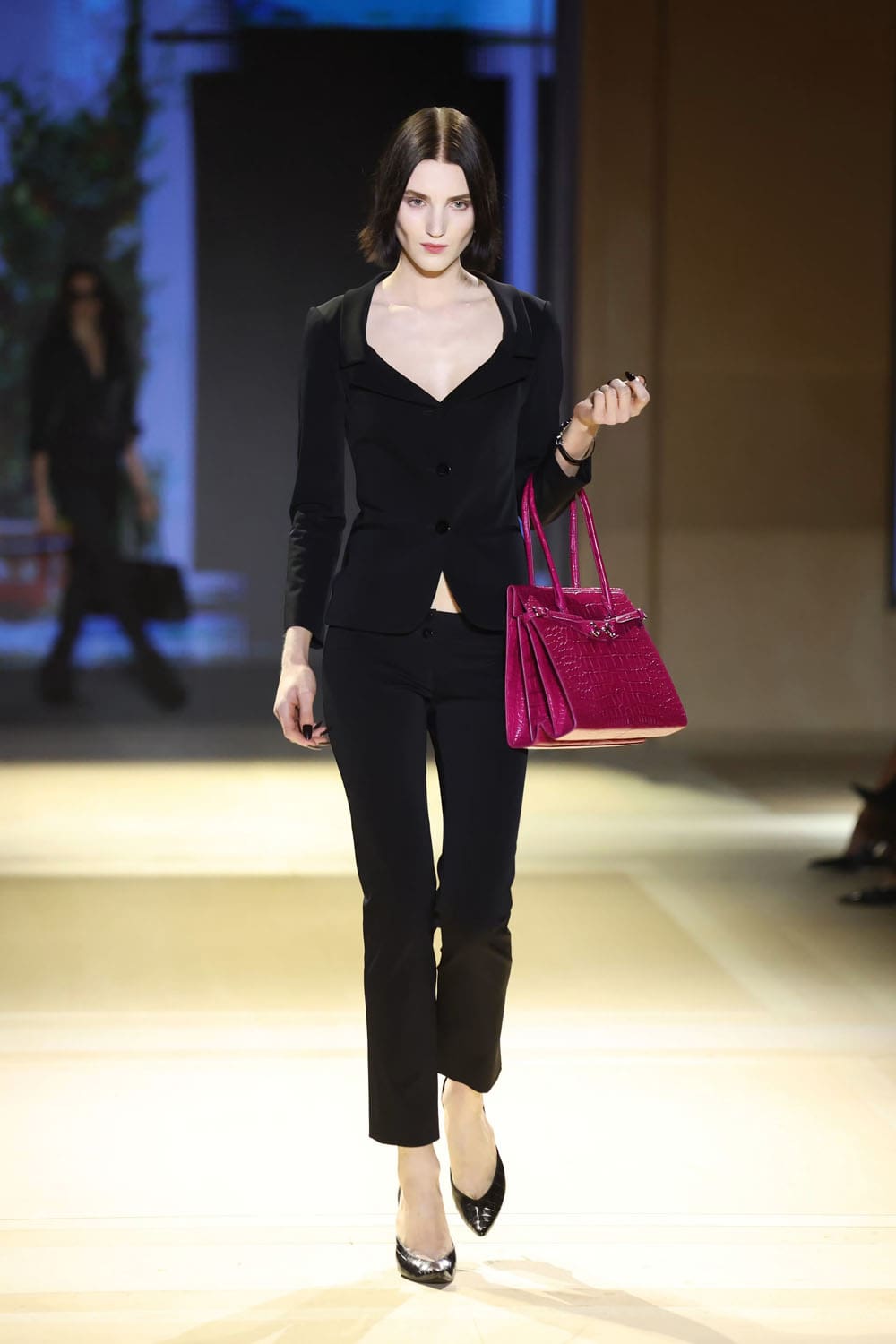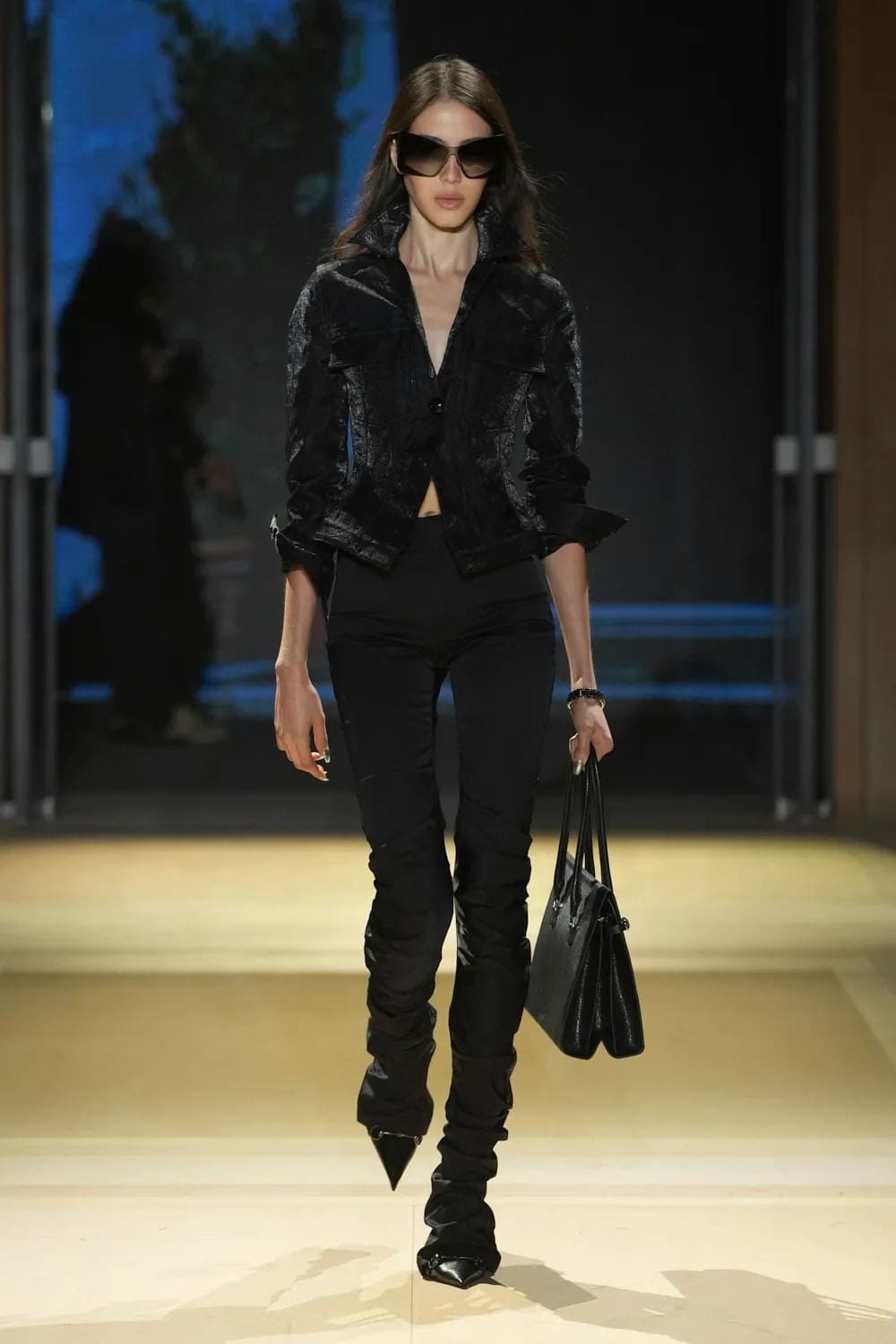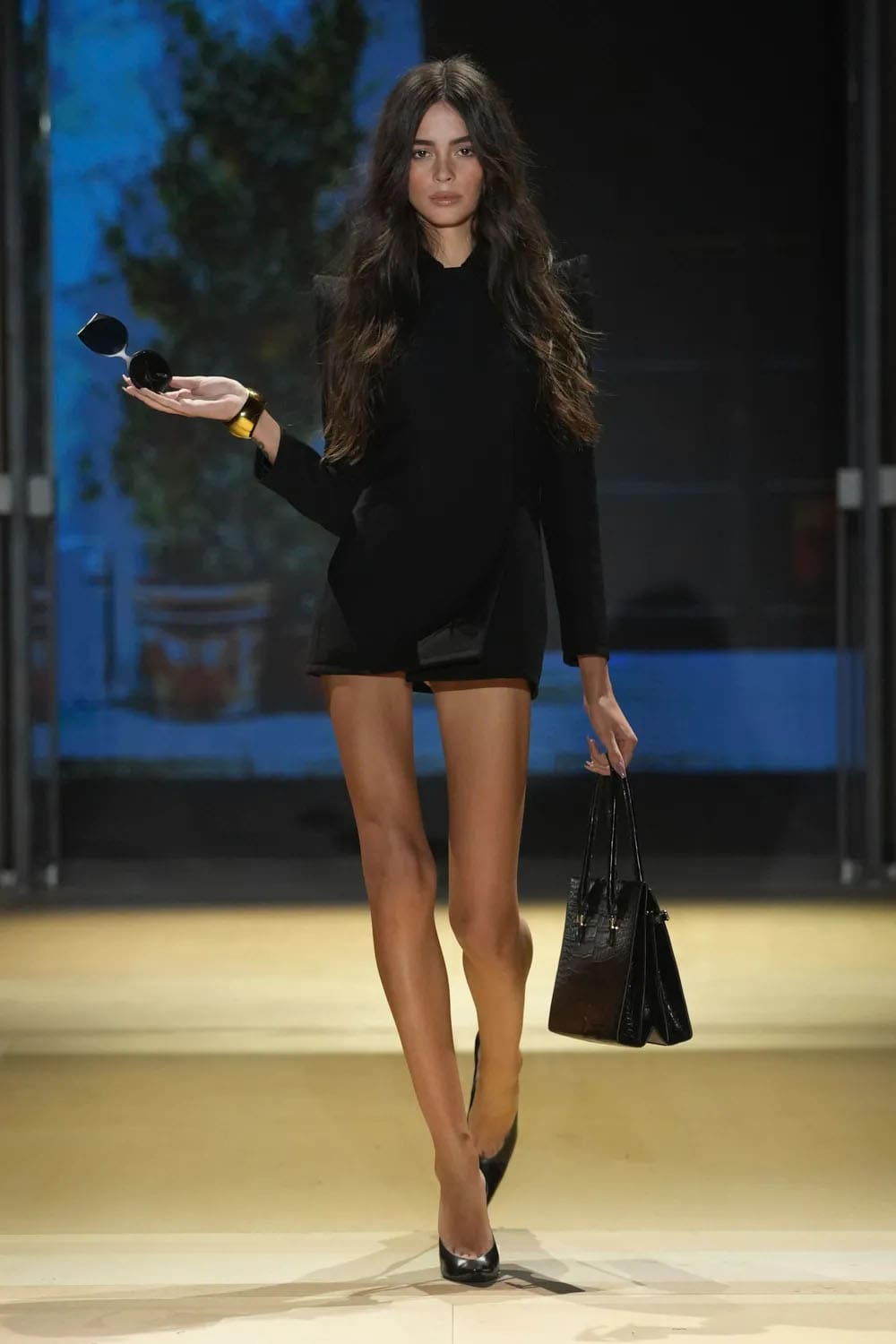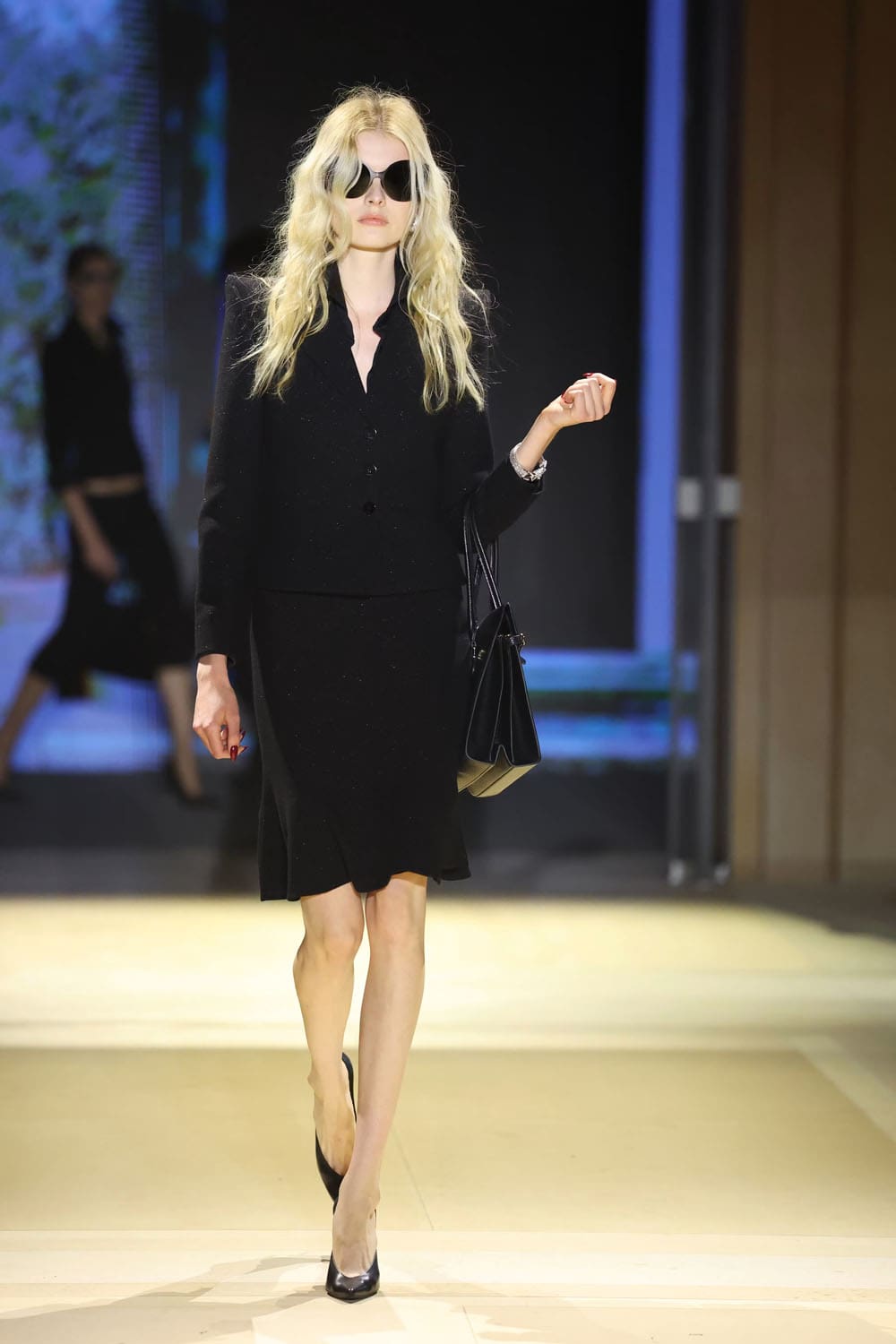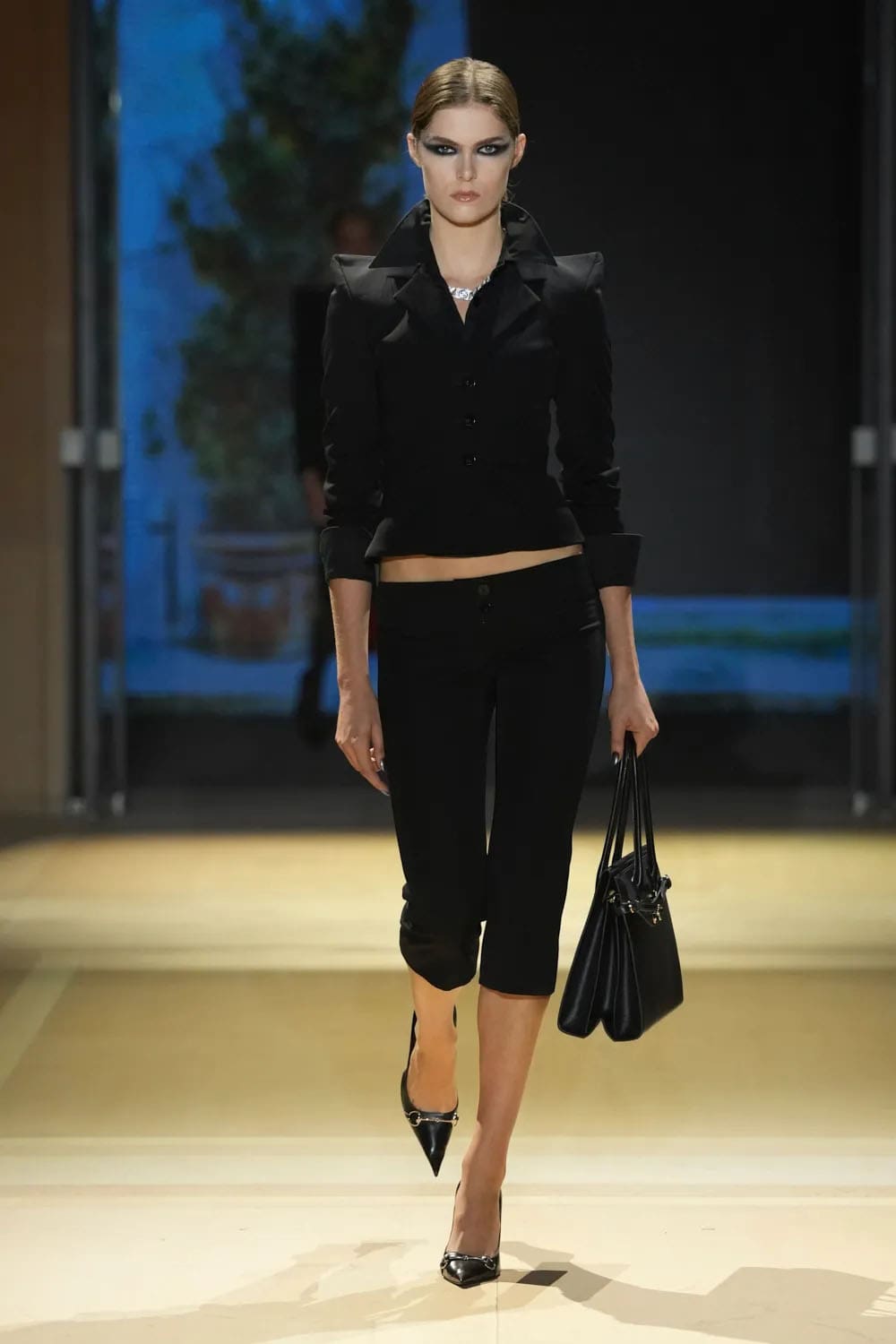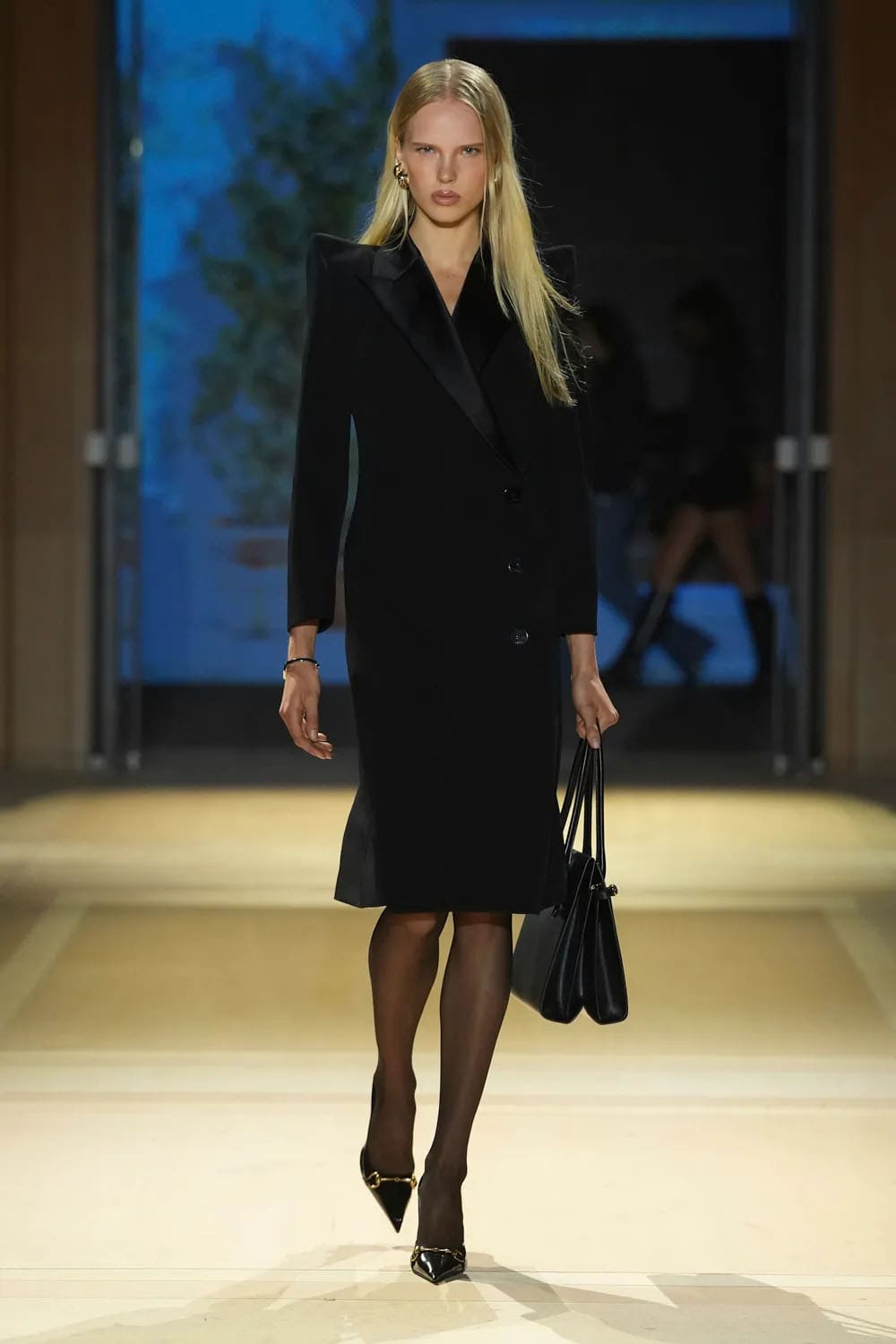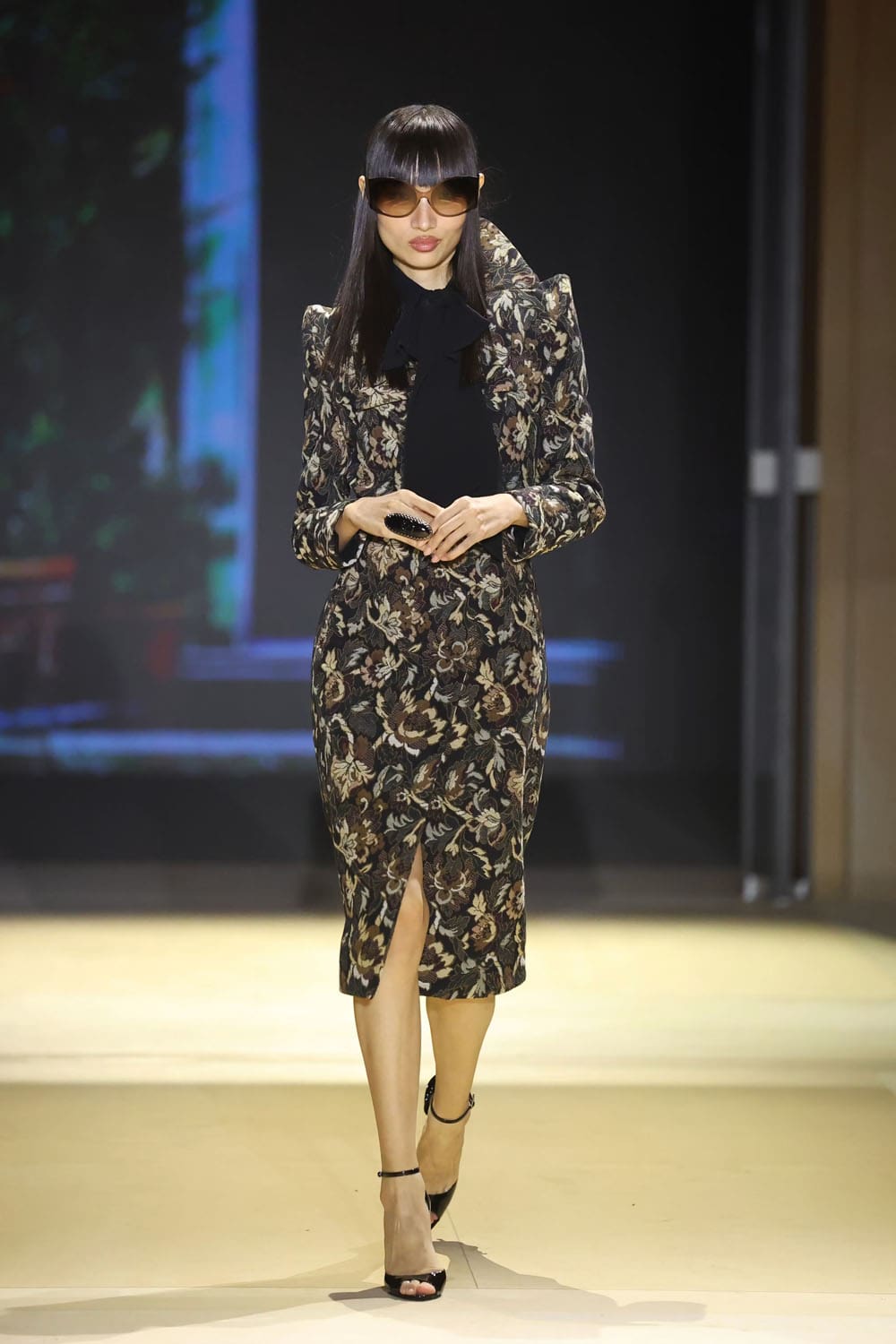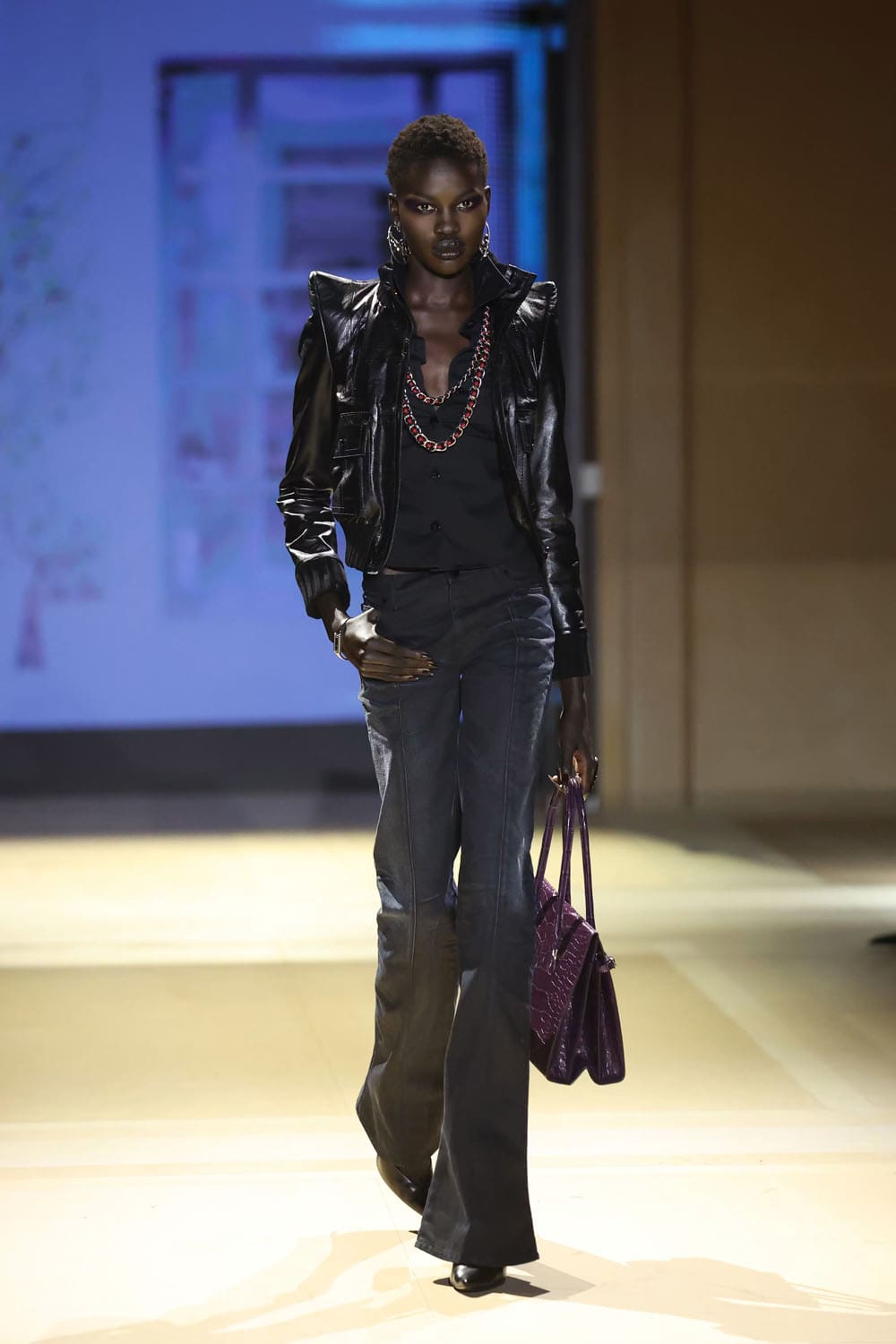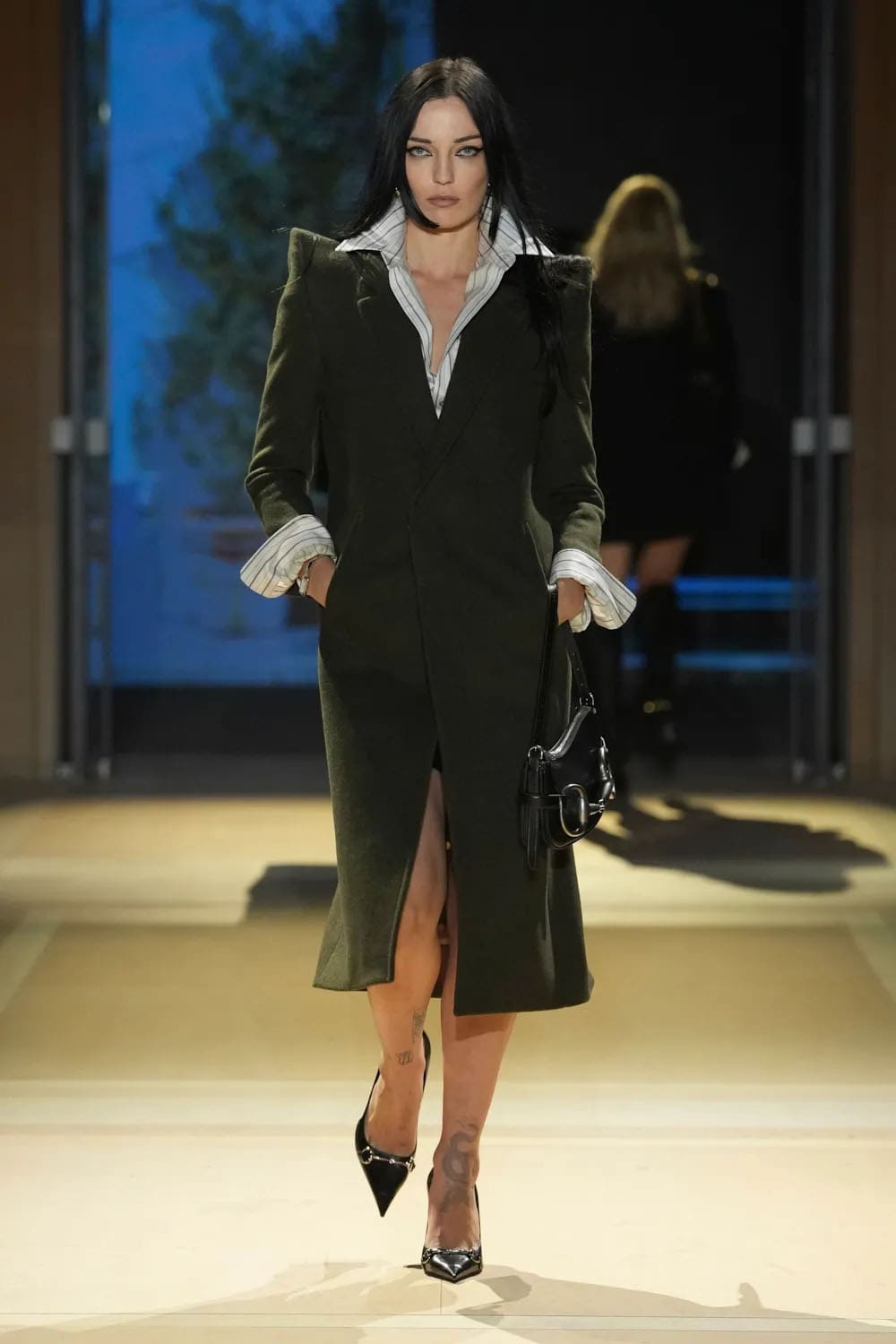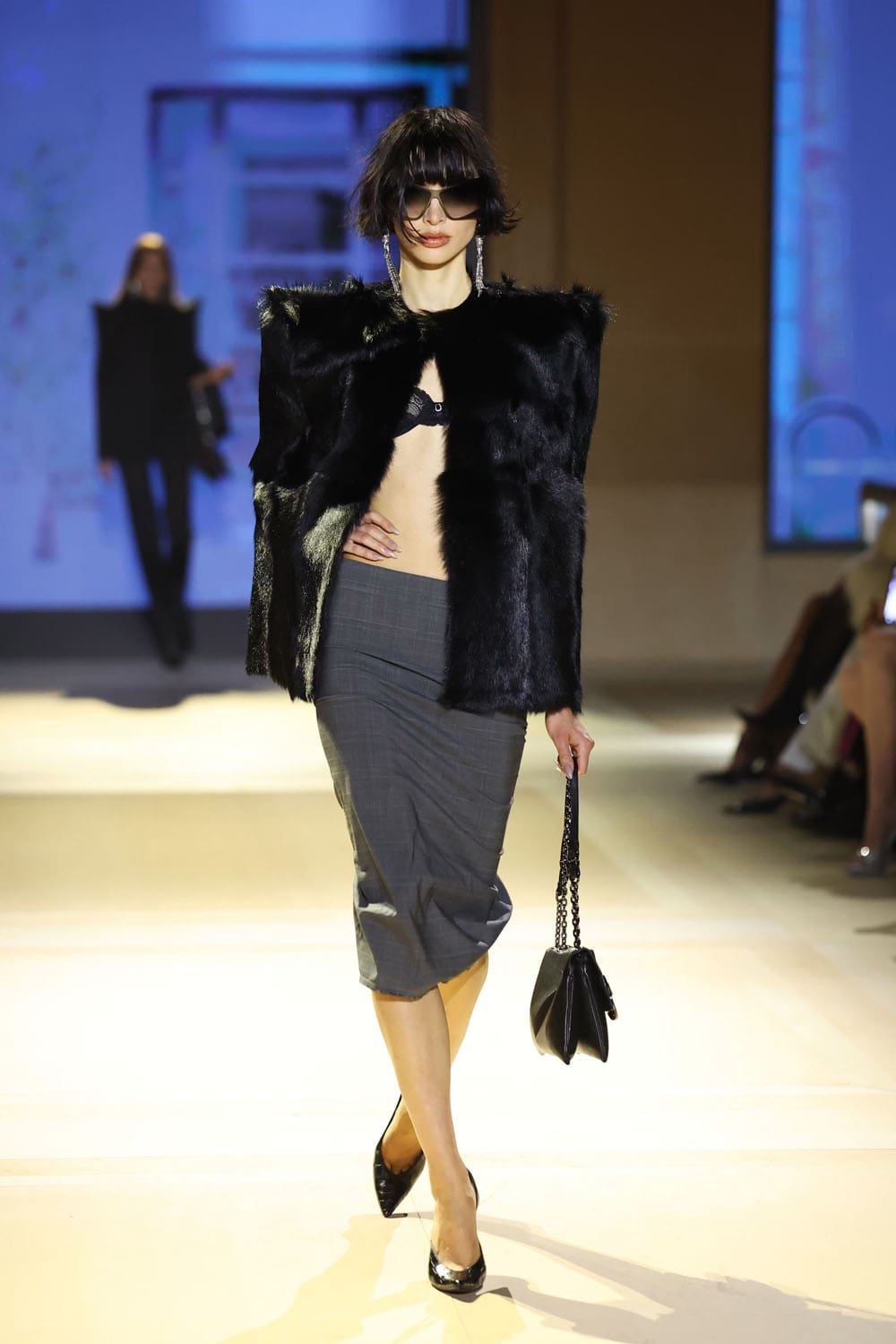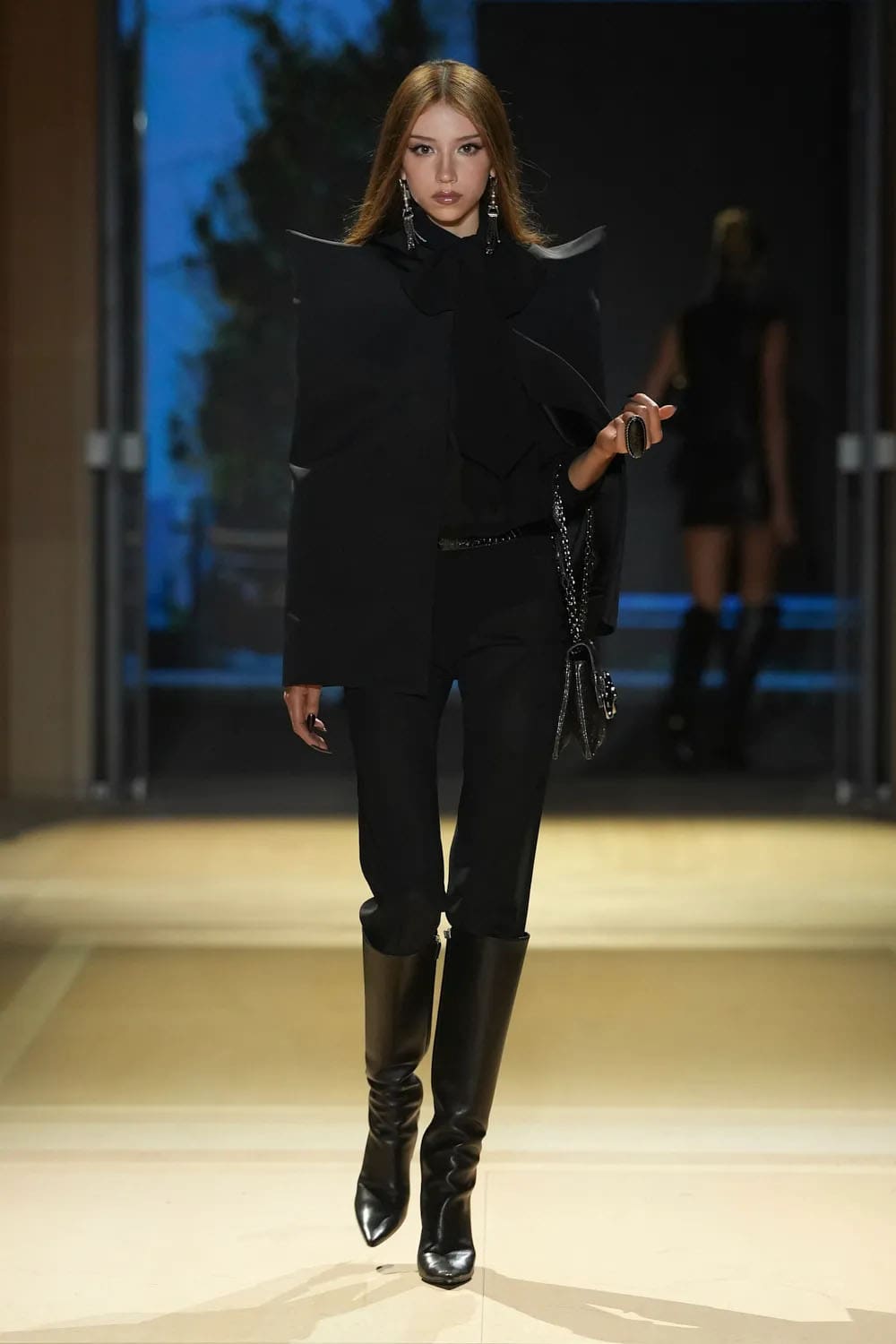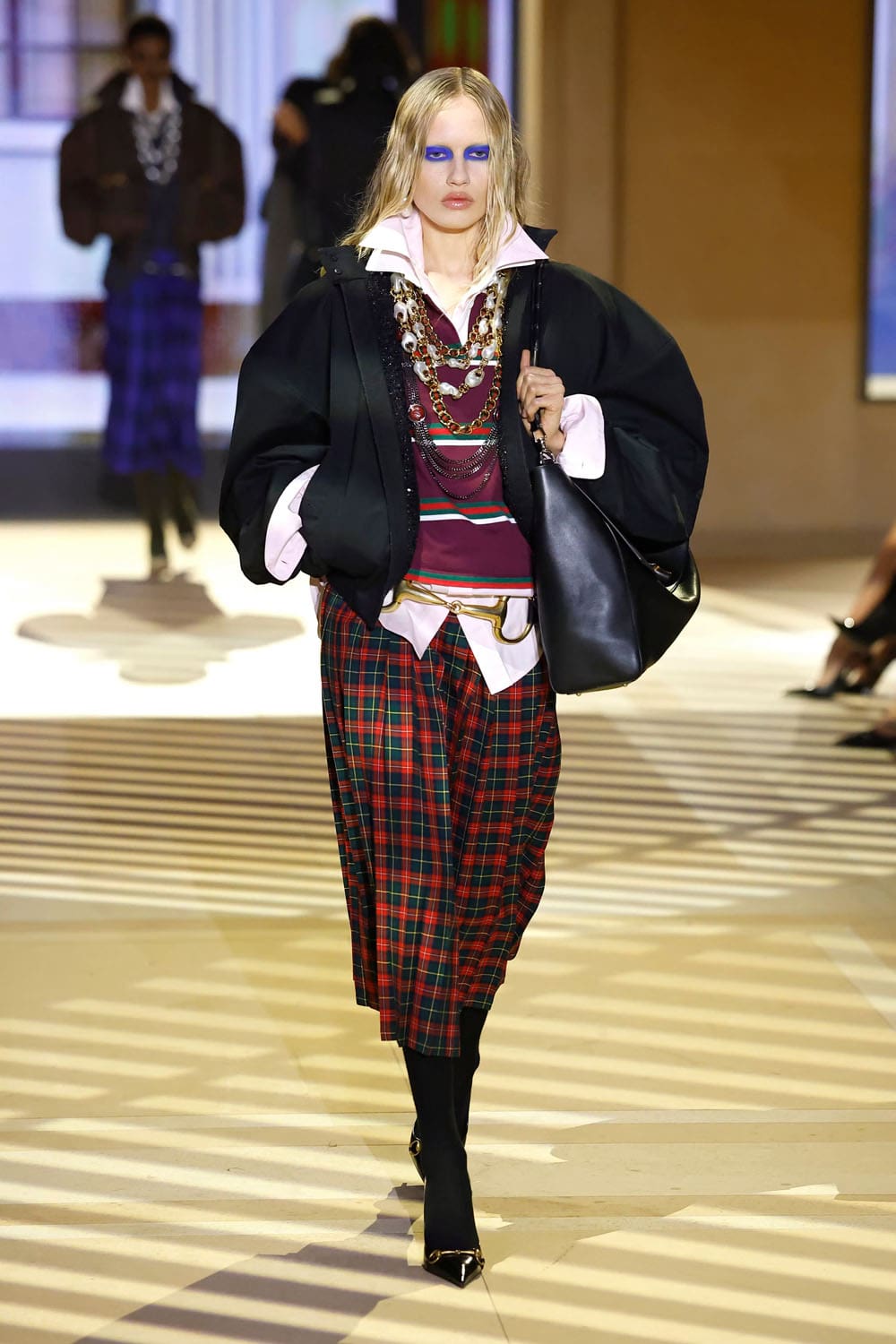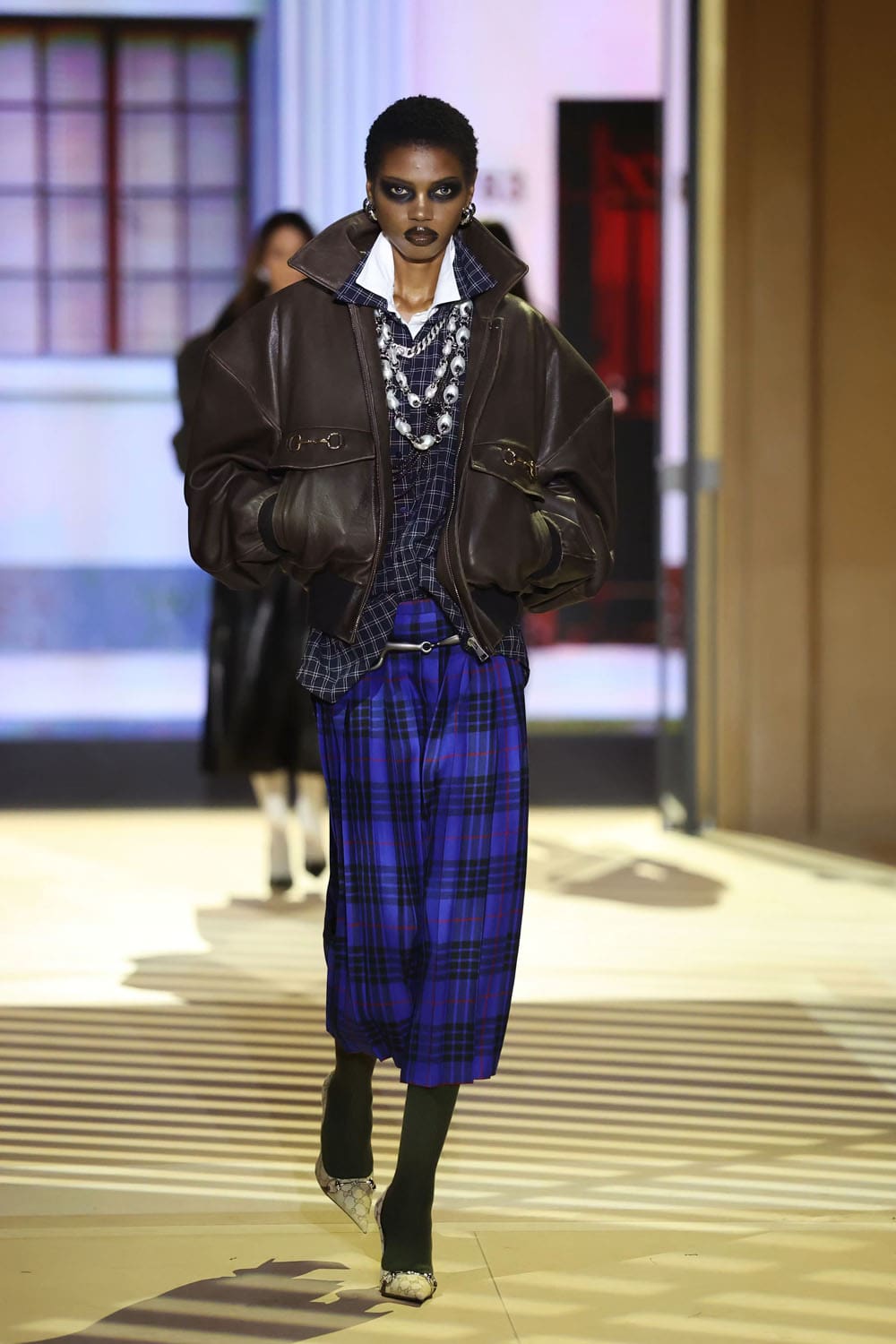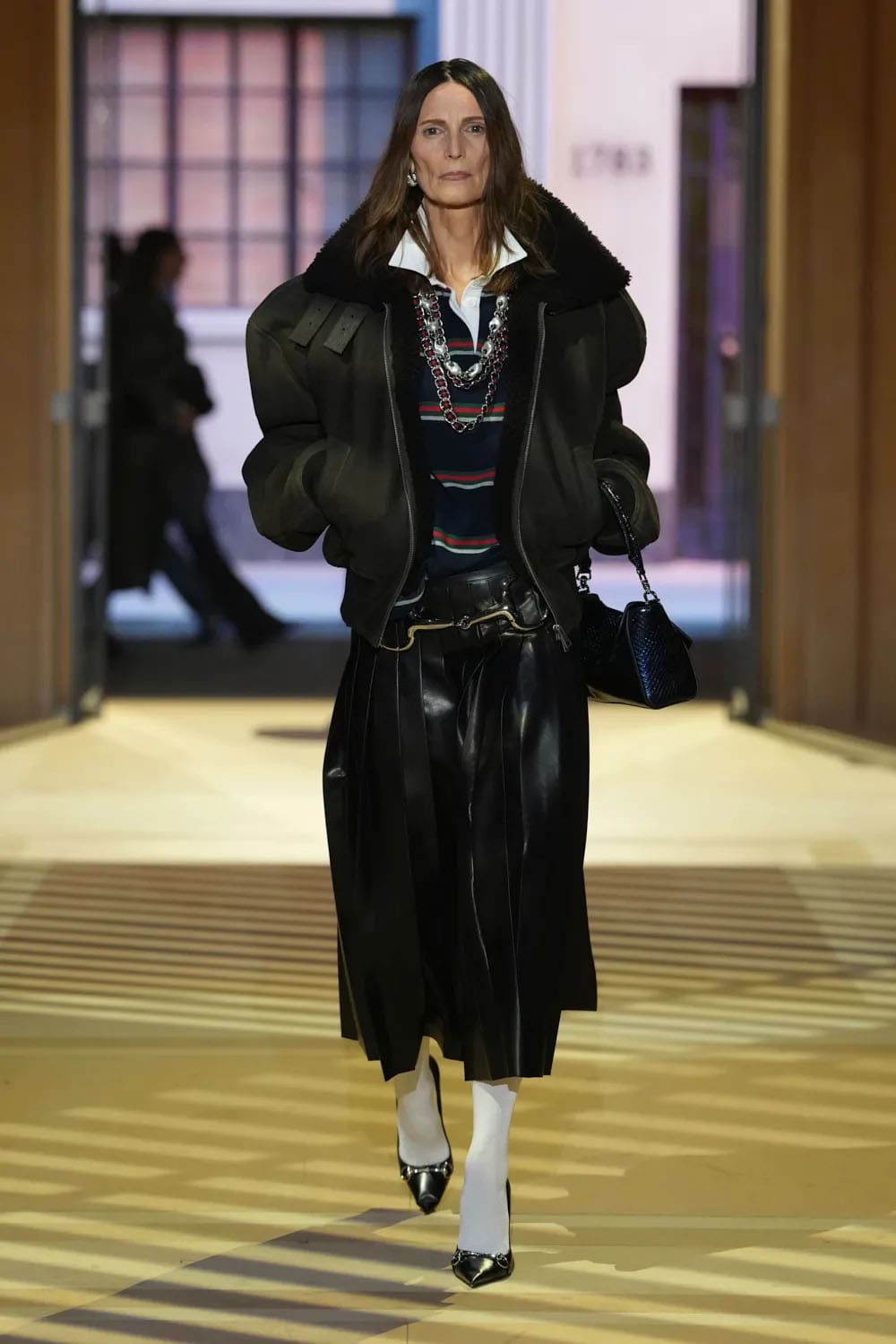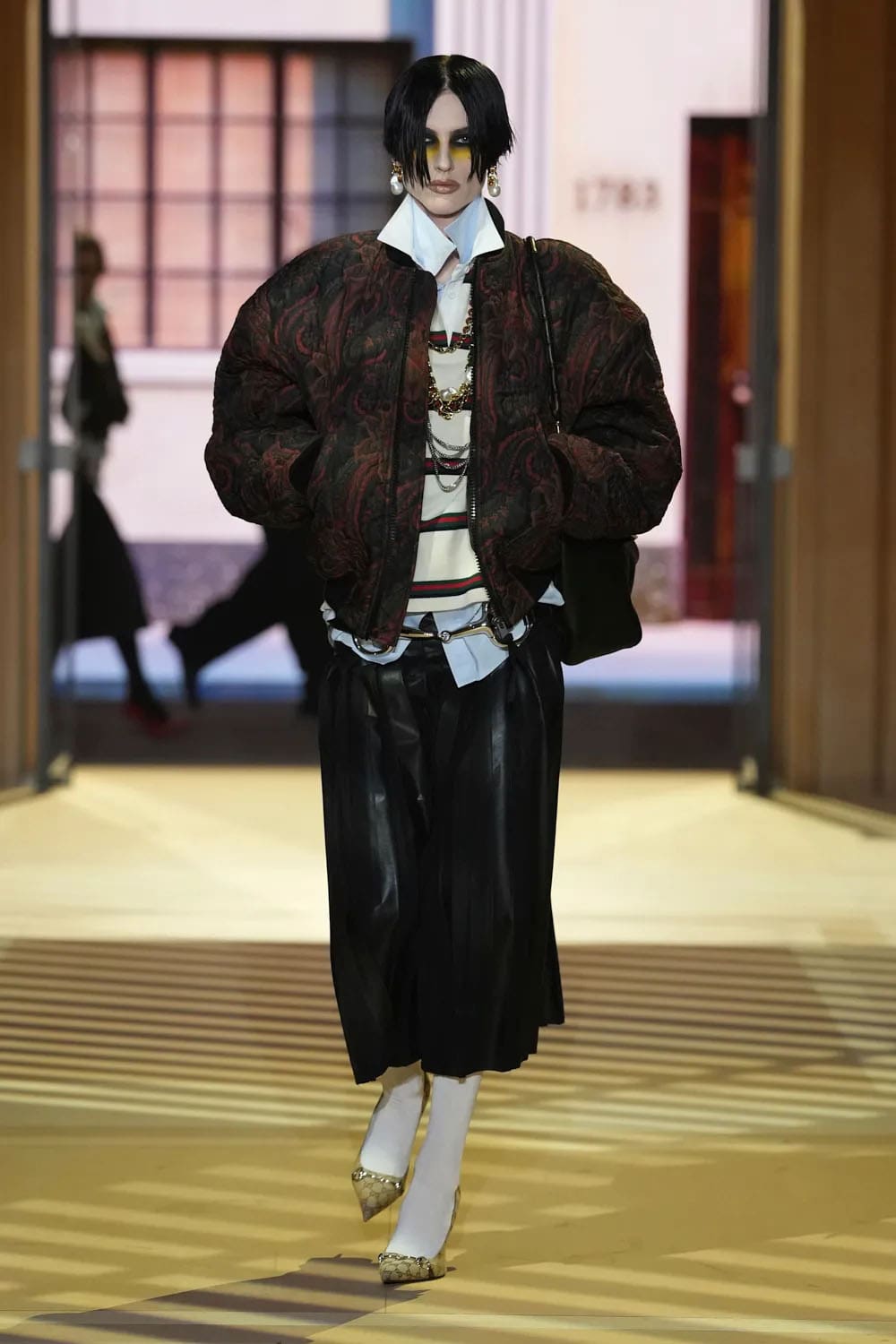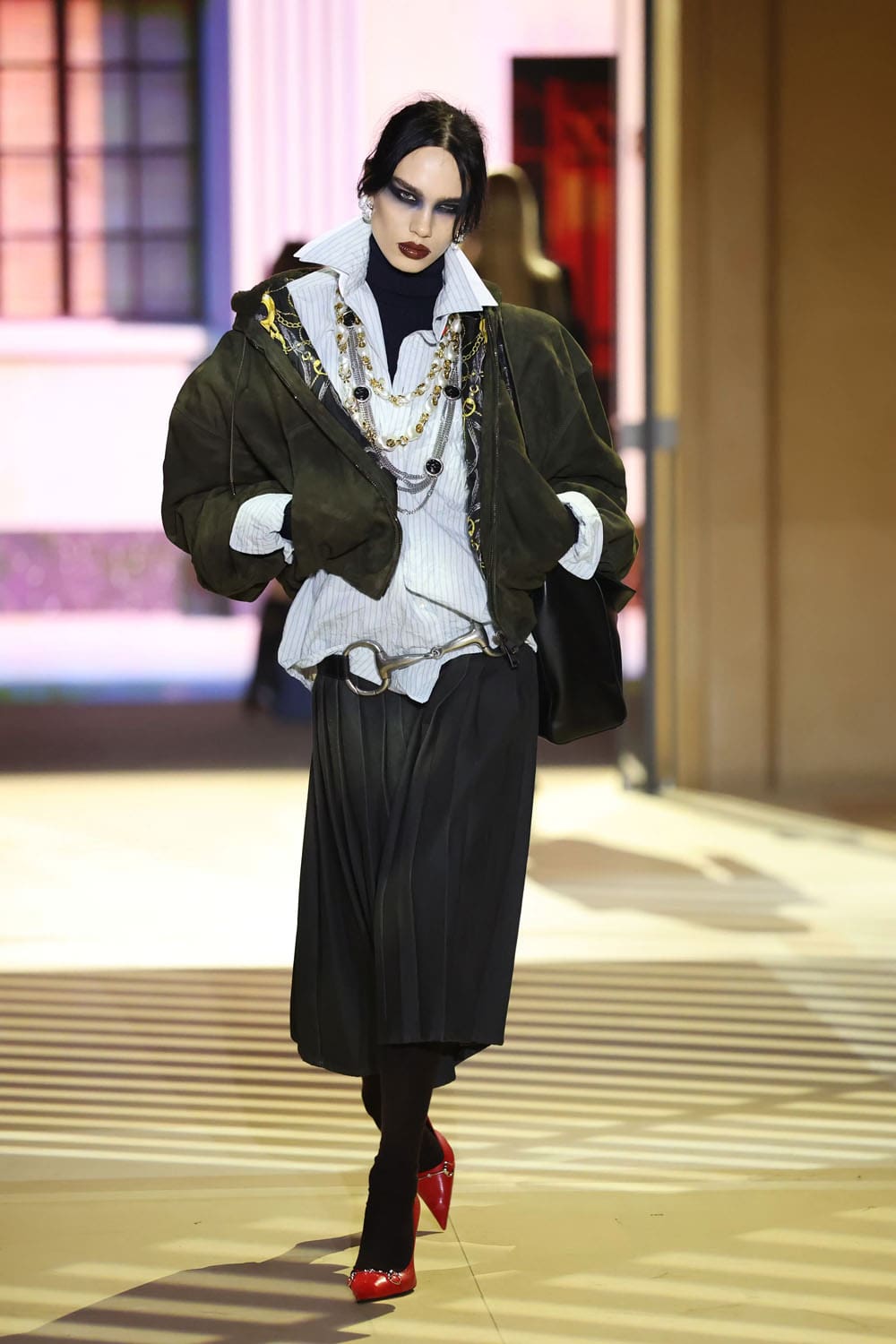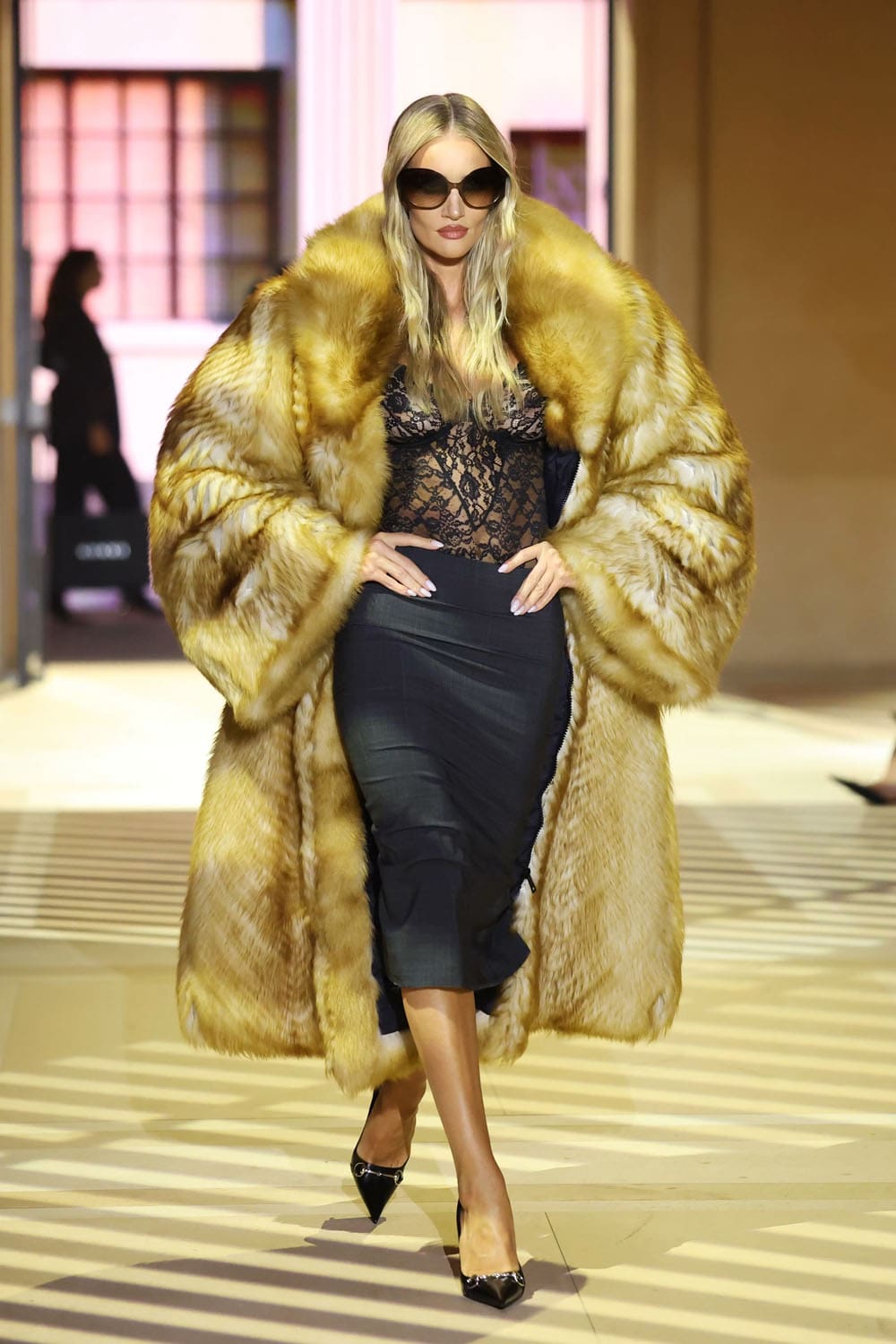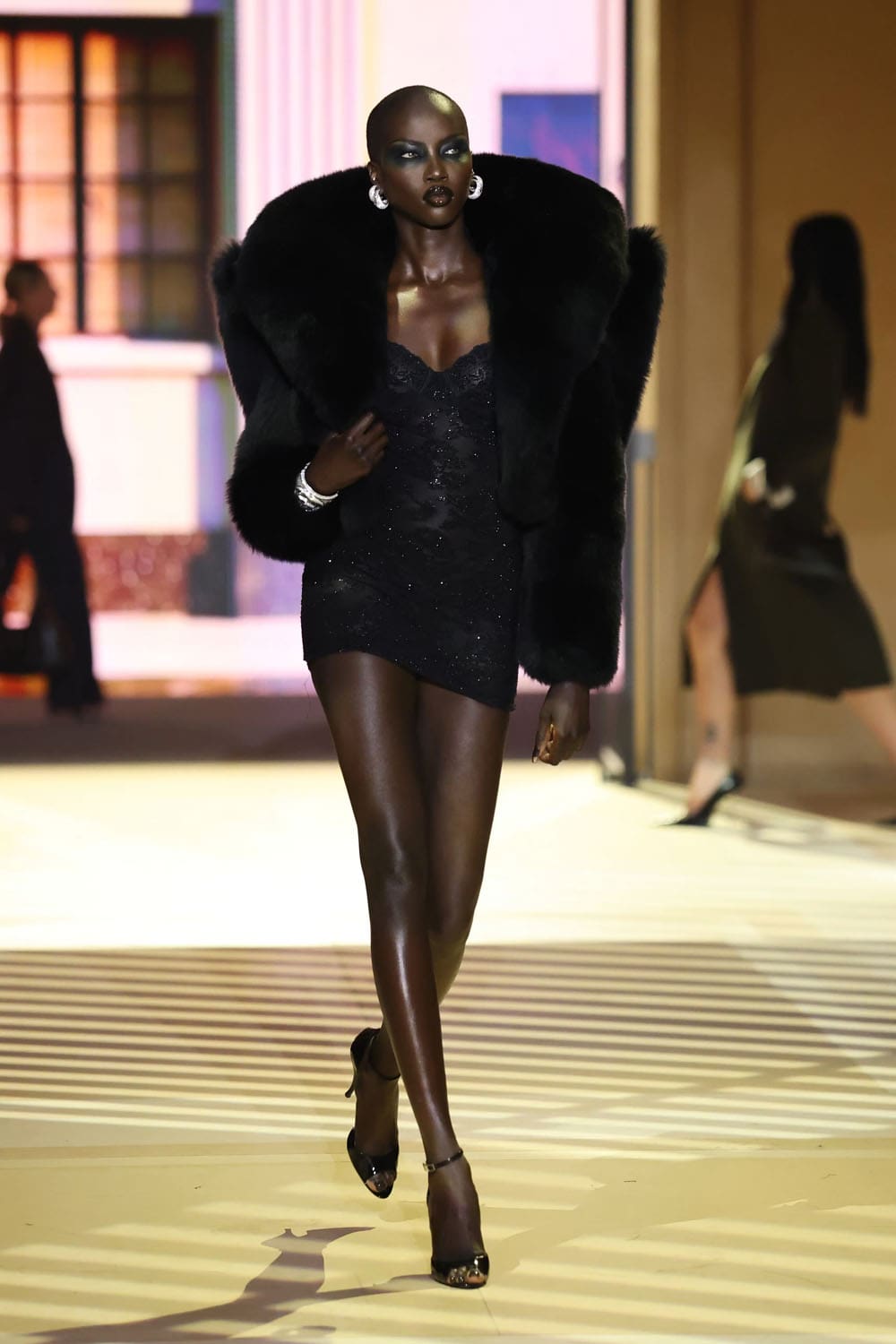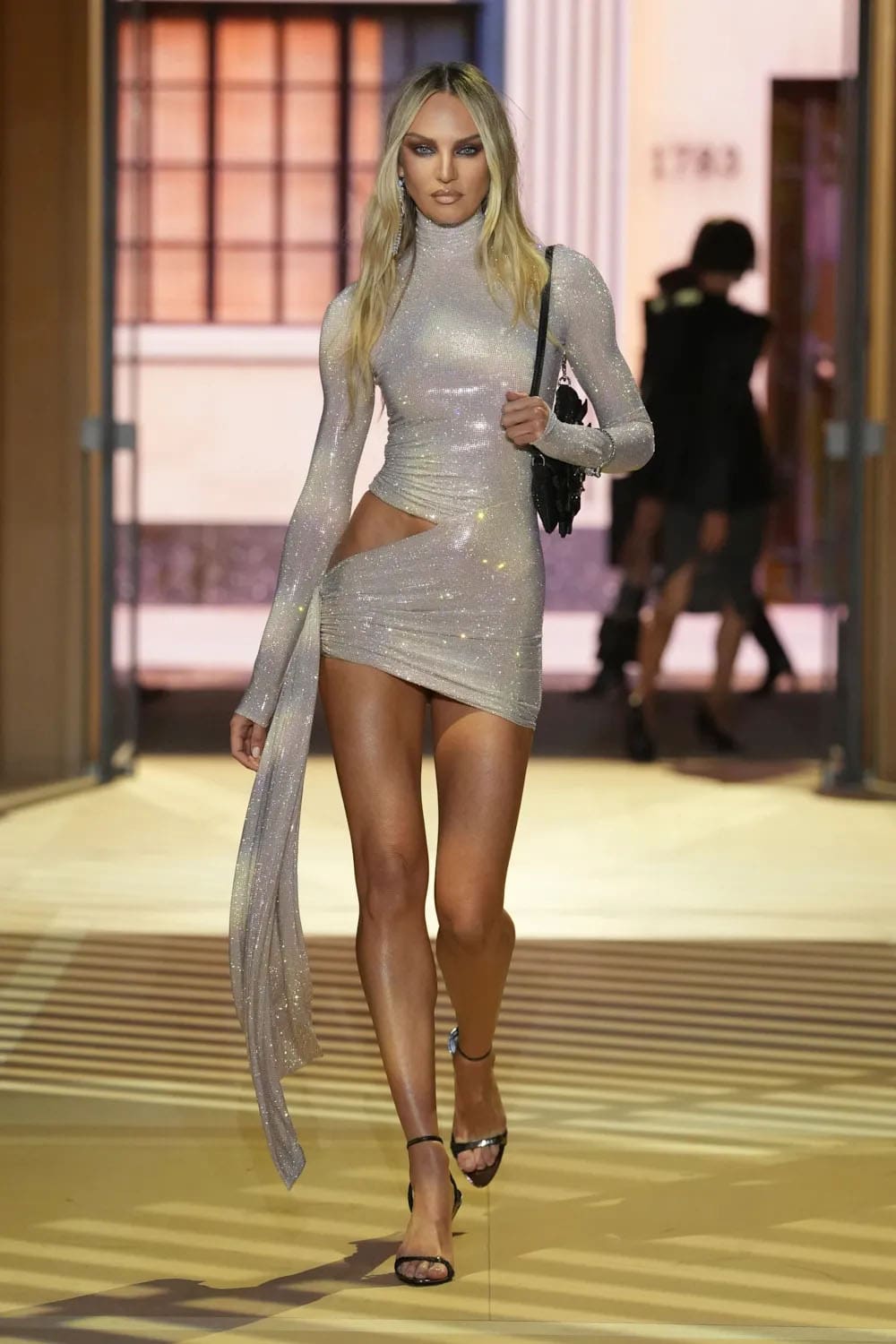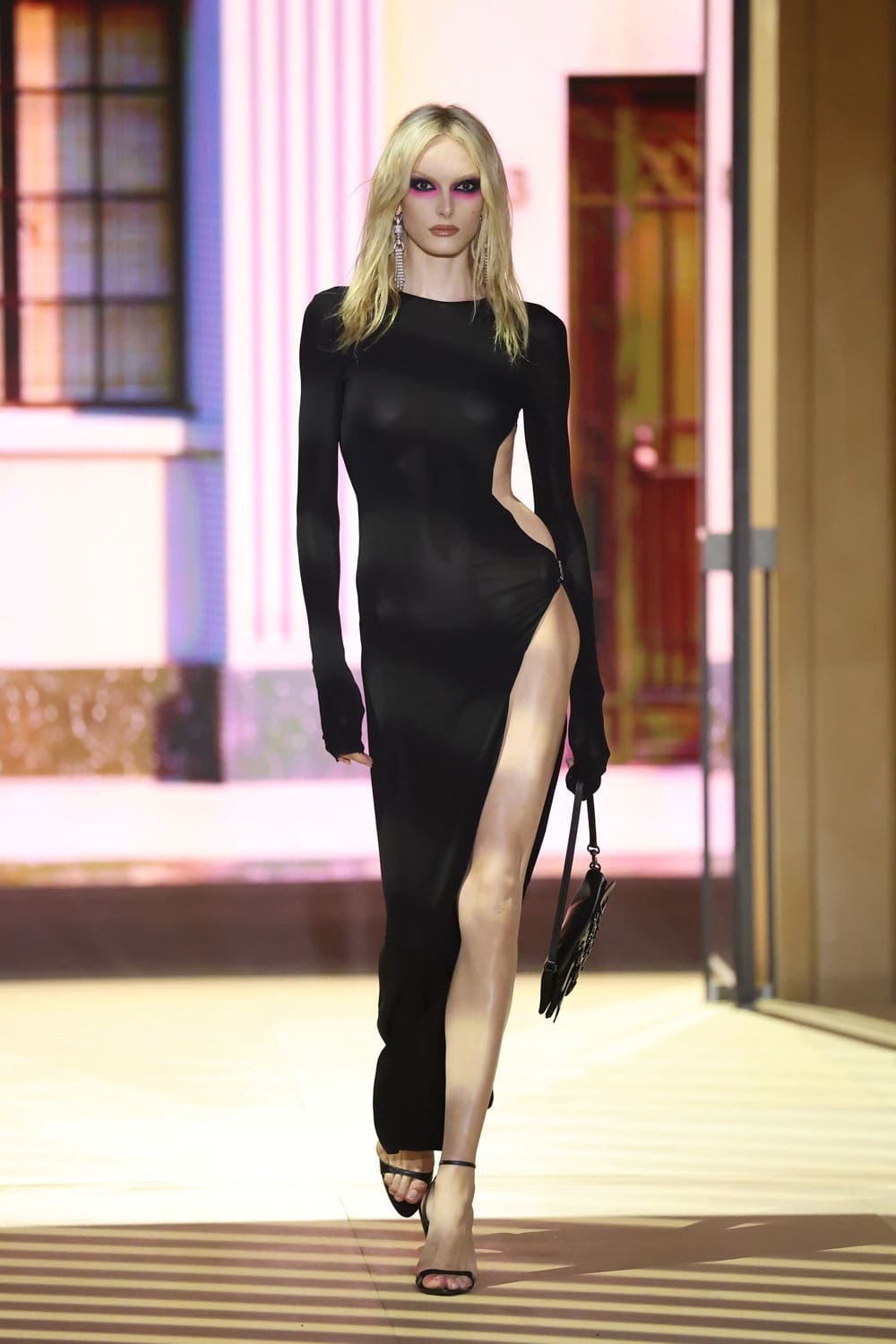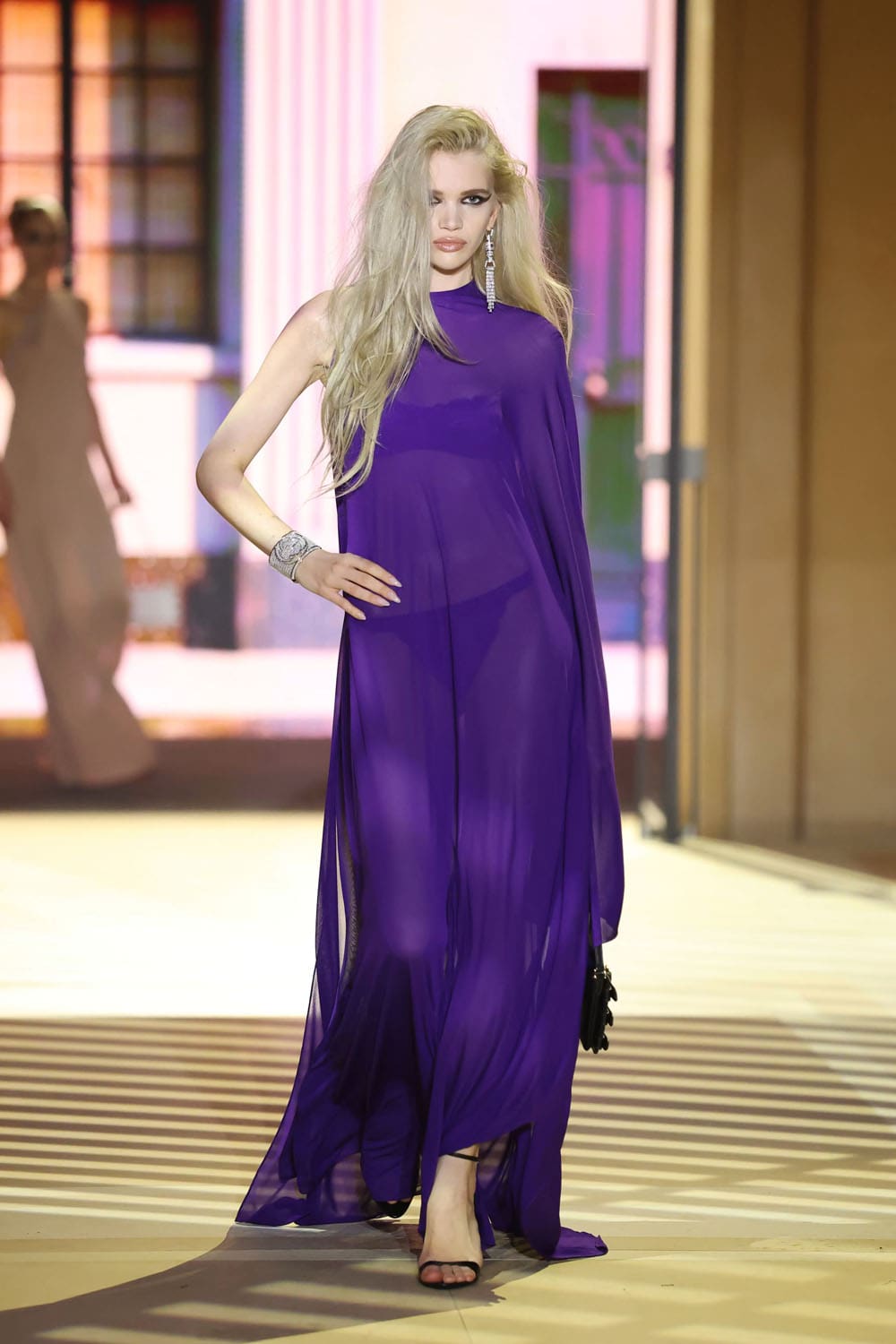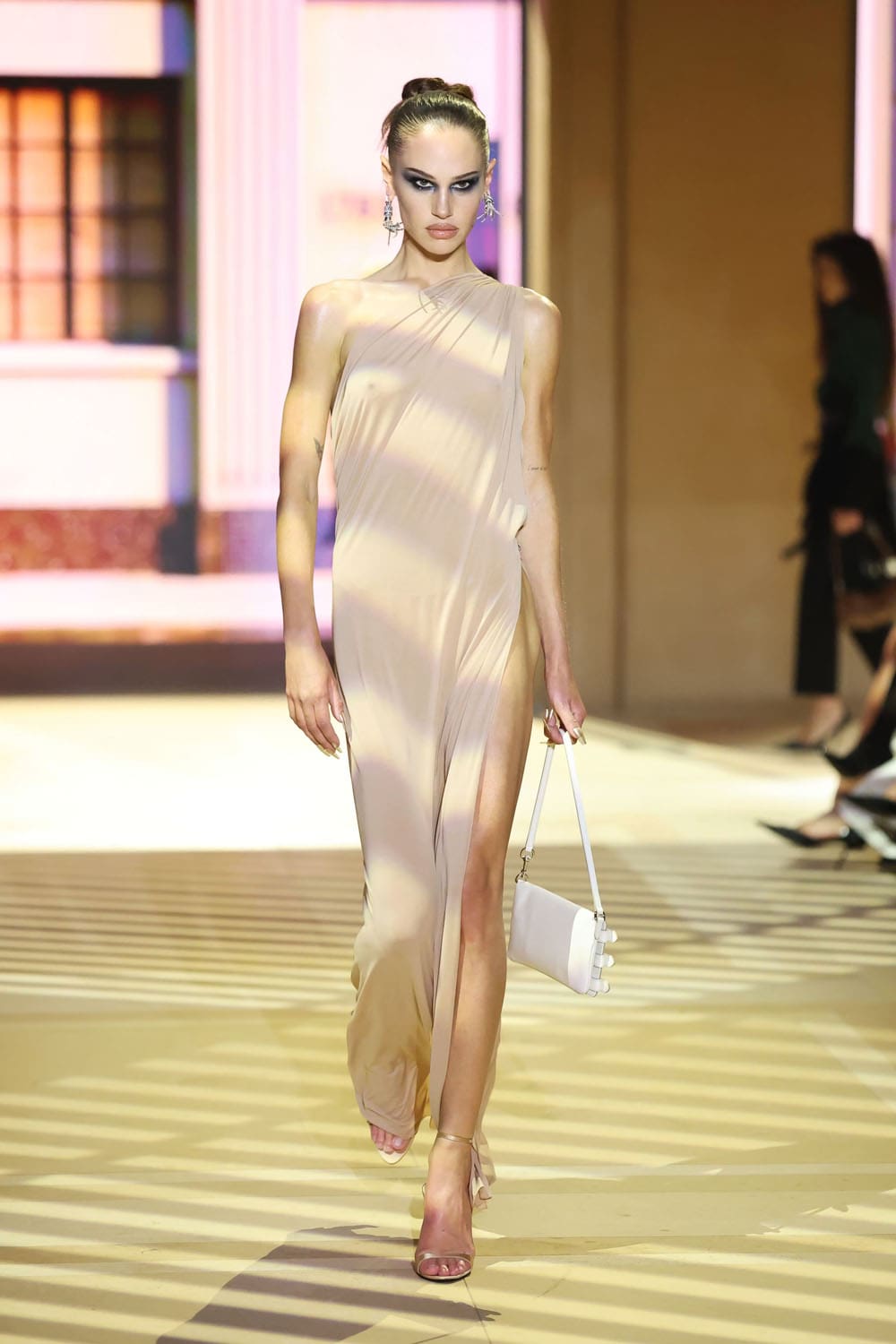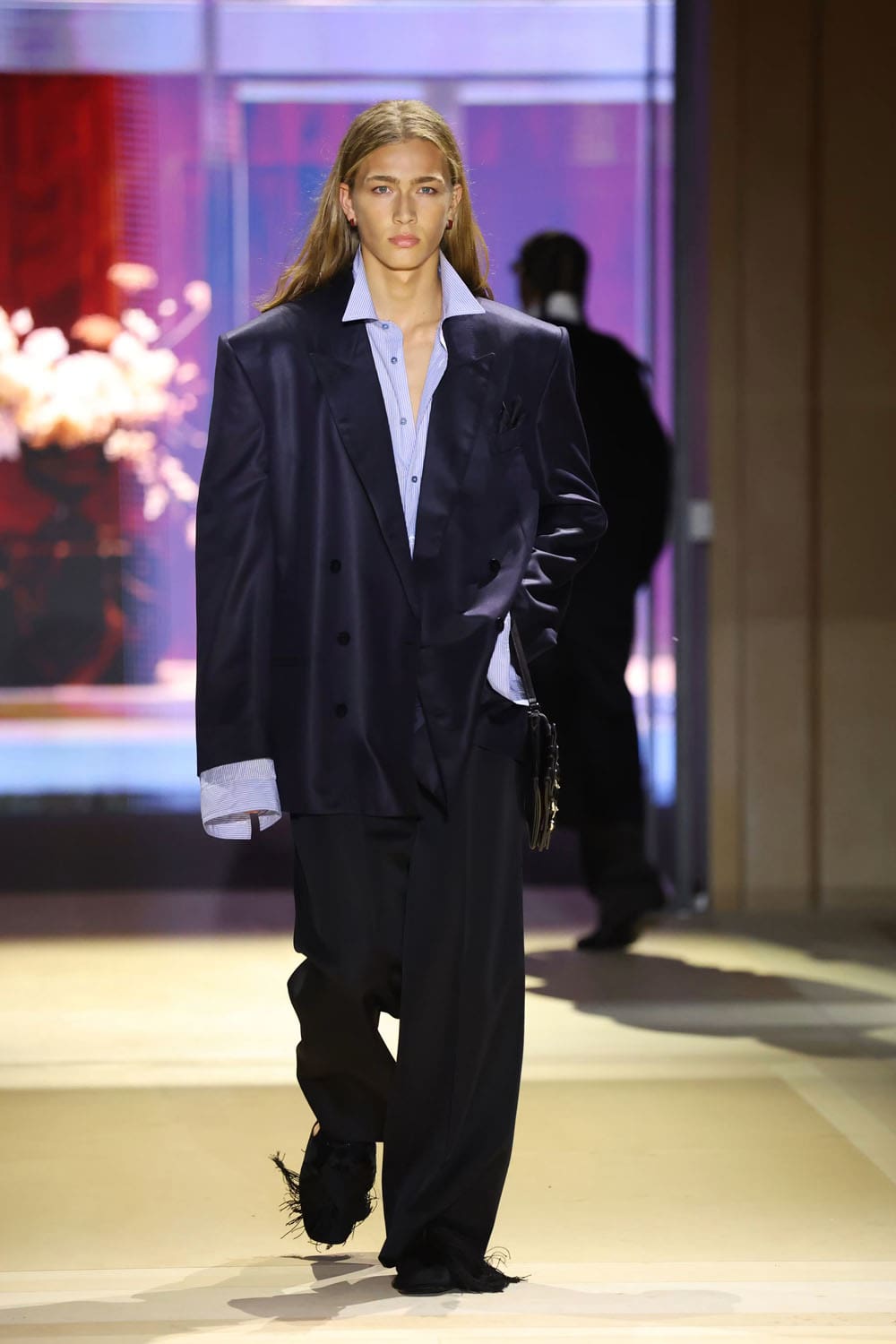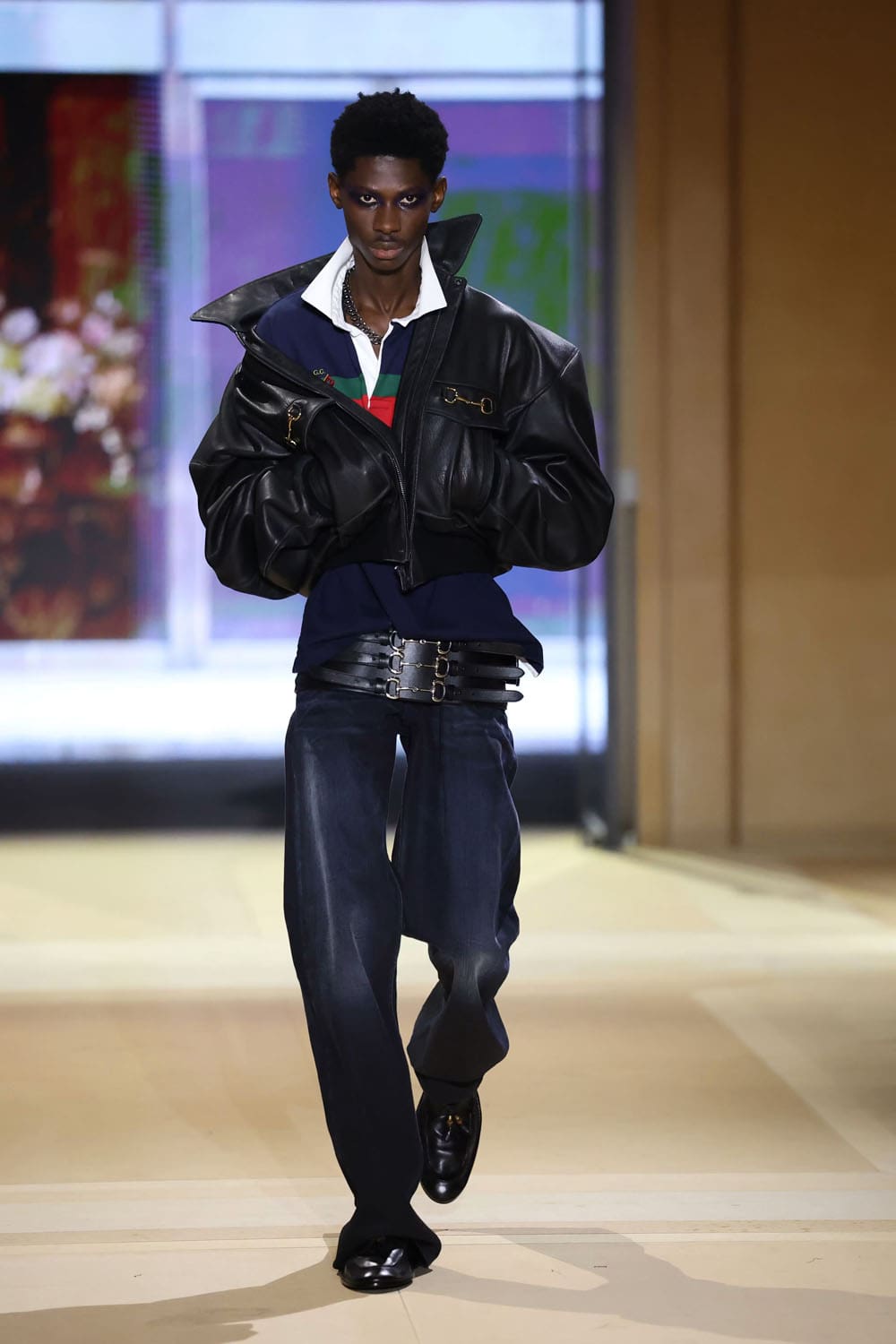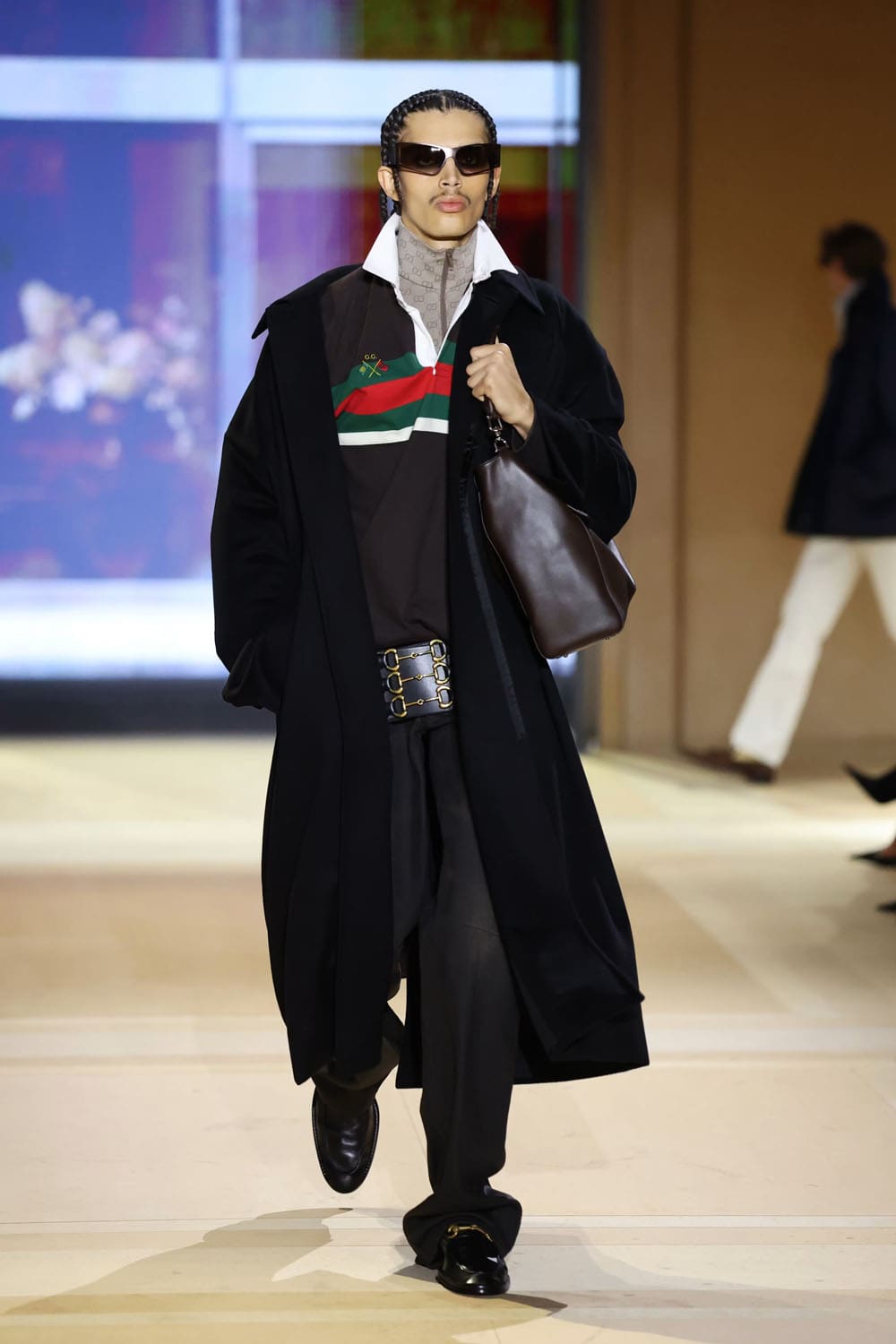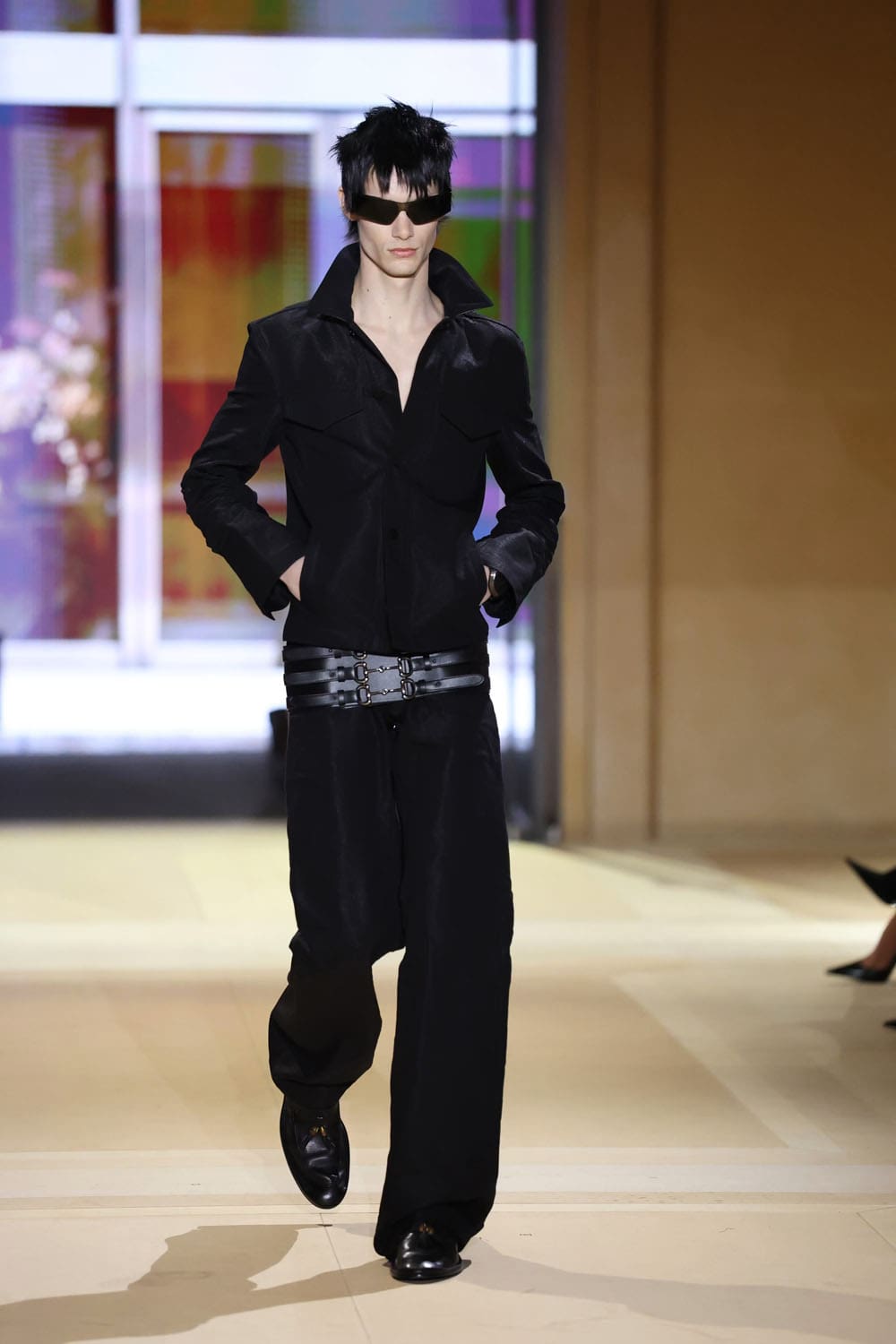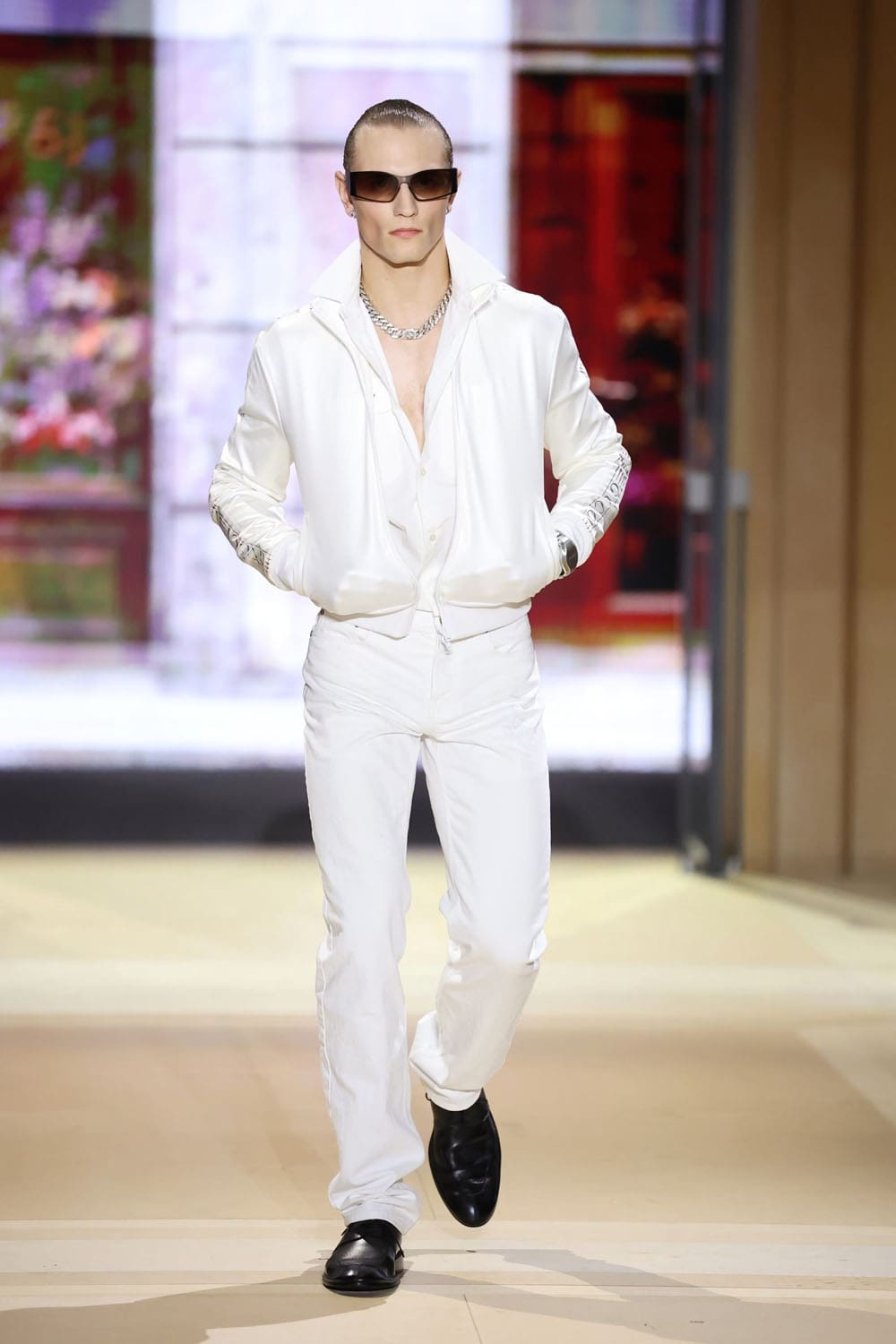
Gucci Spring Summer 2027 by Demna “Discrete Packaging Not Included.” Story by Eleonora de Gray, Editor-in-Chief of RUNWAY MAGAZINE. Photo Courtesy: Daniele Venturelli/Getty Images for Gucci.
The Savoy by Way of the Sex Dungeon, or Where’s My Heavy Duty Locking Leather Bondage Belt?
One must admire the sheer, unblinking audacity required to draft a press manifesto invoking Guccio Gucci’s early days carrying luggage at London’s Savoy Hotel, only to follow it with hardware intended for a basement dungeon. Demna has occupied the creative directorship of Gucci for 1 year, and his Spring Summer 2027 collection—dubbed The Store Show—arrived as his proclaimed “complete personal vision.” According to his own pious declarations, his deep archival research concluded that the house thrives on the tension between “bourgeois respectability” and “eccentricity, danger, or sex appeal.”
What marched across his quartet of monochromatic retail concept rooms, however, was neither dangerous nor genuinely eccentric. It was merely the tired, sensationalist packaging of adult novelty accessories masquerading as radical high fashion. Items that are normally delivered to your doorstep in unmarked brown cardboard, sealed with reinforced industrial tape to spare you the judgment of your mail courier, were pushed front and center onto the Milanese runway. By reducing the century-old legacy of Florentine leathercraft to heavy-duty locking leather bondage belts and submissive chokers, Demna did not redefine contemporary luxury; he turned a historic Italian flagship into a luxury adult boutique for billionaires who desperately want to play at being bad.
The Triple-Buckled Goth Parade
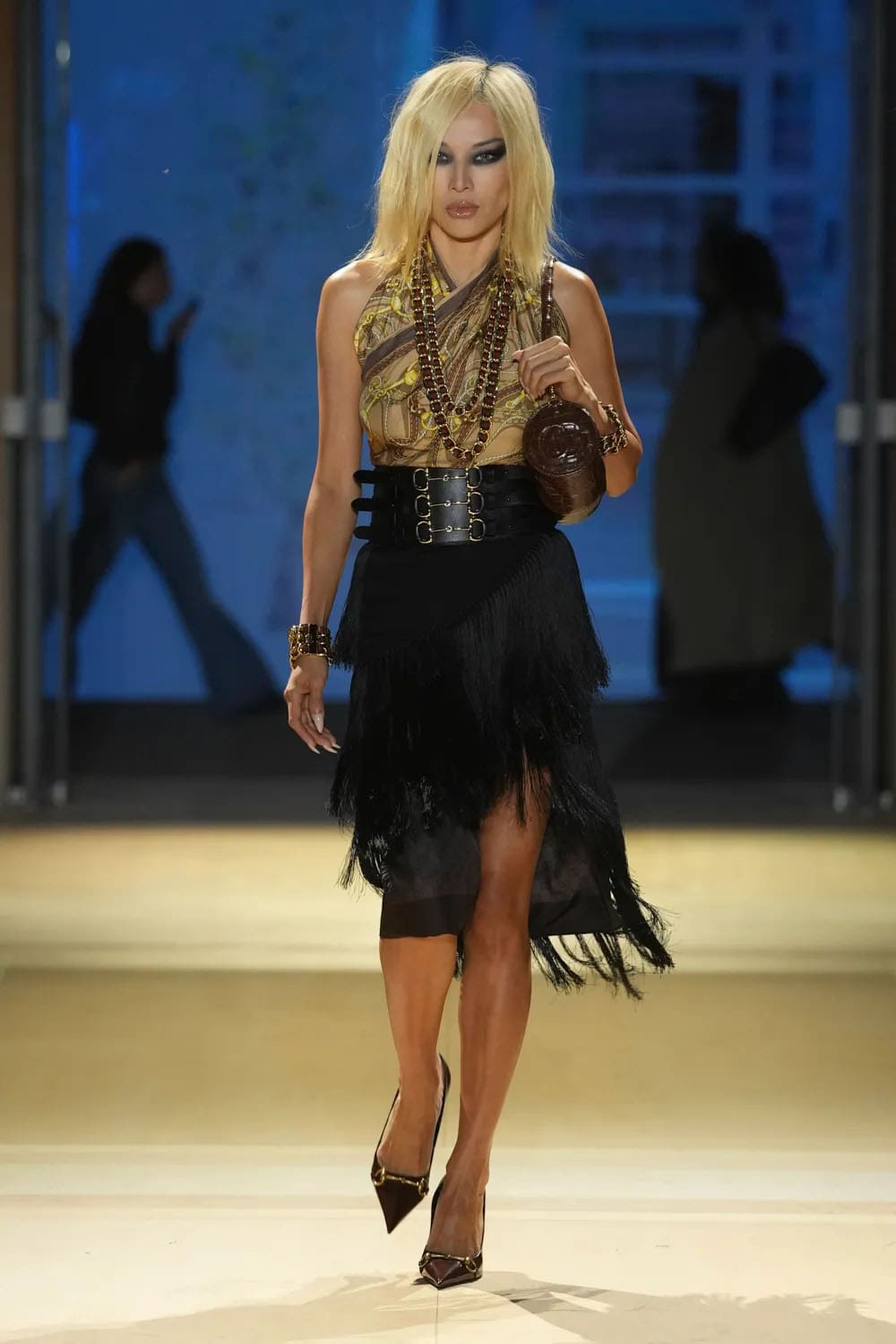
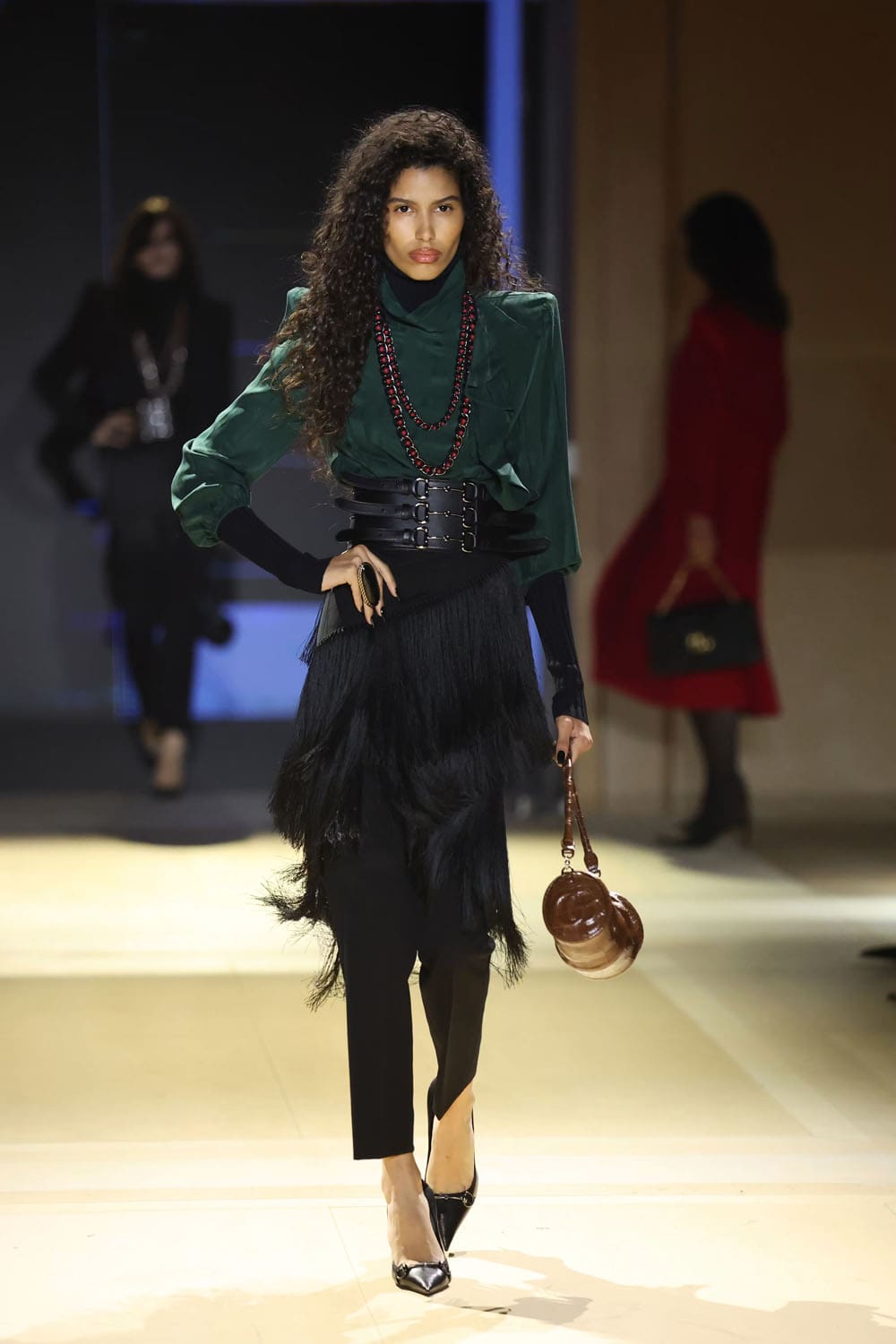
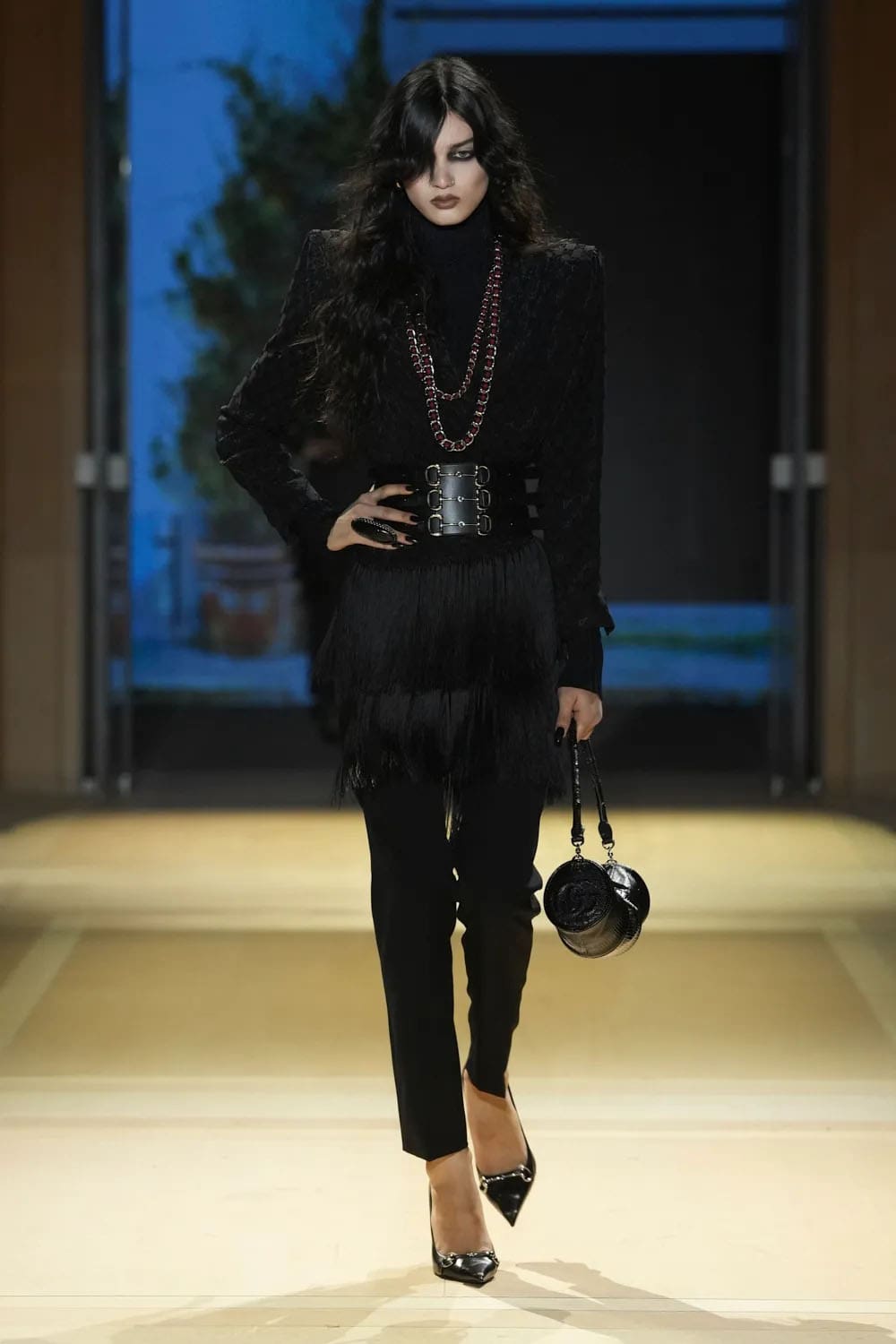
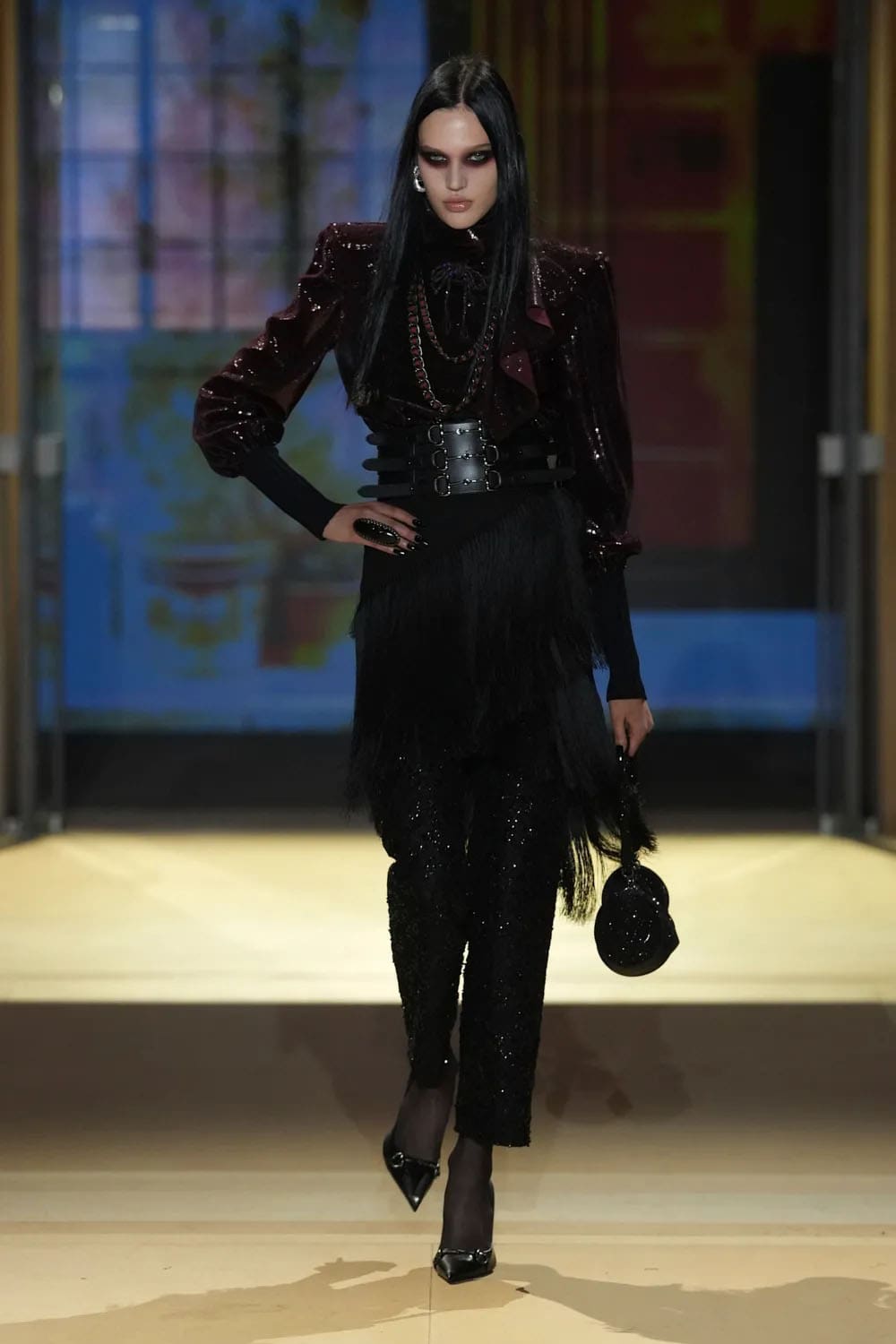
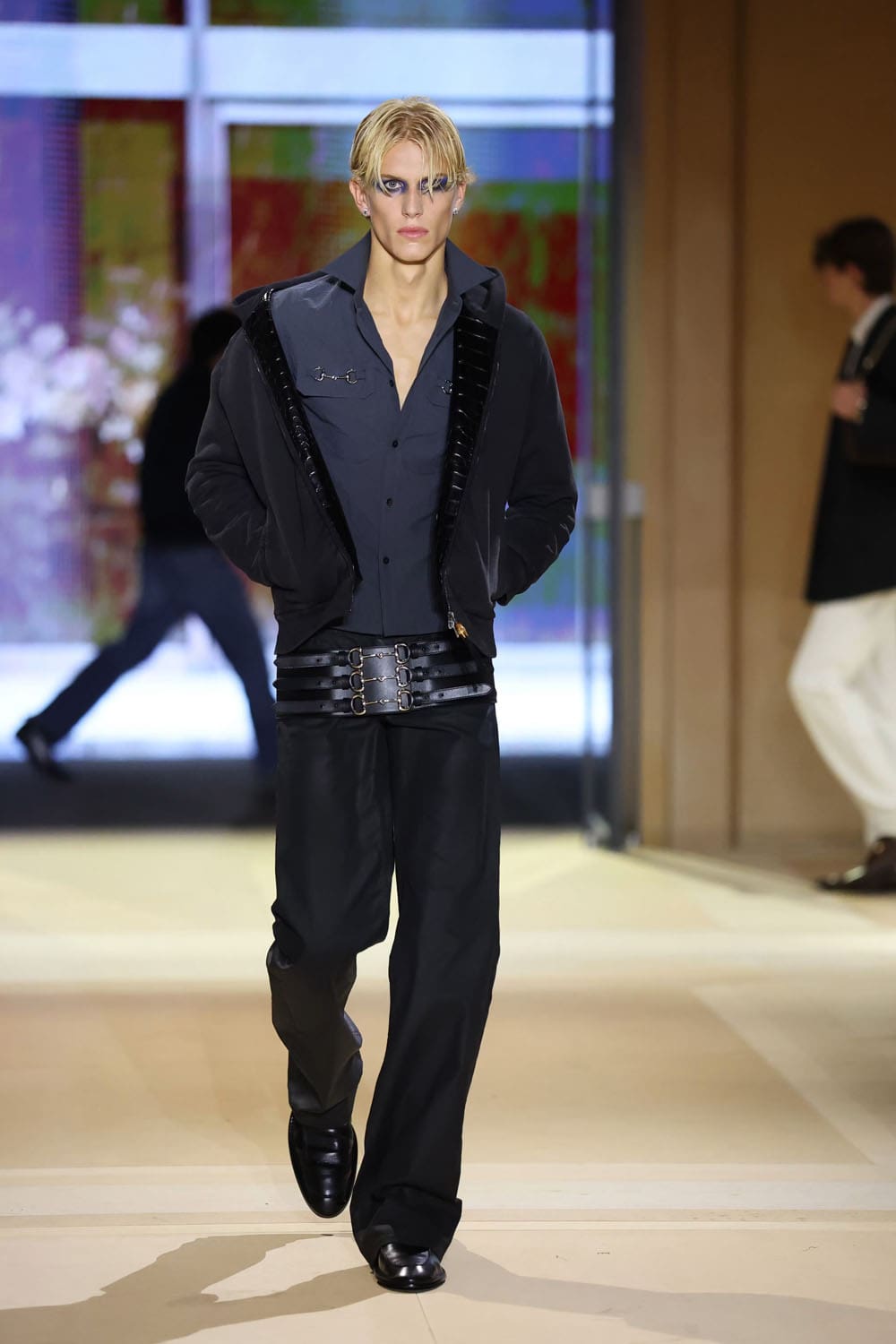
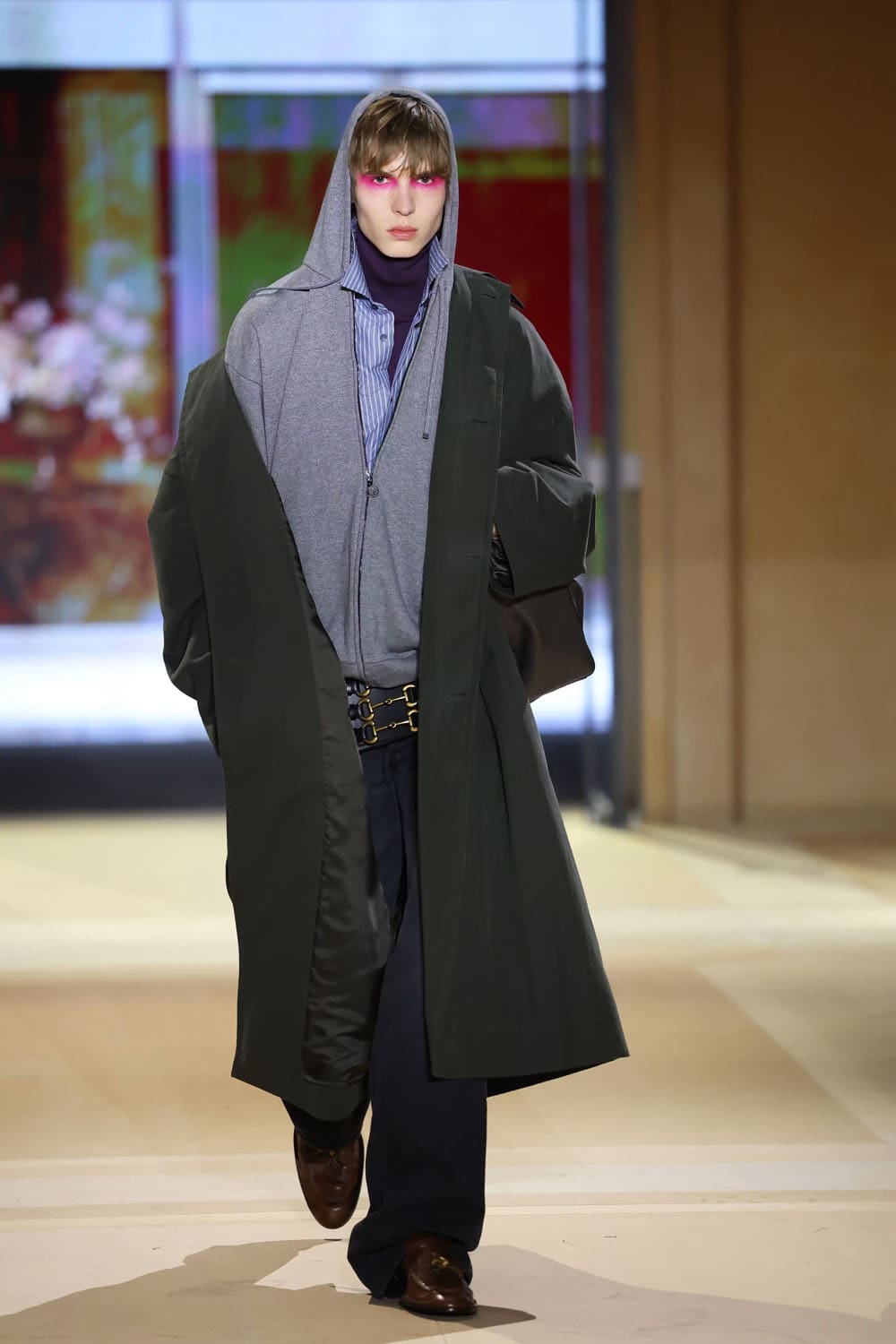
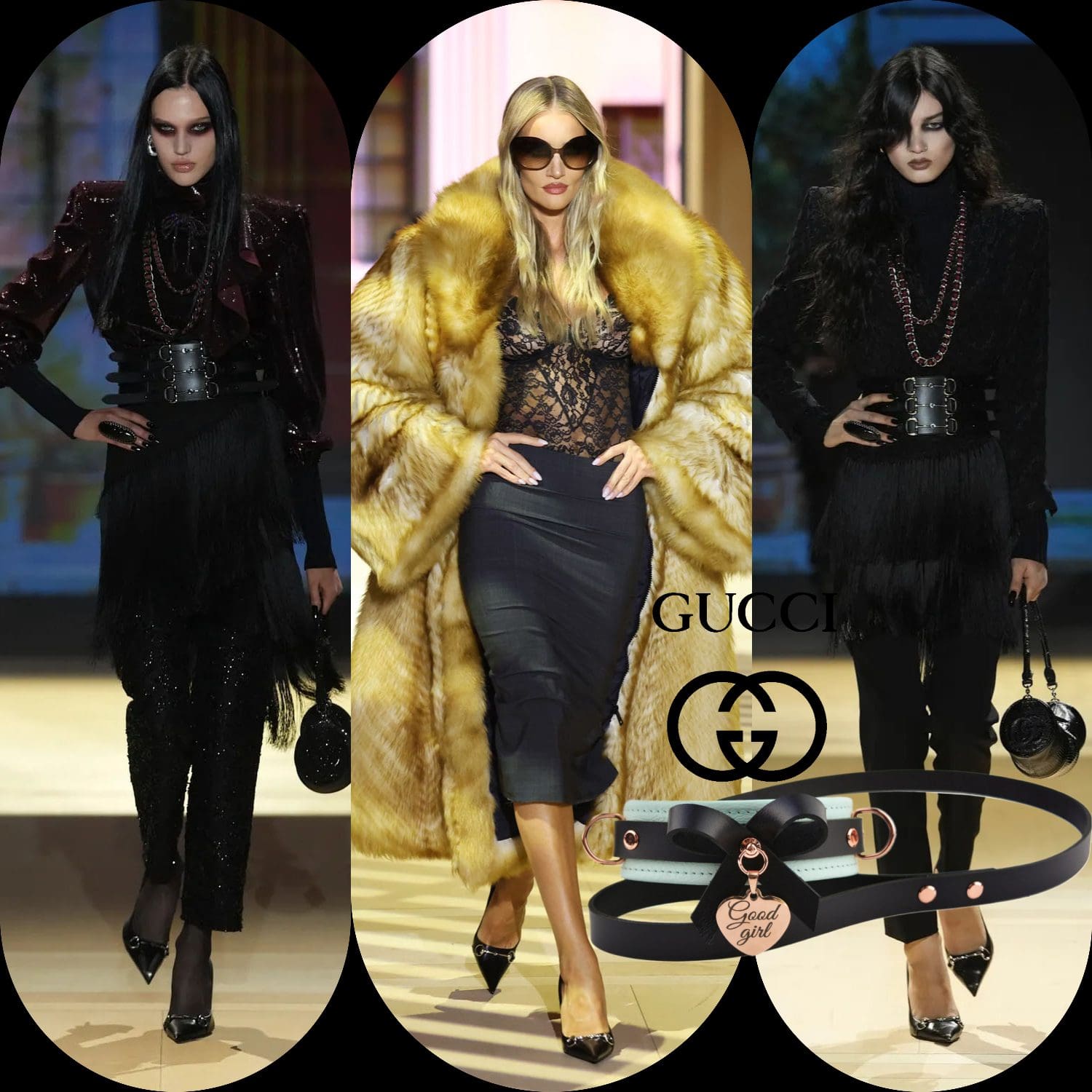
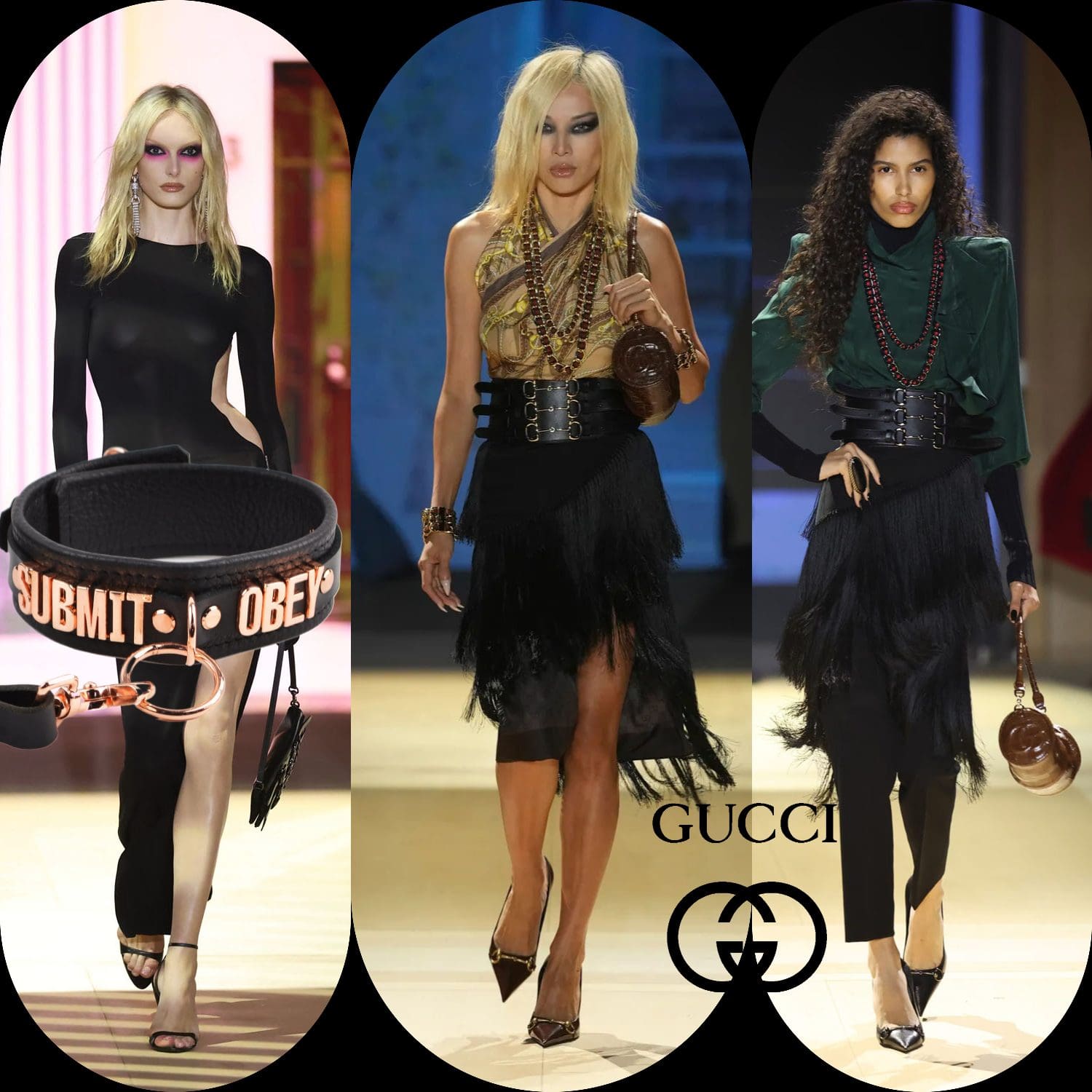
To project his vision of bourgeois rebellion, the runway leaned heavily into a relentlessly dated late-nineties dominatrix aesthetic, crossbred with suburban goth nostalgia. Consider the centerpiece of this daytime perversion: an absurdly wide, triple-buckled leather corset belt with heavy steel roller buckles and metallic ring hardware clamped tightly over every possible garment. It encircled structured black jackets flanked by shredded fringe aprons, cinched high-neck bottle-green silk blouses worn over tailored cigarette trousers, and gripped patterned foulard halter tops draped with clunky amber beads. The horsebit, once the refined calling card of equestrian pedigree, was warped into an instrument of literal restraint.
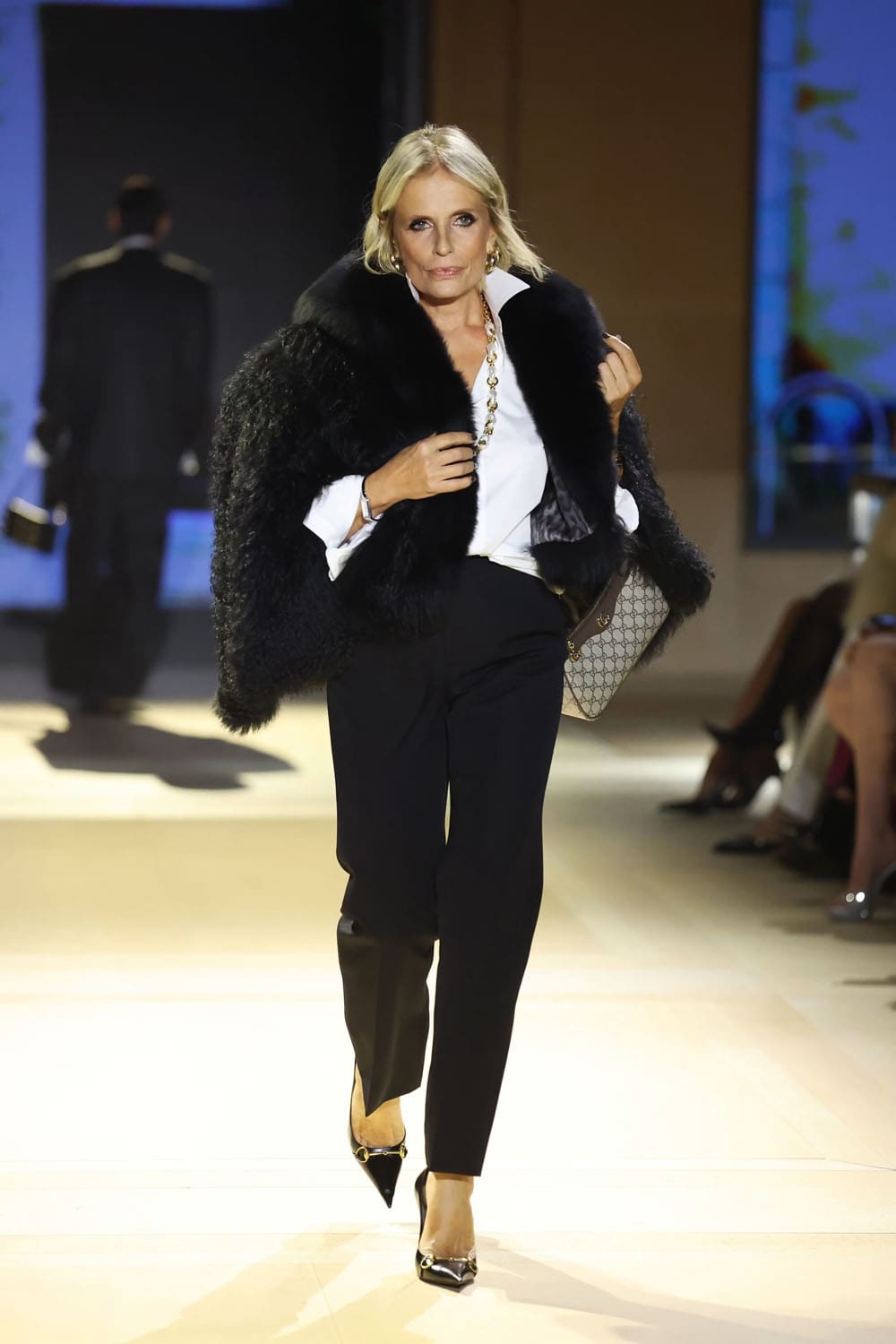
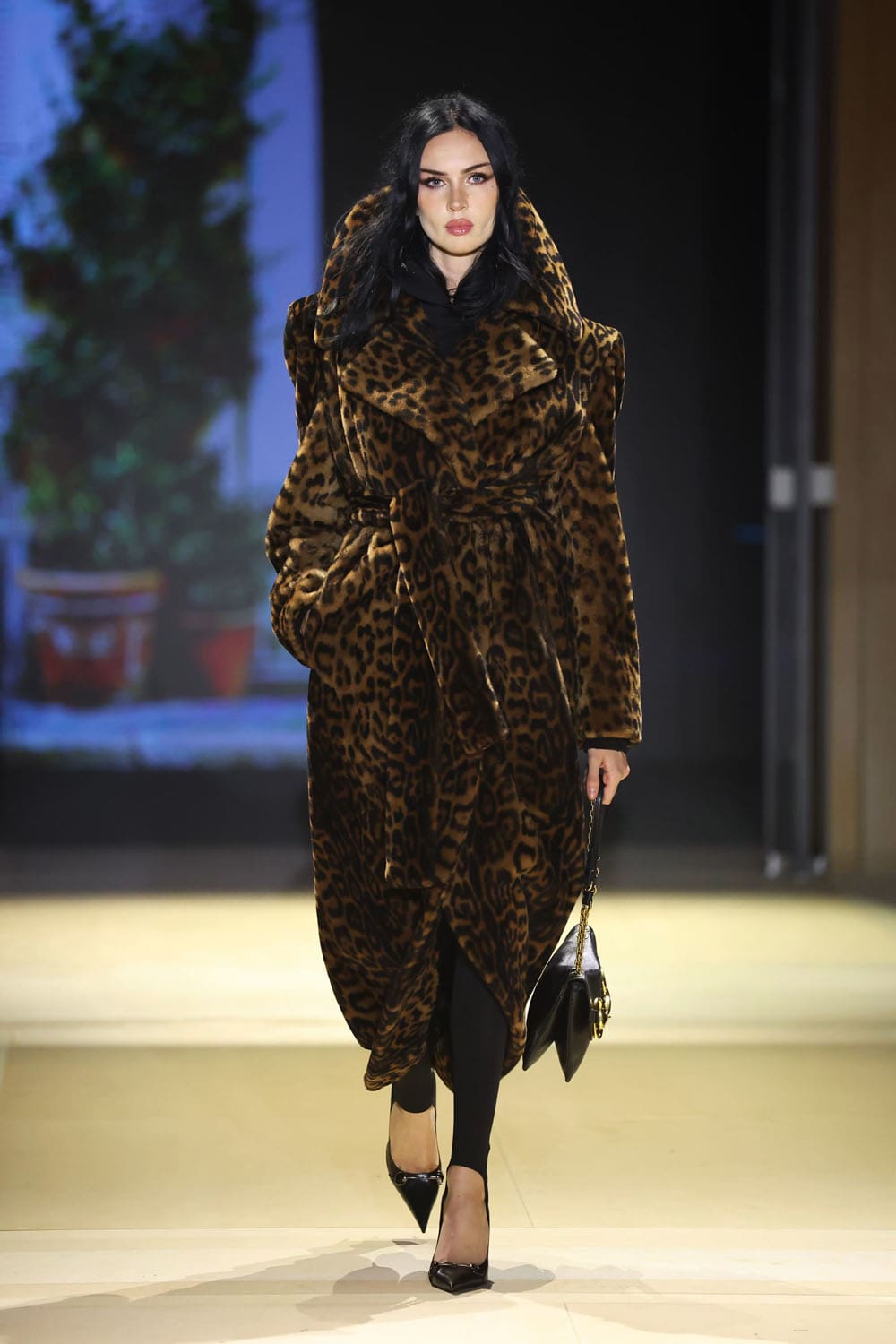
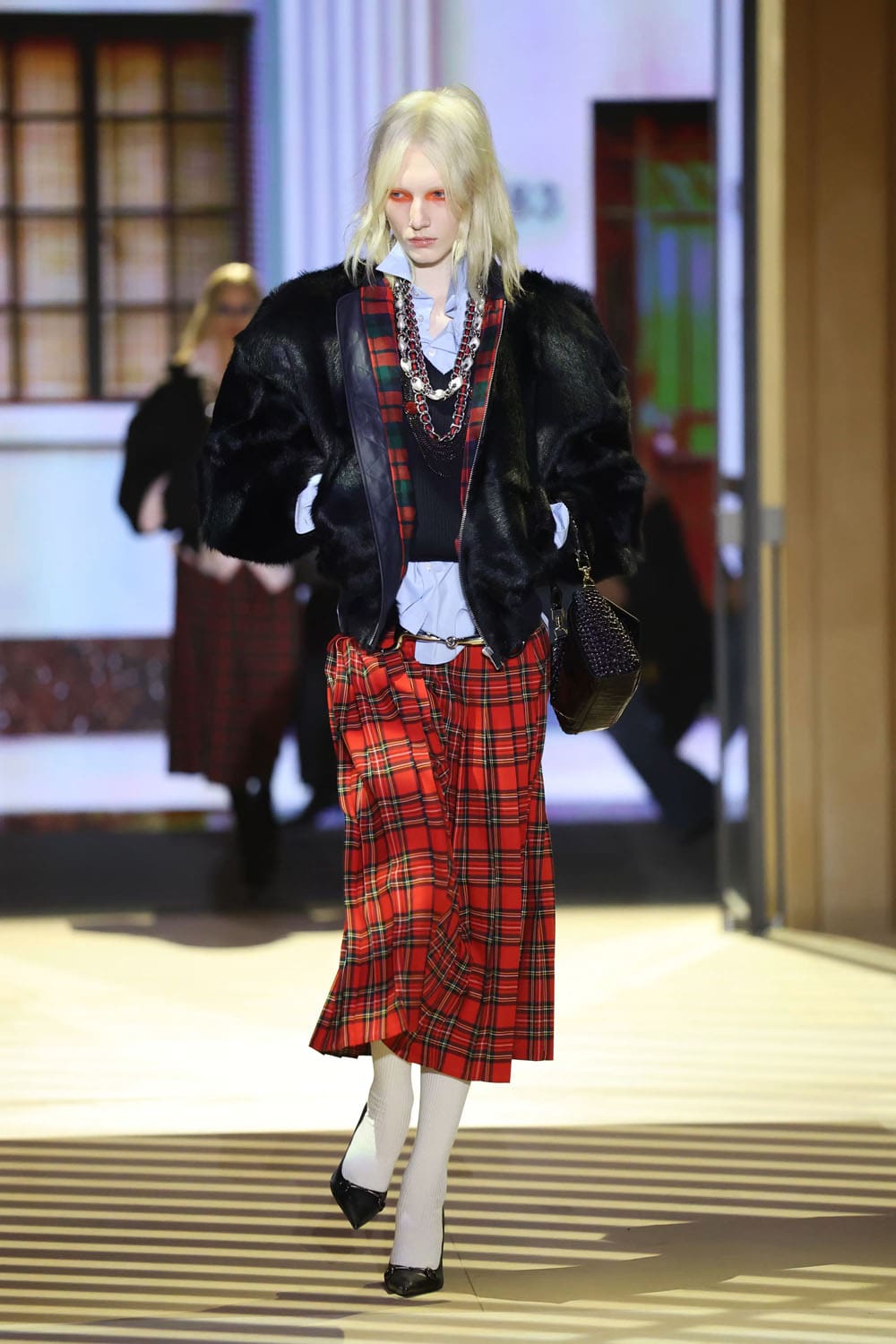
The models, styled with exaggerated racoon-eye black greasepaint, pale skin, and limp hair, shuffled past looking less like empowered sirens and more like sleep-deprived extras ejected from an obscure Berlin industrial club at noon. One model was stuffed into a skintight black bodysuit featuring a back cut away entirely down to the tailbone, balancing on delicate ankle-strap stilettos while projecting the vacant glare of an automaton. Beside her, another walked in a monumental, puffy fake fox fur coat thrown over a transparent black lace lingerie camisole and pencil skirt—a look that felt less like Tom Ford’s sleek, razor-sharp 1996 eroticism and more like a rushed caricature of an eighties casino regular running late for an audit.
The Incoherent Bourgeois Cloak “Submit & Obey”
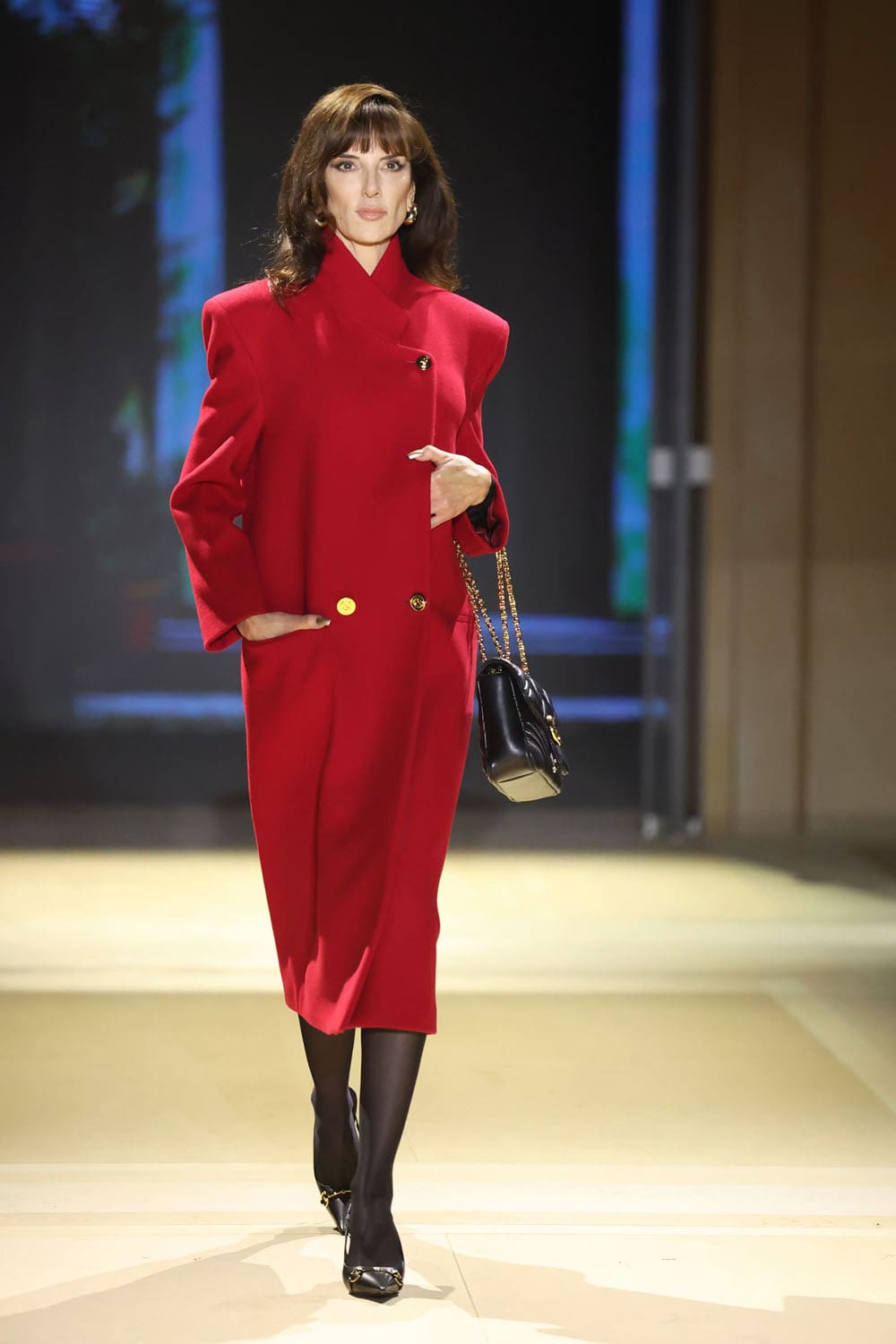
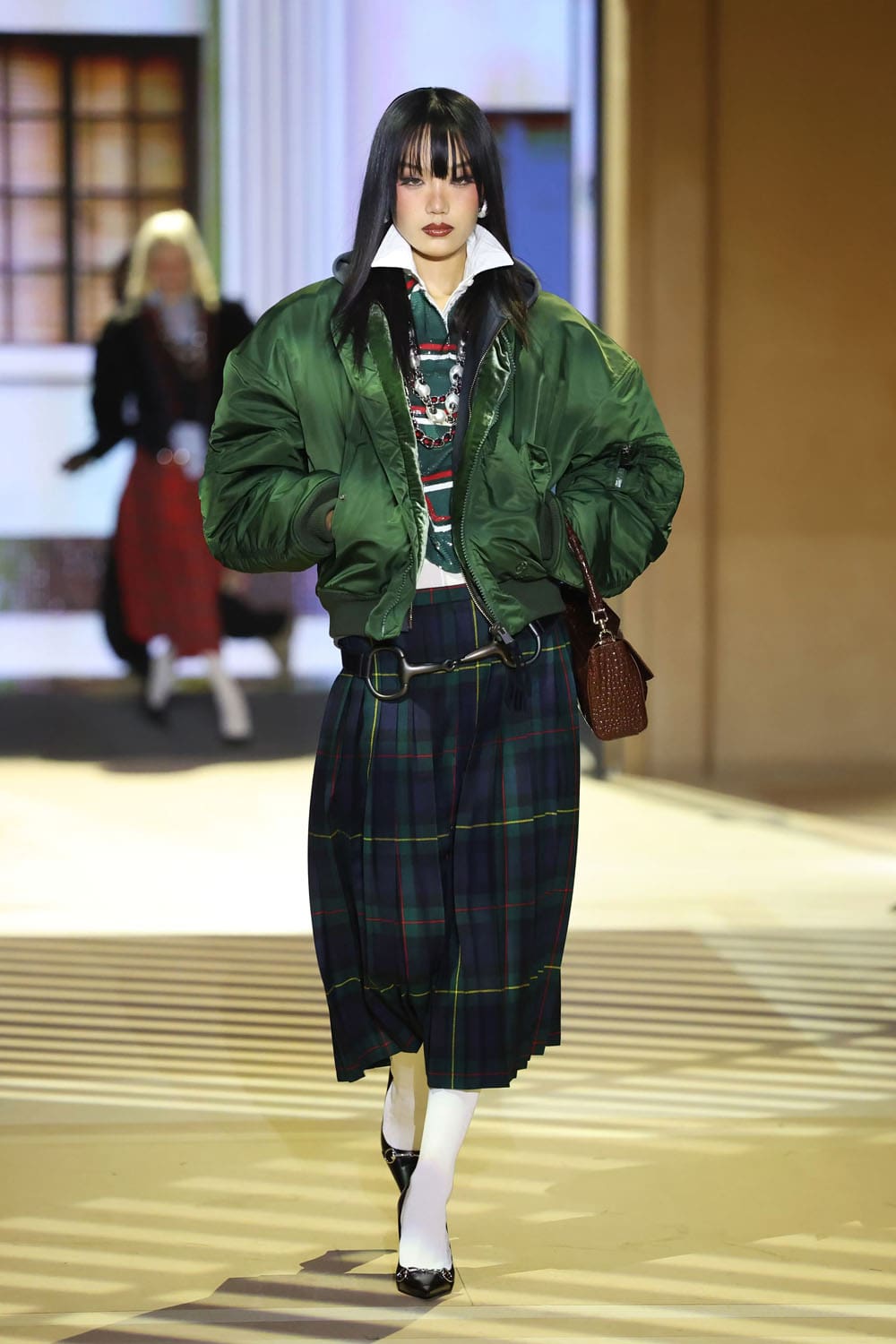
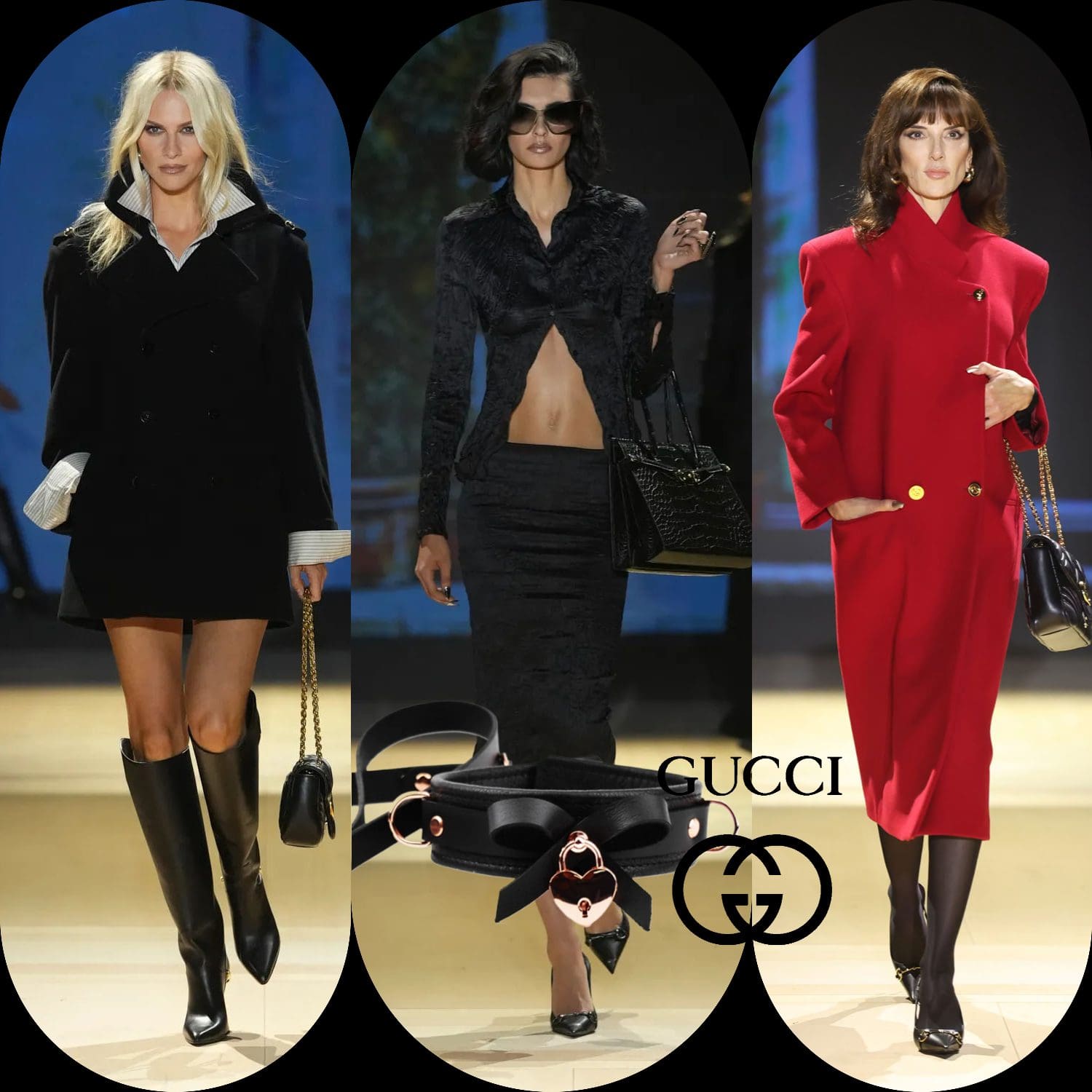
When the collection attempted to pivot back to the promised “polished respectability” of the wardrobe, the results were equally disjointed. A knee-length red military overcoat made an appearance, cut with high structured pagoda shoulders, a funnel neck, and gold buttons. It tried to evoke vintage Roman elegance, yet in the context of the surrounding leather restraints, it looked like a costume borrowed from a Cold War spy thriller. Another model paced through the monochromatic set wearing a cropped double-breasted pea coat over an unbuttoned banker-stripe shirt and bare legs, anchored by stiff equestrian riding boots and a quilted leather chain bag.
Then came the awkward excursions into distorted executive attire. A crinkled black velvet shirt, fastened by a precarious single button at the breastbone, was slashed open across the abdomen to display the ribcage before settling into a matching crinkled midi-skirt. What part of this speaks to “meeting places for aristocrats, artists, and creatives”? It is the visual equivalent of an identity crisis: half the wardrobe is dressed for a stiff diplomatic cocktail party, while the other half is locked into leather waist-cinchers waiting for a safe word.
A Complete Lack of Subversion
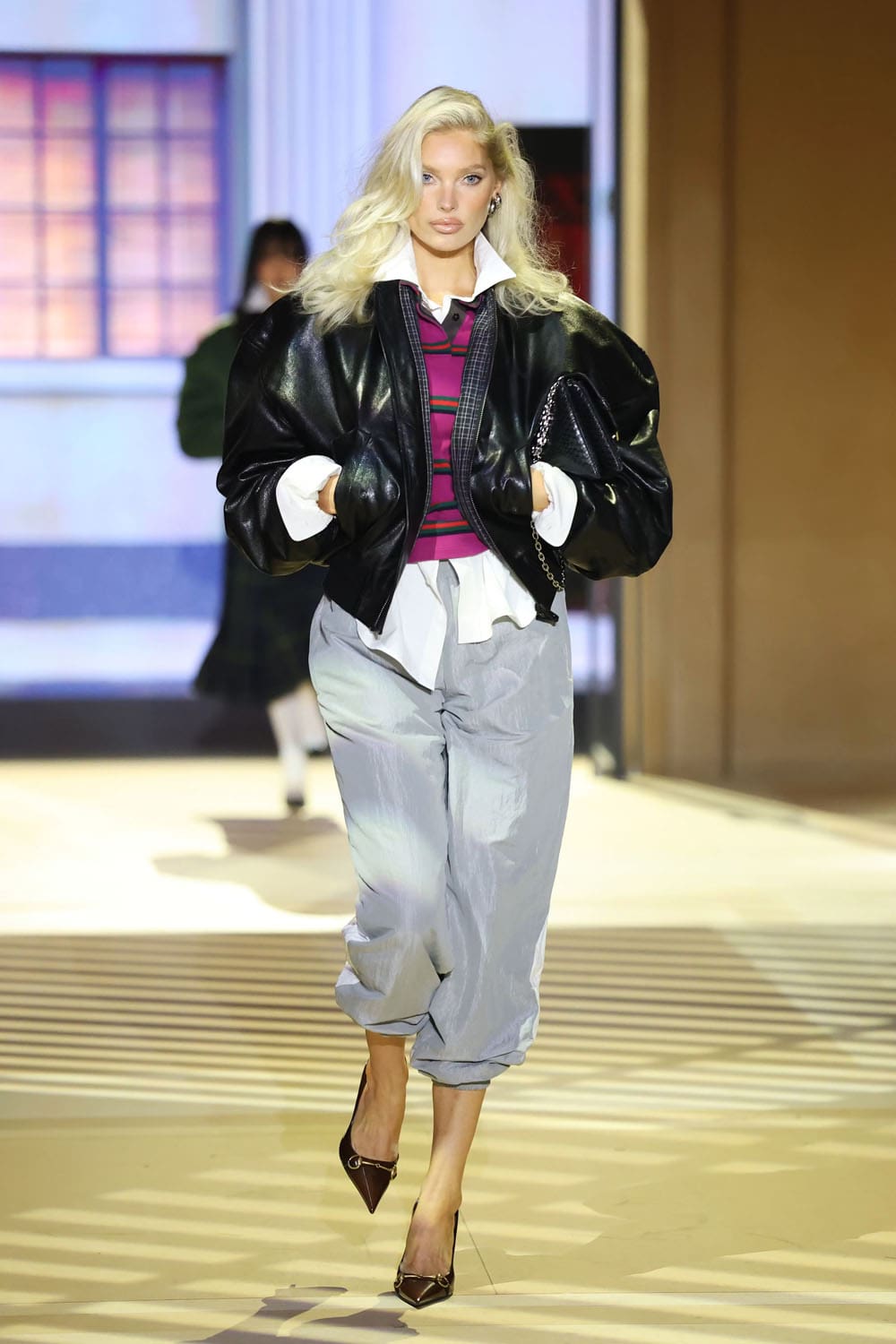
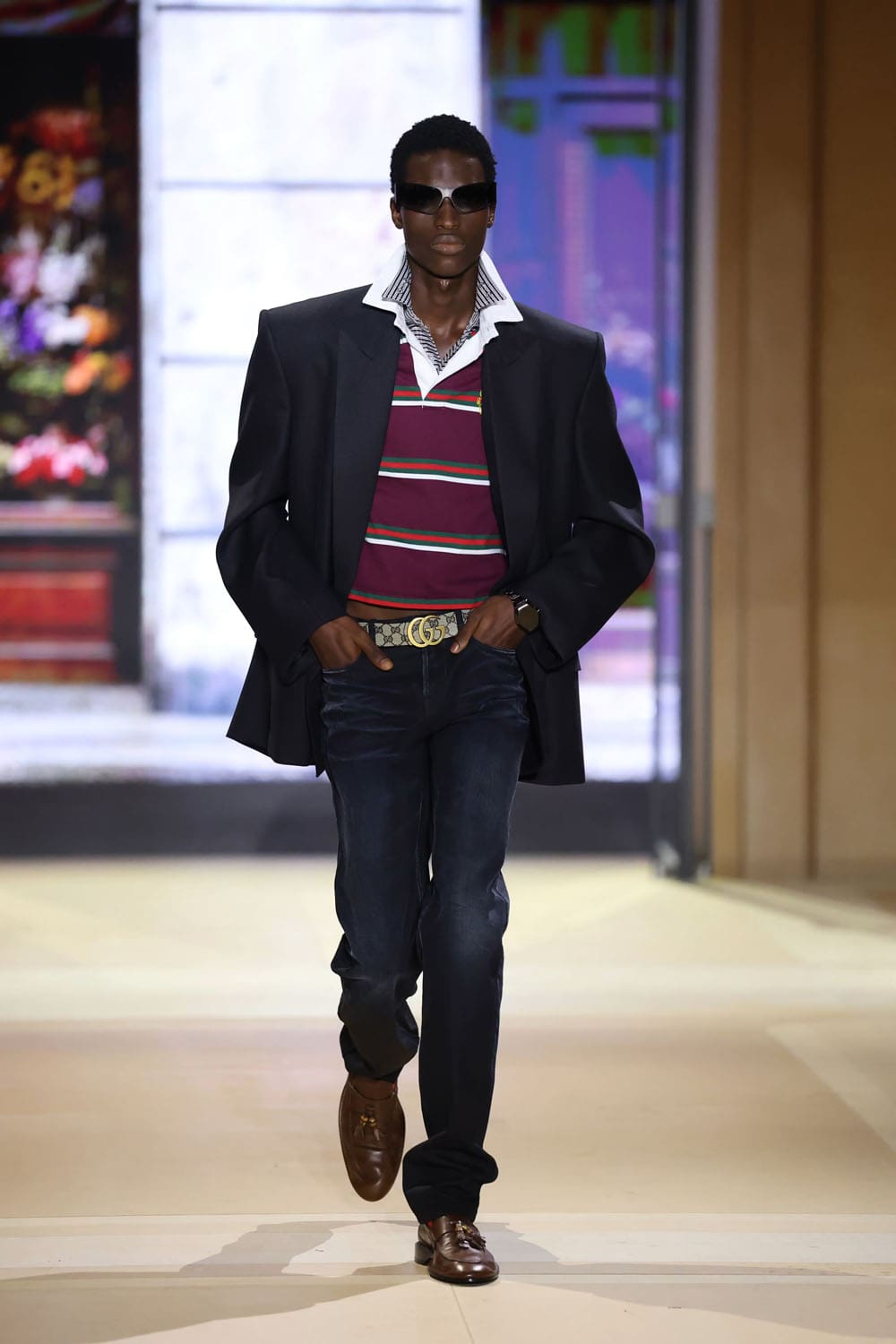
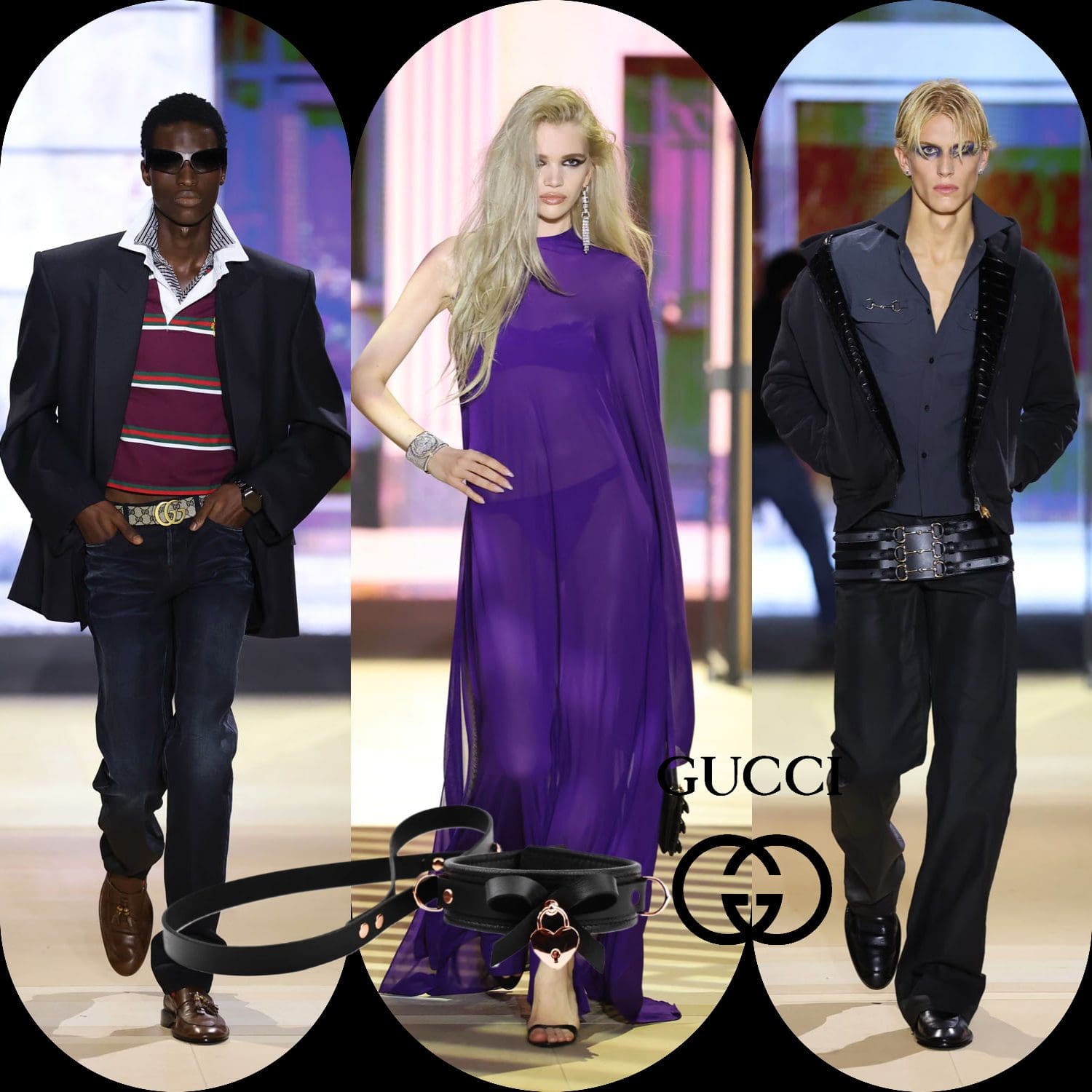
The menswear and evening interludes did little to salvage the ideological wreckage. A boxy, oversized black blazer was thrown over an unbuttoned burgundy and green rugby polo shirt, paired with distressed bootcut denim and a giant gold interlocking-G belt buckle—the archetypal early-2000s frat boy dragged reluctantly toward the catwalk. A sheer, royal purple chiffon evening gown floated transparently over matching purple underwear, flanked by a male companion in a zipped track-blouson, steel-blue shirting, and yet another triple-layered bondage belt clamped across his waist.
Demna wants us to believe that slapped-on fetish tropes equal rebellion, and that parading bondage gear through clinical store spaces proves Gucci is a “space of possibility.” But rebellion requires courage, intelligence, and nuance. Slapping heavy-duty leather restraints, submissive padlocks, and leather collars onto a runway is not an act of audacity; it is the oldest, most exhausted shortcut in modern marketing. When provocation becomes this predictable and mechanical, it ceases to be provocative. It simply leaves the viewer bored, unimpressed, and wishing the entire collection had stayed hidden inside its unmarked box. But François-Henri Pinault loved so much…
Vedi tutti i look Gucci Primavera Estate 2027